









How to Create a Real Estate Agent Marketing Plan That Gets Results
In a competitive market, simply being a great real estate agent isn't enough to guarantee a steady stream of clients. The most successful agents operate like savvy business owners, and the cornerstone of their business is a well-defined strategy. Creating a comprehensive real estate agent marketing plan is the single most effective way to move from reactive, inconsistent lead generation to a proactive system that consistently attracts your ideal clients and grows your income.
This guide will walk you through the essential steps to build a marketing plan from the ground up. We'll cover everything from defining your unique brand to choosing the right technology and measuring your return on investment. Think of this not as a rigid set of rules, but as a flexible blueprint you can adapt to your specific market, budget, and goals.
What You'll Learn
- The Foundation: A solid marketing plan is your business roadmap, helping you define your ideal client, set clear goals, and select the most effective marketing channels.
- Essential Components: Every successful plan includes a unique value proposition (UVP), a detailed budget, and a smart mix of digital and traditional marketing tactics.
- Technology is Key: Modern real estate marketing relies on technology, especially a Customer Relationship Management (CRM) system, to manage leads and automate essential follow-up tasks.
- Adapt and Overcome: Your success hinges on consistently tracking your results, understanding your metrics, and being willing to adapt your strategy based on what the data tells you.
What Exactly is a Real Estate Agent Marketing Plan?
A real estate agent marketing plan is a strategic document that outlines your marketing goals and the specific actions you will take to achieve them over a set period, typically a year. It's far more than just a to-do list of promotional activities. It's a comprehensive blueprint that details who you're trying to reach, what message you want to convey, how you'll deliver that message, and how much you're willing to spend.
Think of it like building a house. You wouldn't start ordering lumber and pouring concrete without an architectural blueprint. Your marketing plan is that blueprint. It ensures that every dollar you spend and every hour you invest is part of a coordinated effort designed to build your business systematically, rather than just hoping for random referrals to come your way.
A great agent marketing plan forces you to answer critical business questions. Who is your ideal client. What makes you different from the dozens of other agents in your city. What is a realistic number of transactions you want to close this year, and what marketing activities will get you there.
Without this clarity, agents often fall into the trap of "random acts of marketing"—boosting a Facebook post here, running a newspaper ad there—with no real way to measure what's working.
The Core Components of a Winning Agent Marketing Plan

Building an effective plan starts with a strong foundation. These core components provide the strategic direction for all your marketing activities. Skipping these foundational steps is like setting sail without a map or a destination in mind.



Step 1: Define Your Target Audience and Niche
You can't be the right agent for everyone. Trying to appeal to all buyers and sellers in your market will dilute your message and make it impossible to stand out. The first step is to identify a specific niche or target audience. This allows you to tailor your messaging, content, and advertising to resonate deeply with a specific group of people.
Your niche could be based on property type (luxury condos, historic homes, new construction), client type (first-time homebuyers, military families, real estate investors), or a specific geographic area (a particular neighborhood or school district). For example, an agent specializing in helping young families upgrade to larger homes will have a very different property agent promotion strategy than one who focuses on empty-nesters downsizing to condos.
To define your audience, create a detailed client avatar. Give them a name, age, occupation, income level, family status, and list their primary pain points and goals related to real estate. What are their biggest fears about the process. What do they value most in an agent.
The more specific you are, the easier it will be to create marketing that speaks directly to them.
Step 2: Craft Your Unique Value Proposition (UVP)
Once you know who you're talking to, you need to decide what you're going to say. Your Unique Value Proposition (UVP) is a clear statement that describes the benefit you offer, how you solve your client's needs, and what distinguishes you from the competition. It's the answer to the question: "Why should I work with you instead of any other agent?"
A weak UVP sounds generic, like "I provide great customer service." A strong UVP is specific and benefit-oriented. For example:
- For First-Time Buyers: "I guide first-time homebuyers through every step of the process with a clear, educational approach, ensuring you feel confident and empowered from your first showing to closing day."
- For Sellers in a Specific Neighborhood: "As a 15-year resident of the Northwood neighborhood, I use my hyper-local expertise and targeted marketing to sell homes faster and for a higher price than the market average."
Your UVP should be at the forefront of all your marketing materials—on your website homepage, in your social media bio, and in your email signature. It's the core of your brand identity.
Step 3: Set SMART Goals and KPIs
Your marketing plan needs measurable goals to keep you on track. The SMART framework is a simple and effective way to set them:
- Specific: Clearly define what you want to achieve. Instead of "get more leads," aim for "generate 25 qualified seller leads per month."
- Measurable: Define how you will track progress. This involves identifying your Key Performance Indicators (KPIs), such as cost per lead, website visitors, or social media engagement rate.
- Achievable: Be realistic. If you're a new agent, a goal of closing 100 deals in your first year might be out of reach. Set challenging but attainable targets.
- Relevant: Ensure your goals align with your overall business objectives. If your focus is on listings, a goal centered on buyer leads might not be the most relevant.
- Time-bound: Set a deadline. For example, "Increase my email list by 300 subscribers in the next 90 days."
Having SMART goals transforms your plan from a vague wish list into an actionable strategy. It gives you clear benchmarks to evaluate your performance and make necessary adjustments.
Step 4: Establish Your Marketing Budget
Marketing costs money, and you need a realistic budget to execute your plan. Many agents struggle with this, either spending too little to make an impact or spending too much on ineffective channels. A common approach is to allocate a percentage of your gross commission income (GCI) to marketing. New agents may need to invest a higher percentage (10-15%) to build momentum, while established agents might spend closer to 5-10%.
Break your budget down by category and channel. A sample annual budget for an agent aiming for $100,000 in GCI might look like this:
- Technology (CRM, Website): $2,000
- Digital Advertising (Google/Facebook Ads): $3,500
- Content & Branding (Photos, Video): $1,500
- Direct Mail & Print: $1,500
- Client Events & Gifts: $1,000
- Total: $9,500 (9.5% of GCI)
The most important part of budgeting is tracking your return on investment (ROI). If you spend $500 on Facebook ads and it generates one closing worth $6,000 in commission, your ROI is excellent. If you spend the same amount on print ads and get zero leads, it's time to reallocate that money. Your budget should be a flexible guide, not a rigid rule.
Building Your Marketing Machine: Top Channels and Strategies
With your foundation in place, it's time to choose the specific tactics and channels you'll use to reach your target audience. The goal is not to be everywhere at once, but to dominate the few channels where your ideal clients spend their time. This is the core of a modern real estate marketing strategy.
Foundational Digital Presence: Your Website and Blog
In 2026, your professional website is your digital storefront. It's often the first impression a potential client will have of you. Your site should be mobile-friendly, easy to navigate, and clearly communicate your UVP. It must feature an IDX (Internet Data Exchange) feed that allows visitors to search for listings directly on your site, keeping them in your ecosystem instead of sending them to Zillow or Redfin.
Beyond property searches, your website is a powerful platform for content marketing. A blog is one of the best tools for demonstrating your expertise and attracting organic traffic from search engines. Write articles that answer the specific questions your target audience is asking. For example:
- "The Top 5 Family-Friendly Neighborhoods in [Your City]"
- "A First-Time Homebuyer's Guide to Getting Pre-Approved"
- "Common Mistakes to Avoid When Selling a Historic Home"
This type of content establishes you as a local authority and builds trust long before a potential client is ready to transact. It's a long-term play that pays significant dividends.
Social Media Marketing: Building Community and Trust
Social media is about more than just posting your new listings. It's about building relationships and showcasing your personality and expertise. Focus on one or two platforms where your target audience is most active. For most agents, this will be Facebook and Instagram.
- Instagram: This is a visual platform perfect for real estate. Use high-quality photos and videos. Create Reels featuring property tours, quick tips for buyers/sellers, or a "day in the life" of an agent. Use Stories for behind-the-scenes content and interactive polls.
- Facebook: Use your business page to share market updates, blog posts, client testimonials, and community news. Facebook Groups are also incredibly powerful. Consider starting a group for new residents in your city or for homeowners in a specific neighborhood.
Paid advertising on these platforms allows for hyper-targeted campaigns. You can target users based on location, age, income, and even behaviors like "likely to move." This is a cost-effective way to generate leads for a specific listing or to promote a home valuation tool.
Pro Tip: Use video content across all platforms. A short, 60-second video explaining a part of the homebuying process or showcasing a neighborhood park will get far more engagement than a text-only post. People connect with people, and video is the best way to let your personality shine through.
Email Marketing: The Engine of Nurturing
While social media is great for attracting attention, email marketing is where you nurture relationships over the long term. Not everyone who visits your website or meets you at an open house is ready to buy or sell today. An email list is your most valuable marketing asset because it's a direct line of communication that you own and control.
Use a CRM system to build and manage your email list. Create simple email campaigns to stay top-of-mind with your sphere of influence, past clients, and new leads. A good email strategy includes:
- A Weekly or Bi-Weekly Newsletter: Share a mix of new listings, recent blog posts, local events, and home maintenance tips.
- Automated Drip Campaigns: Set up a series of pre-written emails that automatically go out to new leads over several weeks or months, providing value and building rapport.
- Segmented Lists: Don't send the same email to everyone. Create separate lists for buyers, sellers, past clients, and investors so you can send more relevant content.
Choosing the Right Tech Stack to Power Your Plan
Executing a modern marketing plan is nearly impossible without the right technology. The central hub of your tech stack should be a Customer Relationship Management (CRM) system designed for real estate. A CRM helps you organize contacts, track interactions, manage your sales pipeline, and automate marketing tasks.
Investing in a good CRM is not an expense; it's an investment in efficiency and growth. It prevents leads from falling through the cracks and frees up your time to focus on what you do best: building relationships and closing deals.
Top CRM Recommendations for Real Estate Agents
There are many CRMs on the market, each with different strengths. Here are a few top options that cater to the needs of real estate agents:
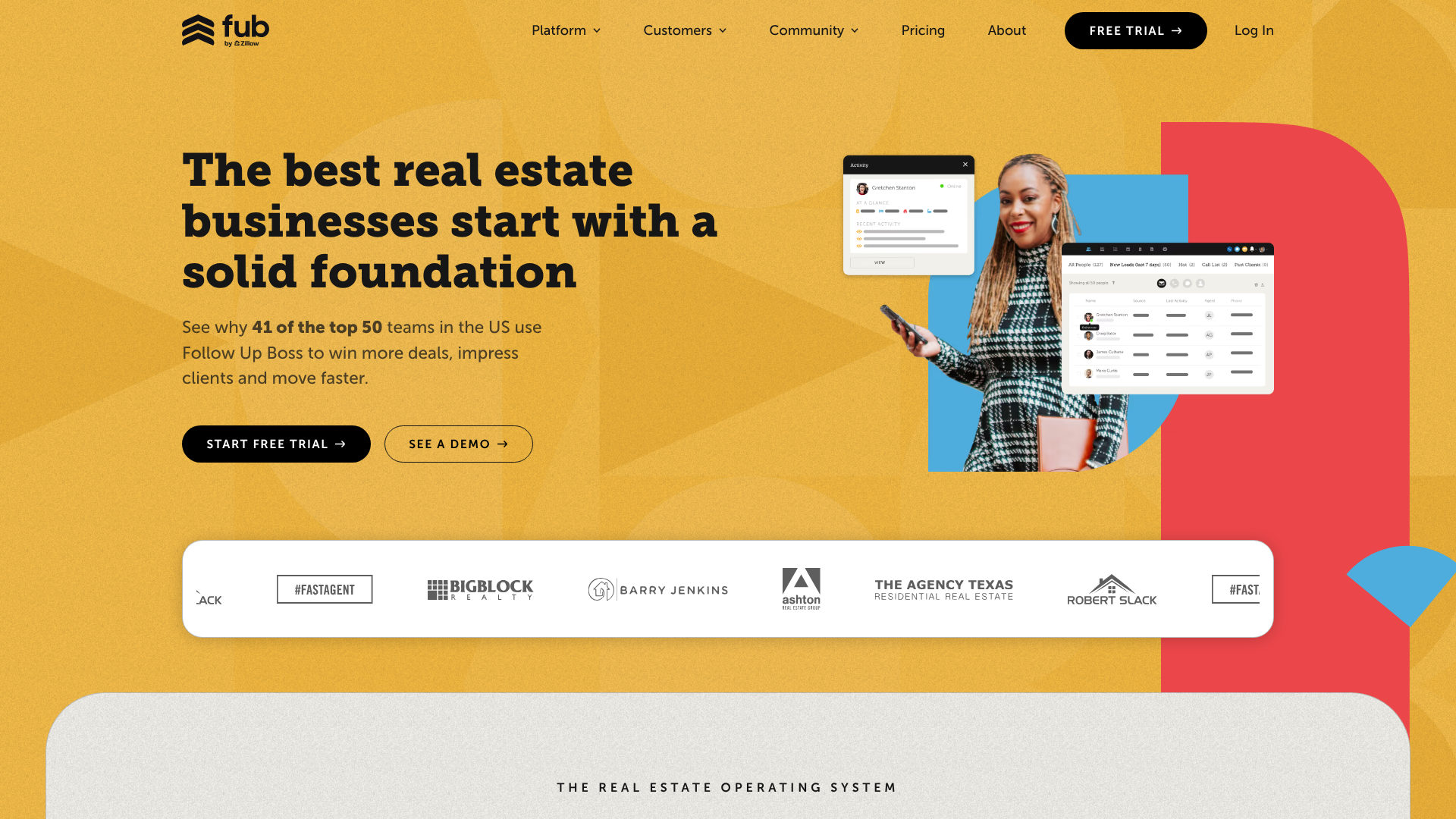
- Follow Up Boss: Widely regarded as one of the best for lead follow-up and team management. It excels at pulling in leads from over 200 sources into one central inbox and has powerful tools for automated texting and calling. It's a great choice for agents and teams who prioritize speed-to-lead.
- LionDesk: A strong all-around option that is particularly known for its communication tools. It includes features like video email and video texting built directly into the platform, which can help your messages stand out. It offers a good balance of features and affordability.
- Wise Agent: A budget-friendly yet powerful CRM that has been serving agents for years. It includes robust transaction management checklists, marketing automation, and contact management features. It's a solid choice for individual agents who need a comprehensive tool without a high price tag.
- kvCORE: This is more than just a CRM; it's an all-in-one platform that includes a website, IDX, marketing automation, and lead generation tools. It's often provided to agents by their brokerage. The main benefit is having everything integrated into one system.
Comparison of Key CRM Features
Choosing the right tool depends on your specific needs and budget. Here’s a quick comparison of these popular options:
| Feature | Follow Up Boss | LionDesk | Wise Agent | kvCORE |
|---|---|---|---|---|
| Best For | Teams & Speed-to-Lead | Video Communication | All-in-One Affordability | Brokerage-Provided Platform |
| Lead Management | Excellent | Very Good | Very Good | Good |
| Marketing Automation | Good | Very Good | Very Good | Excellent |
| Transaction Management | Basic | Basic | Excellent | Integrated |
| Pricing Model | Per User | Per User | Per User | Often Brokerage-Covered |
Pro Tip: Before committing to a CRM, take advantage of free trials. Spend a week using the system with real contacts and tasks. The best CRM for you is the one you will actually use consistently. A powerful tool that gathers digital dust is a waste of money.
Measuring Success: How to Track and Adapt Your Real Estate Marketing Strategy
A marketing plan is a living document. Markets shift, consumer behavior changes, and new technologies emerge. To stay effective, you must regularly track your results and be willing to adapt your real estate marketing strategy.
Schedule a monthly or quarterly review of your marketing performance. During this review, analyze your key metrics against the SMART goals you set. Some of the most important metrics to track include:
- Leads by Source: Where are your leads coming from? (e.g., website, Facebook, open houses). This tells you which channels are most effective.
- Cost Per Lead (CPL): How much are you spending to acquire one new lead from each channel? (Total channel spend / number of leads).
- Lead-to-Client Conversion Rate: What percentage of your leads become active clients? A low conversion rate might indicate a problem with your follow-up process.
- Return on Investment (ROI): For every dollar you spend on a marketing channel, how many dollars in commission do you get back? This is the ultimate measure of success.
Use this data to make informed decisions. If your direct mail campaign has a negative ROI but your Google Ads are performing well, it's a clear signal to shift your budget. Continuous measurement and optimization are what separate top-producing agents from the rest.

Frequently Asked Questions (FAQ)
What are the 7 P's of marketing in real estate?
The 7 P's are a classic marketing framework that can be applied to real estate. They are: Product (the properties you list and your services), Price (commission structure and property pricing strategy), Place (the geographic areas you serve), Promotion (your advertising and marketing activities), People (you, your team, and your clients), Process (the systems you use for client transactions), and Physical Evidence (your branding, office, and client testimonials).
What is the 3 3 3 rule in marketing?
The 3 3 3 rule is a simplifying principle for marketing strategy. It suggests focusing on three main messages (your core value propositions), targeting three distinct audiences (your primary client niches), and using three key marketing channels (e.g., email, social media, and networking). This helps prevent agents from spreading themselves too thin and encourages a more focused, effective approach.
What are the 5 C's of a marketing plan?
The 5 C's are a framework for market analysis, often used when creating a marketing plan. They are: Company (your strengths and weaknesses), Customers (your target audience's needs and wants), Competitors (who you're up against and their strategies), Collaborators (partners like lenders and inspectors), and Climate (external factors like the economy and market trends).
What is a marketing plan for a real estate agent?
Simply put, it's a documented strategy that outlines an agent's marketing goals for the year and the specific steps they will take to achieve them. It includes defining a target audience, setting a budget, choosing marketing channels, and establishing metrics to measure success. It's the business plan for an agent's lead generation and branding efforts.
What are the 4 Ps of a good marketing plan?
The 4 P's are the original, foundational elements of the marketing mix, a subset of the 7 P's. They are Product, Price, Place, and Promotion. For a real estate agent, this means defining your service offering, your commission strategy, your target market area, and how you will advertise and promote your services to potential clients.
Final Thoughts: Your Blueprint for Success
Building a detailed real estate agent marketing plan takes time and effort upfront, but the clarity and focus it provides are invaluable. It transforms your business from a series of random activities into a predictable, scalable system for growth. By defining your audience, crafting a compelling message, choosing the right channels, and leveraging technology, you create a powerful engine for attracting clients.
Remember, your plan is not meant to be set in stone. It's a dynamic guide that should evolve as you learn what works best for your unique brand and market. Consistently execute your plan, diligently track your results, and never be afraid to adapt. This strategic approach is the key to building a sustainable and thriving real estate career.
If you're ready to organize your leads and supercharge your follow-up process, exploring a dedicated real estate CRM is a logical next step. Tools like Follow Up Boss or LionDesk are designed to help you implement the strategies outlined in this guide and turn your marketing plan into a reality.