









10 Best Real Estate Tools for Agents to Use in 2026 (Ranked)
In today's competitive market, running a real estate business on spreadsheets and a simple calendar is no longer enough. The top-producing agents are powered by technology that automates tasks, nurtures leads, and streamlines transactions. The right collection of real estate tools for agents can be the difference between struggling to keep up and scaling your business efficiently. These platforms handle everything from lead capture and contact management to marketing campaigns and closing paperwork, freeing you up to focus on what you do best: building relationships and selling homes.
This guide breaks down the essential tools every agent should consider. We'll explore the top platforms, from comprehensive CRMs to specialized marketing and transaction software, helping you build a tech stack that saves time, increases productivity, and ultimately drives more revenue. We'll cover what to look for, compare the leading options, and provide clear recommendations for agents at every stage of their career.
Essential Points
- CRM is Your Foundation: A Customer Relationship Management (CRM) system is the most critical tool for any agent. It acts as your central database for all contacts, leads, and client interactions, making follow-up and nurturing systematic rather than chaotic.
- All-in-One vs. Specialized: You can choose an all-in-one platform that handles everything (website, CRM, marketing) or build a custom stack of specialized, best-in-class tools. The right choice depends on your budget, tech skills, and business needs.
- Automation is Key to Scaling: The best real estate agent tools automate repetitive tasks like sending follow-up emails, texting new leads, and posting to social media. This allows you to provide consistent service to more clients without working longer hours.
- Transaction Management Simplifies Closings: Tools dedicated to managing documents and e-signatures, like Dotloop, reduce paperwork errors, improve compliance, and create a smoother closing experience for you and your clients.
- AI is No Longer Optional: Artificial intelligence is becoming a standard feature in modern agent tools for real estate. AI can write compelling listing descriptions, qualify leads with chatbots, and predict which contacts are most likely to transact next.
What Exactly Are Real Estate Tools for Agents?
Real estate tools for agents are software, applications, and digital platforms designed specifically to address the unique challenges of the real estate industry. They go far beyond generic business software by incorporating features tailored to an agent's daily workflow. This includes managing client relationships, generating and nurturing leads, marketing properties, coordinating complex transactions, and analyzing market data.
These tools can be broken down into several key categories:
- Customer Relationship Management (CRM): The heart of an agent's tech stack. CRMs organize contacts, track communication history, and automate follow-up sequences to ensure no lead falls through the cracks.
- Lead Generation Platforms: These tools focus on attracting new clients. They often include IDX-enabled websites that display MLS listings, landing pages for capturing contact information, and built-in advertising management.
- Marketing Automation: This category includes software for creating and scheduling email campaigns, social media posts, and property flyers. The goal is to maintain a consistent marketing presence with minimal manual effort.
- Transaction Management: These platforms digitize the closing process. They provide secure document storage, e-signature capabilities, and compliance checklists to keep deals on track from contract to close.
- Artificial Intelligence (AI) Assistants: A newer but rapidly growing category, AI tools can draft property descriptions, create ad copy, power chatbots for instant lead response, and analyze data to identify sales opportunities.
Ultimately, the purpose of these tools is to introduce efficiency, organization, and scalability into a real estate business. They handle the administrative and repetitive work, allowing agents to dedicate more time to high-value, client-facing activities.
The Core Benefits: Why Every Agent Needs a Modern Tech Stack
Adopting the right set of tools for real estate agents isn't just about keeping up with trends; it's about fundamentally improving how you operate your business. A well-integrated tech stack delivers tangible benefits that directly impact your productivity and bottom line. It transforms your business from a series of manual tasks into a streamlined, automated system.
First, these tools provide streamlined lead management. Instead of leads scattered across emails, text messages, and sticky notes, a CRM centralizes everything. It can automatically capture leads from your website, Zillow, and social media, then trigger follow-up plans so you respond instantly, which is critical for conversion. This systematic approach ensures every potential client receives timely attention.
Second, they enable automated marketing efforts. Imagine creating an email campaign for new buyer leads once and having it run for every new contact automatically. That's the power of automation. These platforms can send market updates, happy home-anniversary emails, and new listing alerts without you lifting a finger, keeping you top-of-mind with your entire sphere of influence.



Third, you gain efficient transaction coordination. The journey from an accepted offer to the closing table involves dozens of documents, deadlines, and signatures. Transaction management software like Dotloop creates a central hub for all parties—buyers, sellers, lenders, and other agents—to collaborate. This reduces the risk of errors, ensures compliance, and provides a transparent, professional experience for your clients.
Finally, these tools empower data-driven decision-making. Modern platforms come with analytics dashboards that show you where your best leads come from, which marketing campaigns are working, and what your sales pipeline looks like. This insight allows you to stop guessing and start investing your time and money into the strategies that deliver the best results.

How to Choose the Right Tools for Your Real Estate Business

With so many options available, selecting the right agent tools for real estate can feel overwhelming. The key is to avoid chasing the newest, shiniest object and instead focus on what your business truly needs. A strategic approach will ensure you invest in software that you'll actually use and that provides a positive return.
Assess Your Specific Needs
Start with an honest evaluation of your business. Are you a solo agent, part of a small team, or running a large brokerage. A solo agent might need a simple, cost-effective CRM, while a team leader needs a platform with advanced lead routing and agent accountability features. Consider your strengths and weaknesses.
If you struggle with consistent follow-up, prioritize a tool with strong automation. If marketing is your weak point, look for a platform with built-in templates and campaign builders.
Consider Your Budget and Pricing Models
Real estate software pricing varies dramatically. Some tools charge a flat monthly fee, while others have tiered pricing based on the number of users or contacts. All-in-one platforms like kvCORE or BoomTown can cost several hundred to over a thousand dollars per month, but they replace the need for multiple other subscriptions. A la carte CRMs like Wise Agent or LionDesk are much more affordable.
Set a realistic monthly budget and look for tools that fit within it. Always ask about setup fees and contract lengths before committing.
Look for Key Integrations
Your tools should work together. A CRM that doesn't integrate with your lead sources or email client will create more manual work, not less. Before choosing a platform, make a list of the other software you rely on (e.g., Google Workspace, Mailchimp, your MLS) and check if it integrates smoothly. Strong integration capabilities prevent you from having to manually transfer data between systems, saving time and reducing errors.
Prioritize User-Friendliness and Support
The most powerful tool is useless if you don't know how to use it. Look for software with a clean, intuitive interface. Many companies offer free trials or live demos—take advantage of them to get a feel for the platform. Equally important is the quality of customer support and training.
Does the company offer live onboarding, a comprehensive knowledge base, and responsive customer service. A strong support system is invaluable, especially when you're first getting started.
Top 10 Real Estate Agent Tools to Boost Your Business in 2026
Navigating the sea of software options can be tough. To help, we've compiled this list of the top real estate tools for agents, broken down by category. This list includes a mix of all-in-one platforms, powerful CRMs, and essential specialized tools to help you build the perfect tech stack.
Category: All-in-One Platforms & CRMs
These tools serve as the command center for your business, combining CRM, lead generation, and marketing automation into a single system.
1. Follow Up Boss
Best For: Teams and top-producing agents focused on speed-to-lead and conversion.
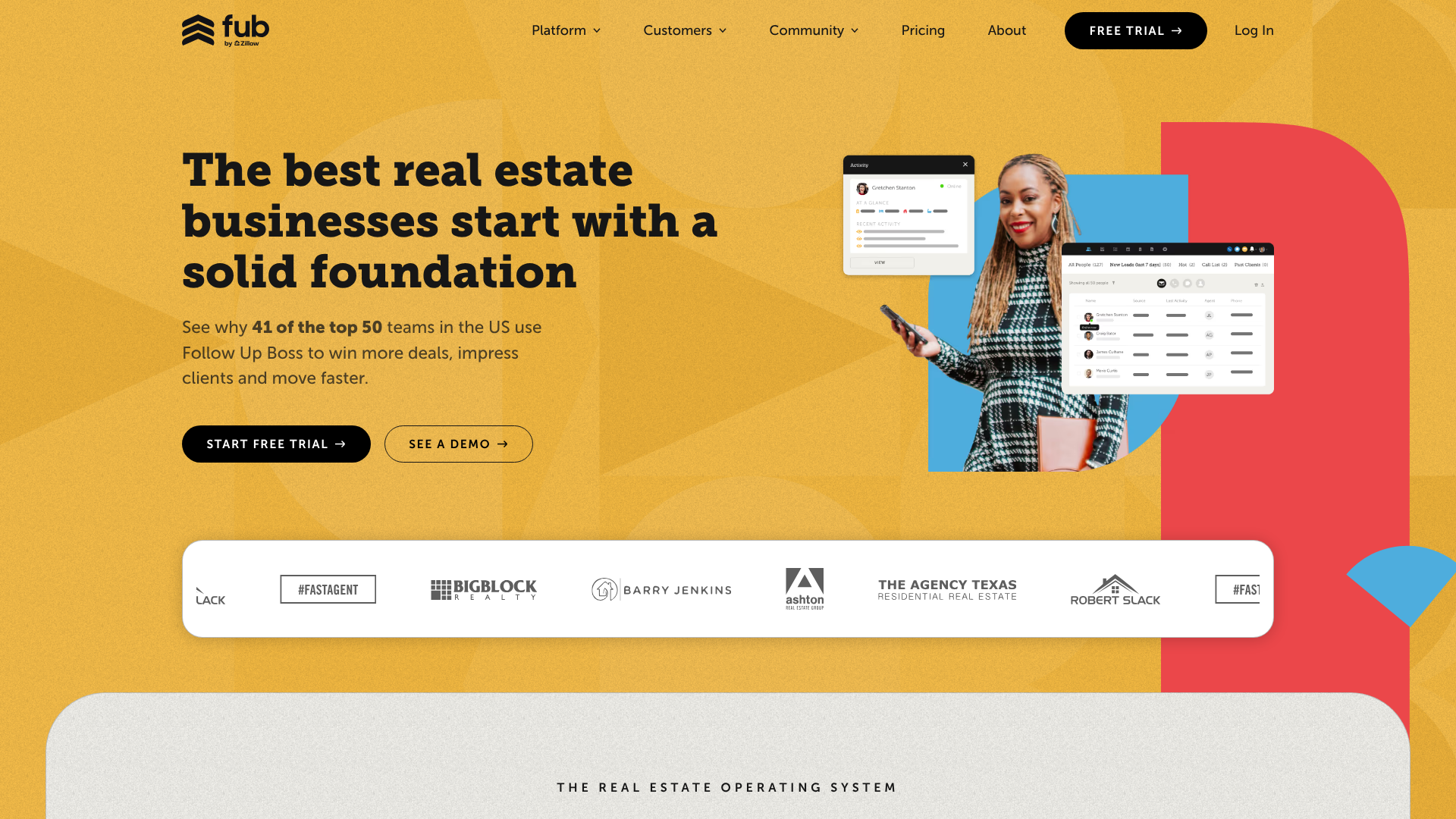
Follow Up Boss is widely regarded as one of the best CRMs in the industry, particularly for its laser focus on lead management and follow-up. It consolidates leads from over 200 sources into a single, clean inbox. Its standout feature is its robust team functionality, with advanced lead routing, agent accountability tracking, and collaborative tools. The platform also includes powerful email and texting automation, making it easy to build and deploy sophisticated nurture campaigns.
While it doesn't include an IDX website like some all-in-one platforms, it integrates seamlessly with virtually every real estate website and lead generation tool on the market. This "best-of-breed" approach allows you to pair its powerful CRM with your preferred website provider.
Pros
- Superior lead consolidation and management.
- Excellent team features for collaboration and accountability.
- Simple, intuitive user interface that agents love.
Cons
- Does not include a front-end website.
- Can be more expensive than some simpler CRMs.
2. kvCORE
Best For: Brokerages and agents looking for a true all-in-one solution.
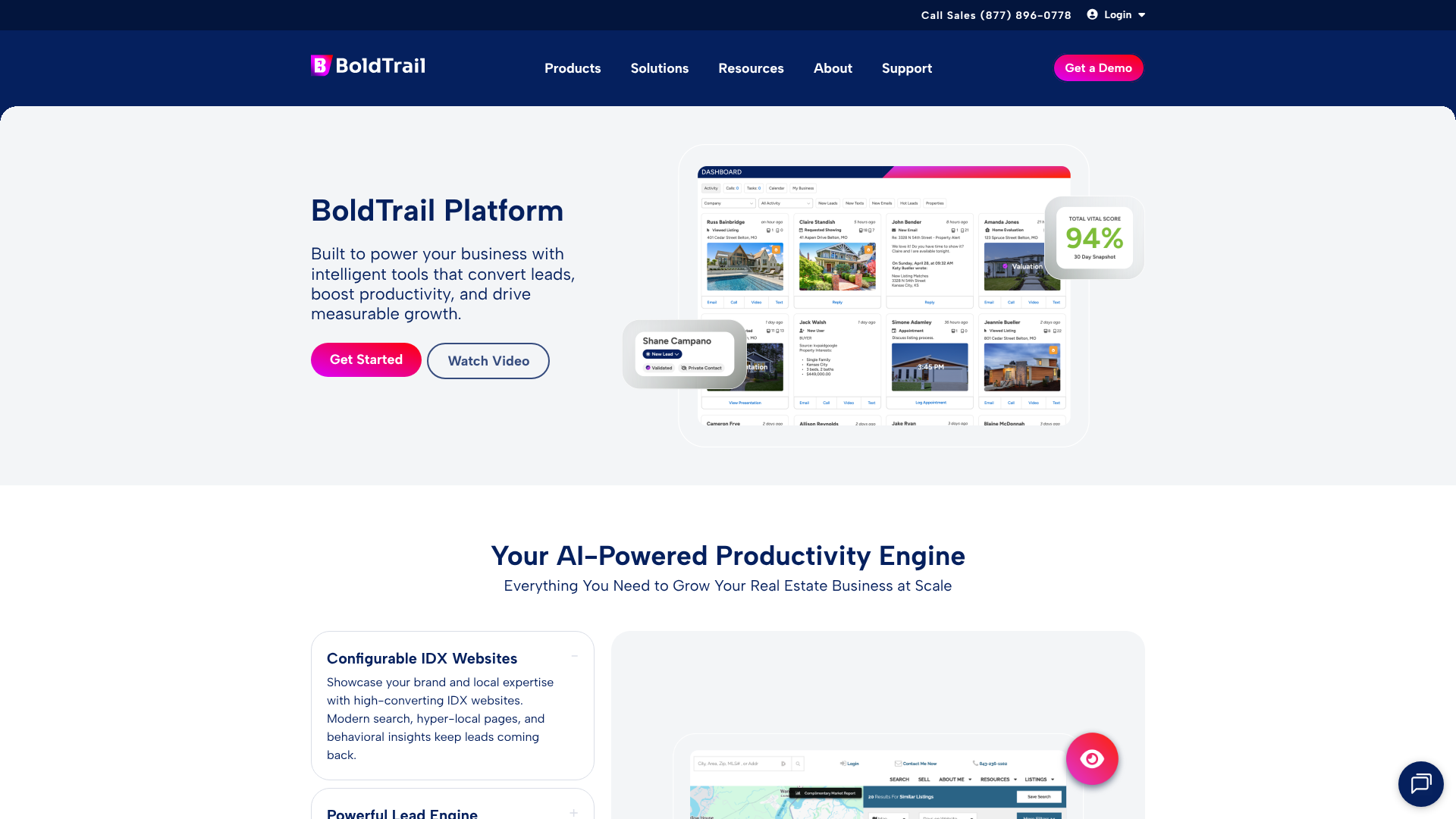
kvCORE is a comprehensive platform designed to handle nearly every aspect of an agent's digital presence. It provides each agent with a high-performing IDX website, a powerful CRM, and a full suite of marketing automation tools. Its behavioral automation is a key feature, tracking user activity on your site and triggering alerts and follow-up campaigns based on their actions (e.g., viewing a property multiple times).
The platform also includes tools for generating seller leads, like automated home valuation landing pages, and a built-in dialer for power calling sessions. Because it's an all-in-one system, all the components work together perfectly, providing a single source of truth for your business data.
Pros
- A complete ecosystem with website, CRM, and marketing.
- Advanced behavioral automation to surface hot leads.
- Strong features for both buyer and seller lead generation.
Cons
- Can have a steeper learning curve due to its extensive features.
- Often sold at the brokerage level, which can mean less flexibility for individual agents.
3. Chime
Best For: Agents and teams who want to use AI to improve lead conversion.
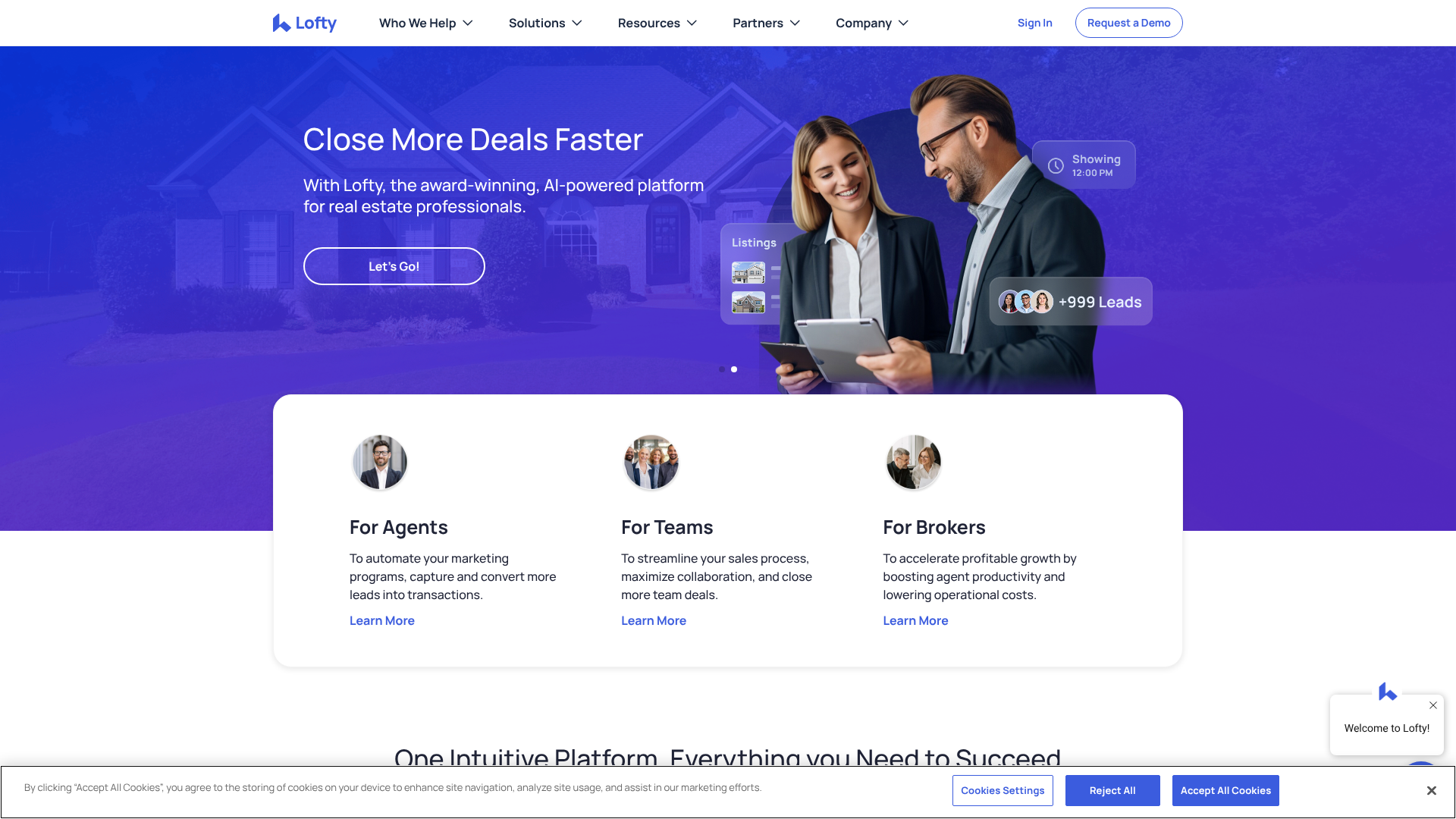
Chime is another powerful all-in-one platform that sets itself apart with its strong emphasis on AI. The platform includes an IDX website, a feature-rich CRM, and marketing tools, but its AI assistant is the main attraction. The AI can engage new leads via text message 24/7, ask qualifying questions, and book appointments directly on your calendar, ensuring no lead is missed.
Chime also offers a Power Dialer with pre-recorded voicemail drops and a strong focus on tracking marketing ROI. Its reporting dashboards help you understand exactly which lead sources are performing best, allowing you to optimize your ad spend effectively.
Pros
- AI assistant for automated lead qualification and nurturing.
- Integrated Power Dialer to increase call efficiency.
- Detailed analytics for tracking marketing ROI.
Cons
- The monthly cost can be high for solo agents.
- Some users report the website templates are less customizable than competitors.
4. Wise Agent
Best For: Solo agents and small teams looking for a feature-rich CRM on a budget.
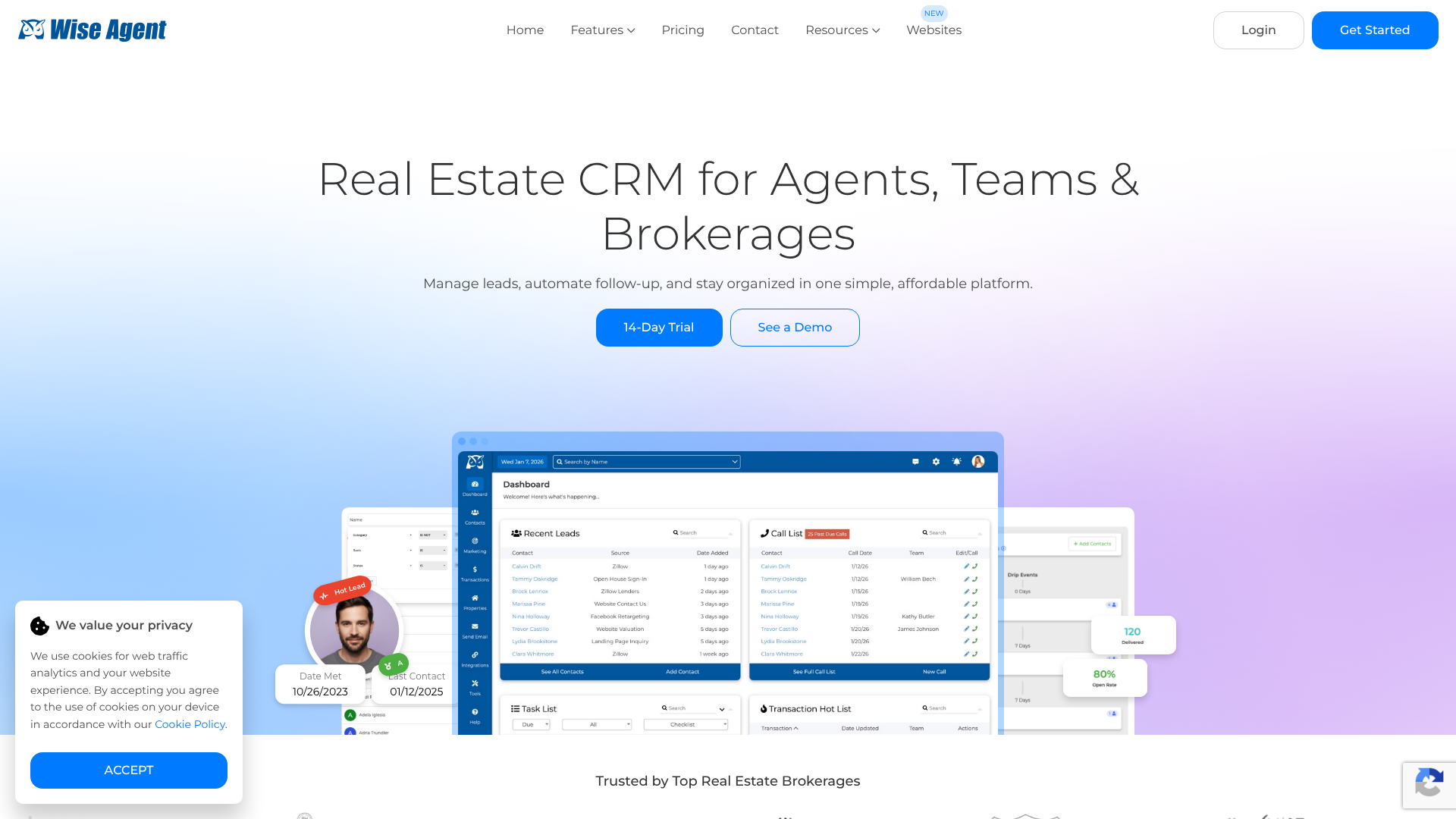
Wise Agent has been a staple in the real estate industry for years, known for offering a huge number of features at an incredibly competitive price point. It's a CRM at its core but includes transaction management checklists, marketing automation, landing page creators, and even a social media content tool. It's designed to be the central hub for a solo agent's business.
While its interface may not be as modern as some newer platforms, its functionality is deep. The company is also known for its outstanding customer support, offering free and unlimited training to all users. For agents who want a powerful tool without a hefty monthly fee, Wise Agent is an excellent choice.
Pros
- Very affordable with a flat, predictable monthly fee.
- An extensive feature set that covers CRM, marketing, and transactions.
- Highly-rated customer support and training.
Cons
- The user interface feels a bit dated compared to newer platforms.
- Can feel overwhelming for agents who only need basic CRM functions.
5. LionDesk
Best For: Agents who want to incorporate video into their marketing and follow-up.
LionDesk is a CRM that makes it easy to communicate with clients in a more personal way. Its standout feature is the ability to easily record and send video emails and video text messages directly from the platform. This helps agents stand out in a crowded inbox and build stronger connections with their leads and clients.
Beyond video, LionDesk offers solid CRM functionality, including contact management, automated email and text drip campaigns, and a transaction management tool. It also has an AI-powered lead nurturing assistant named Gabby to help qualify incoming leads. It strikes a good balance between powerful features and ease of use.
Pros
- Integrated video email and texting to personalize communication.
- AI assistant helps manage and qualify new leads.
- User-friendly interface that is easy to learn.
Cons
- Some advanced features require higher-tier plans.
- Reporting and analytics are not as detailed as some competitors.
Category: Transaction Management
These tools are focused on one thing: getting you from contract to close smoothly and efficiently.
6. Dotloop
Best For: Agents and brokers who need a complete transaction and compliance solution.
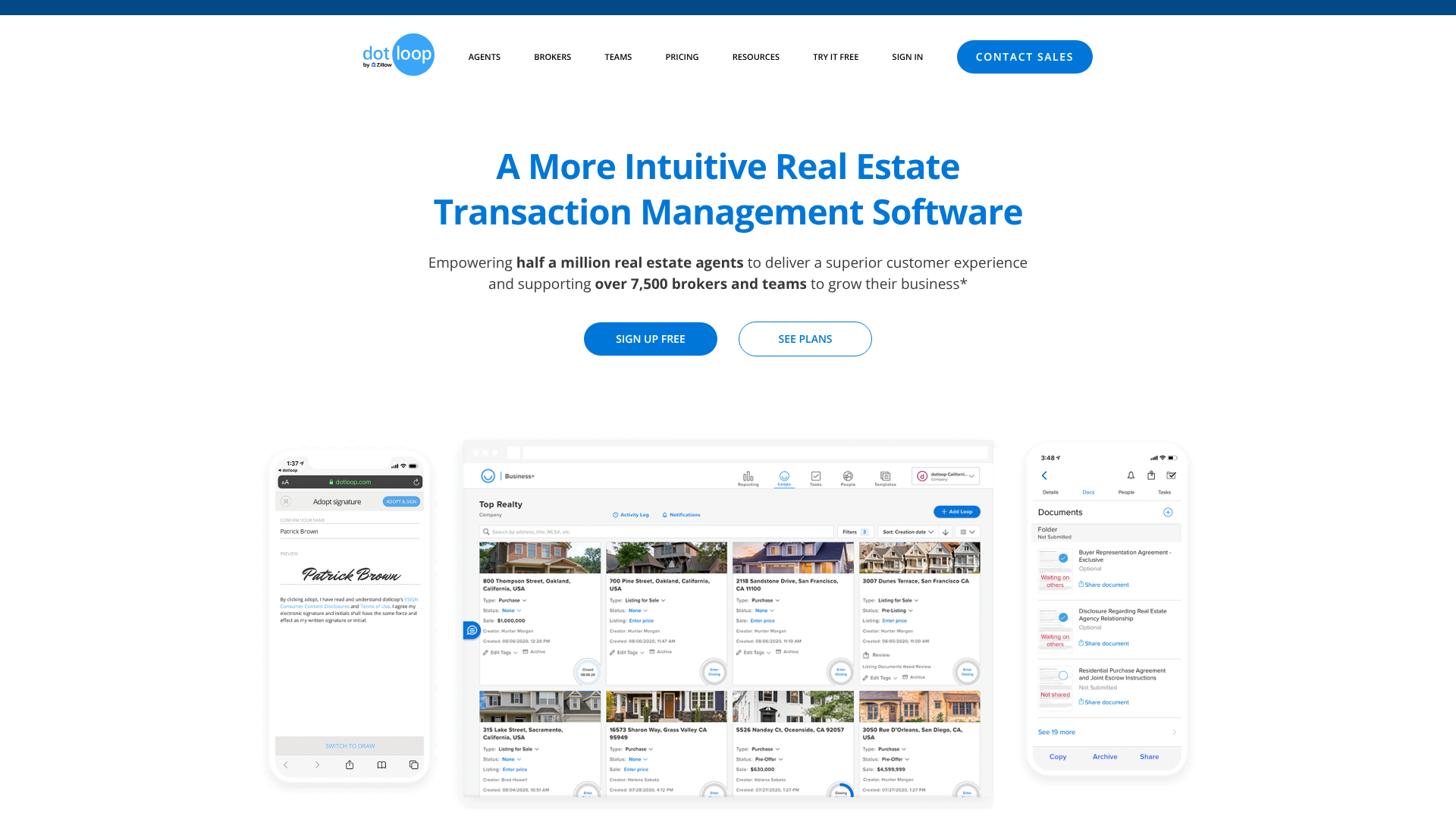
Dotloop is an end-to-end transaction management platform that simplifies the entire closing process. It's more than just an e-signature tool; it's a collaborative workspace where agents, clients, and service providers can share, edit, and sign documents. The platform's "loops" contain all documents, contacts, and conversations related to a specific transaction.
For brokers, Dotloop offers powerful compliance features, allowing them to create document checklists, review and approve files, and maintain a complete audit trail for every deal. This ensures that all paperwork is in order and reduces legal risk.
Pros
- A single, collaborative space for the entire transaction.
- Strong compliance and reporting features for brokerages.
- Integrates with many other real estate software platforms.
Cons
- The mobile app has fewer features than the desktop version.
- Can be more complex than a simple e-signature tool if that's all you need.
7. DocuSign
Best For: Agents needing a reliable, industry-standard e-signature solution.
DocuSign is the most recognized name in electronic signatures, and for good reason. It offers a secure and legally binding way to get documents signed from anywhere, on any device. While it doesn't manage the entire transaction like Dotloop, its e-signature functionality is second to none. The platform provides a detailed audit trail, tracking when a document was opened, viewed, and signed.
Many agents use DocuSign in conjunction with their CRM or another transaction management system. Its simplicity and widespread acceptance among clients and other professionals make it an essential tool in any agent's arsenal.
Pros
- The industry standard for e-signatures, trusted by clients.
- Simple to use for both agents and signers.
- Excellent security and detailed audit trails.
Cons
- Lacks the full transaction management features of competitors.
- Pricing can add up if you have a high volume of transactions.
Category: Lead Generation & Marketing
These tools are designed to fill the top of your sales funnel with new prospects and market your listings effectively.
8. Real Geeks
Best For: Agents who want to generate their own leads through a high-converting website.
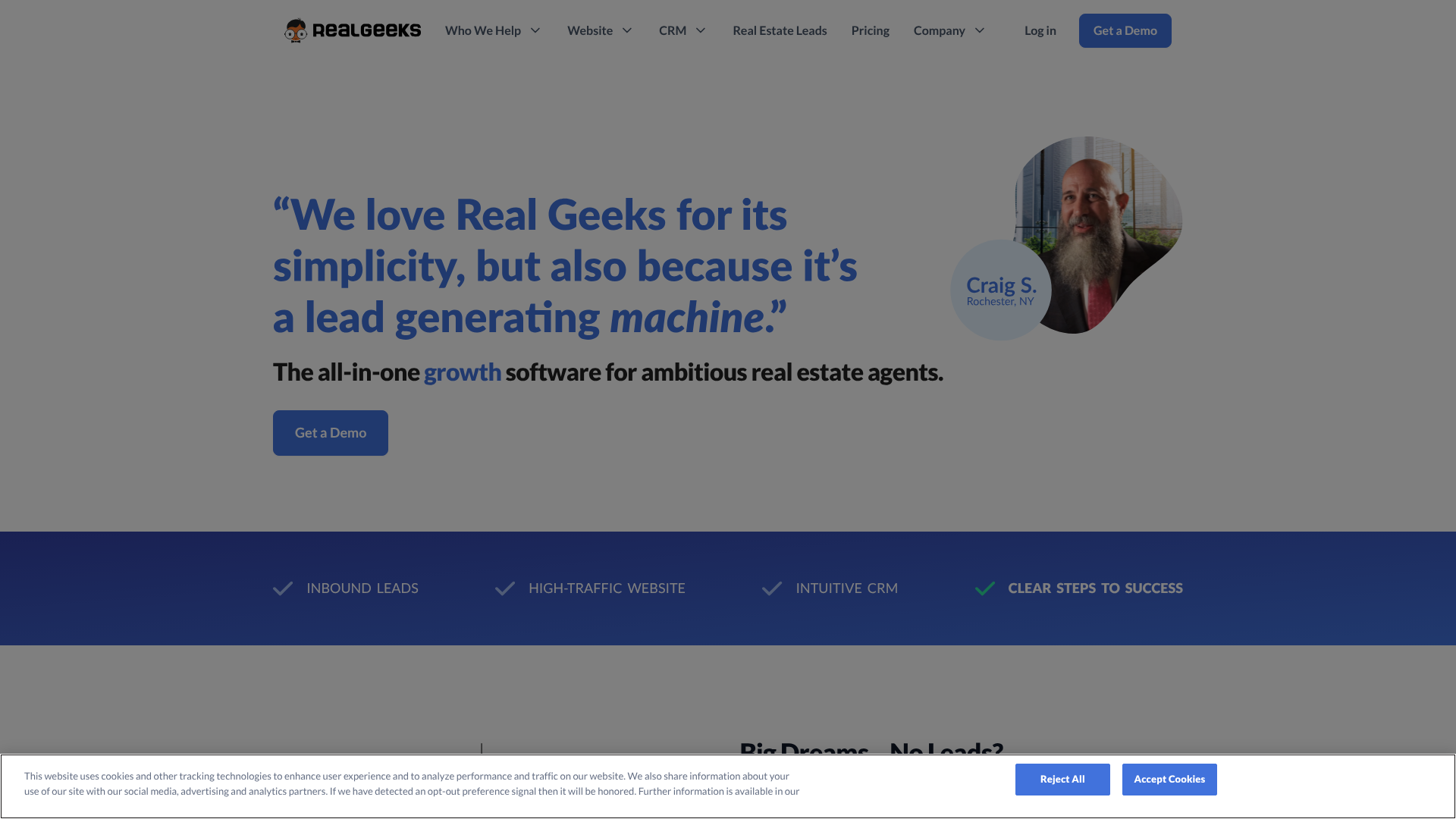
Real Geeks provides a complete lead generation solution centered around a customizable IDX website. Their websites are known for being fast, mobile-friendly, and optimized for lead capture. The platform includes a CRM to manage the leads you generate, as well as tools for creating landing pages and running Facebook ads.
The Real Geeks platform also includes a property valuation tool to attract seller leads and automated email/SMS responders to engage new leads instantly. It's a powerful system for agents who are serious about building a predictable pipeline of online leads.
Pros
- Websites are highly optimized for lead conversion.
- Includes integrated tools for Facebook marketing and seller lead gen.
- The CRM is straightforward and easy to use.
Cons
- The website design options are not as modern as some competitors.
- Requires a commitment to actively managing online marketing campaigns.
9. Canva
Best For: All agents who need to create professional marketing materials quickly.
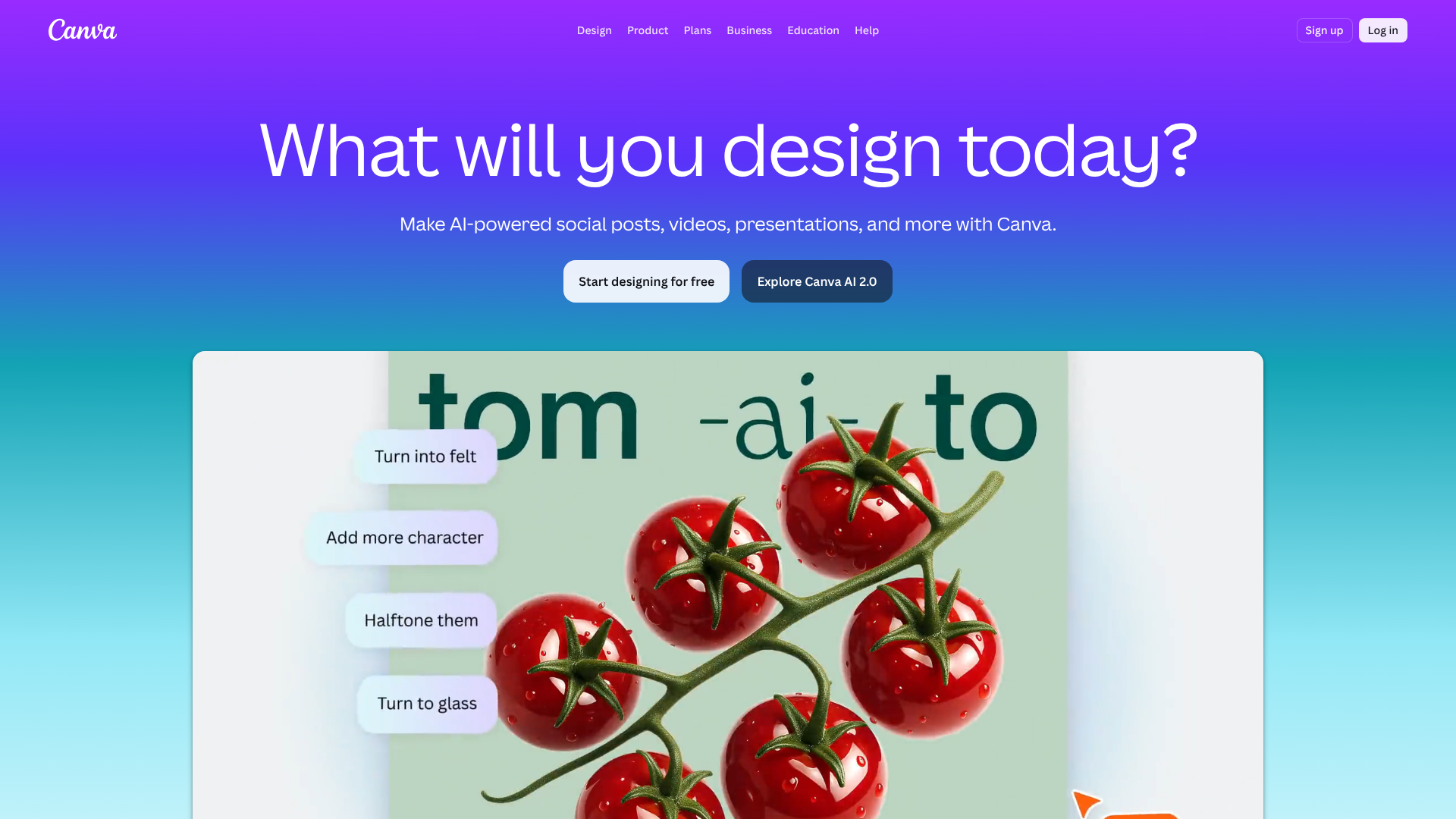
Canva is a graphic design tool that has become indispensable for real estate agents. It allows anyone, regardless of design skill, to create stunning visuals for social media posts, property flyers, postcards, listing presentations, and more. The platform offers thousands of professionally designed templates specifically for real estate.
You can easily upload your own photos, add your branding, and customize the text to create marketing materials in minutes. While not a real estate-specific tool, its utility for agents is undeniable. A Pro account allows you to set up a "Brand Kit" with your logos and colors for one-click branding.
Pros
- Incredibly easy to use, even for non-designers.
- A massive library of real estate-specific templates.
- Affordable pricing, with a very capable free version available.
Cons
- Not a substitute for a professional designer for high-end branding projects.
- The sheer number of options can sometimes be overwhelming.
Category: AI-Powered Assistants
This new wave of tools uses artificial intelligence to automate creative and analytical tasks.
10. Trof AI
Best For: Agents looking to save time on writing marketing copy.
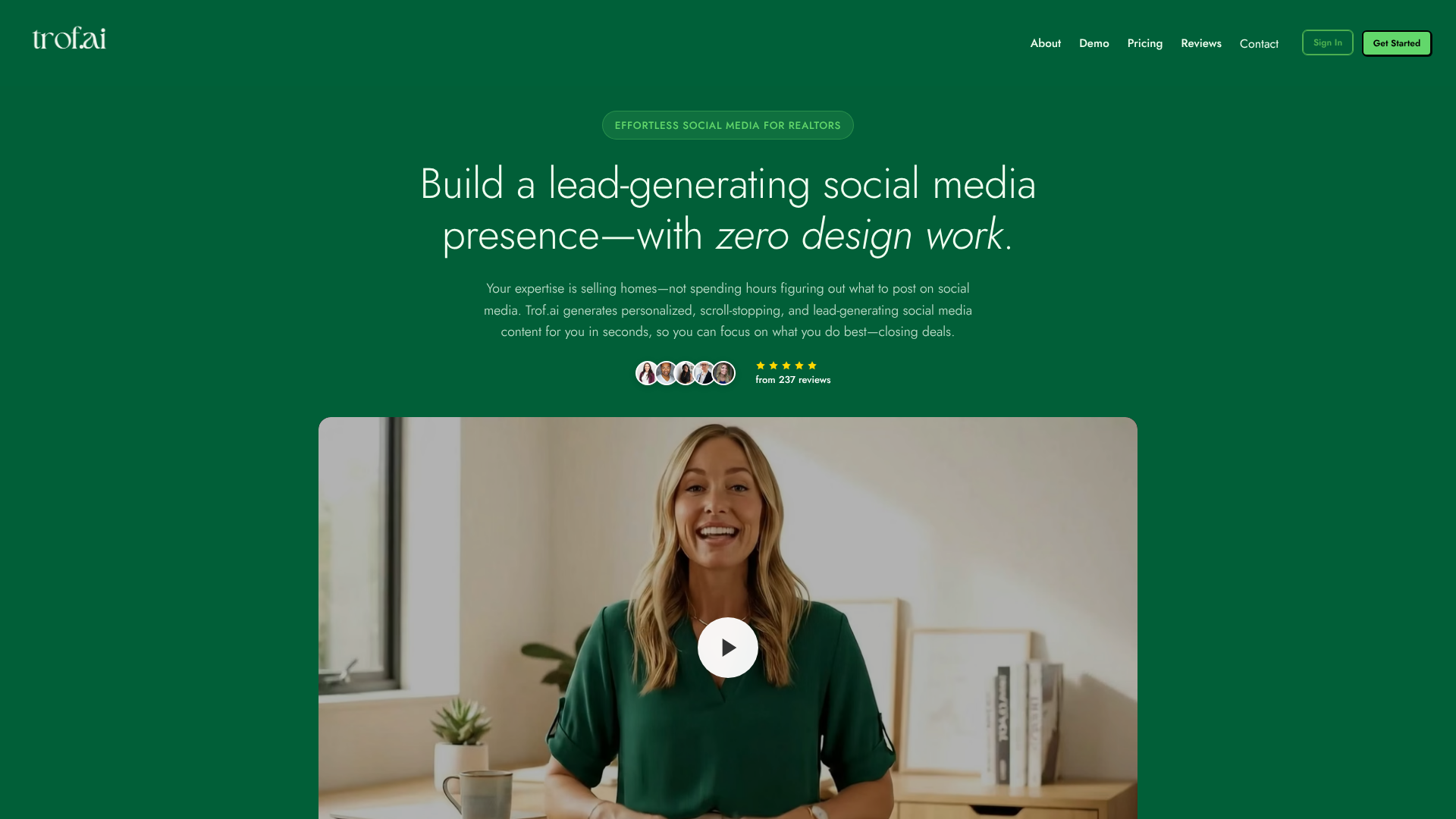
Trof AI is a specialized AI writing assistant built for real estate. It helps agents overcome writer's block by generating high-quality copy for various needs. You can input a few details about a property, and Trof AI will produce multiple options for compelling MLS listing descriptions, focusing on different tones like "luxury," "family-friendly," or "urgent."
Beyond listings, the tool can also write social media captions, email newsletters, video scripts, and agent bios. By handling the first draft, it saves agents hours of time each week, allowing them to focus on client-facing activities. It's a perfect example of how AI can serve as a practical, time-saving assistant.
Pros
- Generates creative and engaging copy specifically for real estate.
- Saves significant time on writing tasks.
- Simple, focused interface that is easy to master.
Cons
- As an AI tool, the output still requires a human touch for final review and editing.
- Its functionality is focused solely on content creation.
Comparing Top Real Estate Platforms: A Side-by-Side Look
Choosing between powerful platforms can be difficult. This table provides a quick overview of some of the top contenders to help you see how they stack up against each other.
| Feature | Follow Up Boss | kvCORE | Wise Agent | Dotloop |
|---|---|---|---|---|
| Best For | Teams & Conversion | All-in-One Solution | Budget-Conscious Agents | Transaction Management |
| Core Function | CRM & Lead Nurturing | Website + CRM + Marketing | CRM & Automation | Document & Compliance |
| Includes IDX Website? | No | Yes | No (Integrates) | No |
| Key Feature | Superior Lead Routing | Behavioral Automation | Extensive Feature Set | Collaborative "Loops" |
| Pricing Model | Per User, Tiered | Per User/Brokerage | Flat Monthly Fee | Per User/Transaction |
Pro Tip: Don't pay for features you won't use. A simple, affordable CRM that you use consistently is far more valuable than an expensive, complicated platform that gathers digital dust. Start with your core need—usually contact management—and build from there.
Pros and Cons of Using Specialized vs. All-in-One Agent Tools
A major decision when building your tech stack is whether to use a single, all-in-one platform or to assemble a collection of specialized, "best-of-breed" tools. Both approaches have distinct advantages and disadvantages, and the right choice depends on your technical comfort level, budget, and business goals.
The Case for Specialized Tools (The "Best-of-Breed" Approach)
This strategy involves selecting the absolute best tool for each specific job. For example, you might use Follow Up Boss for your CRM, Real Geeks for your website, Mailchimp for email marketing, and Dotloop for transactions. The primary advantage is that each tool is a master of its domain, offering deeper functionality and often a better user experience than the equivalent module in an all-in-one system.
However, the main drawback is the complexity of managing integrations. You need to ensure all the systems talk to each other, which can sometimes be a technical challenge. You'll also be managing multiple subscriptions and logins, which can be less convenient and potentially more expensive than a single platform.
The Argument for All-in-One Platforms
All-in-one platforms like kvCORE, Chime, or BoomTown offer a single, integrated solution for your website, CRM, marketing, and sometimes even transaction management. The biggest benefit is simplicity. Everything is designed to work together from the start, creating a seamless workflow and a single database for all your client information. This can save a significant amount of time and eliminate the headaches of managing integrations.
The potential downside is that some modules within an all-in-one system may not be as powerful as a dedicated, standalone tool. For example, the email marketing feature might not have all the bells and whistles of a specialized platform like Mailchimp. You also risk vendor lock-in, making it more difficult to switch to a different provider if your needs change.
Frequently Asked Questions (FAQ)
What software do most real estate agents use?
The cornerstone of nearly every agent's tech stack is a Customer Relationship Management (CRM) system. It's the most essential piece of software for managing contacts and automating follow-up. Popular CRMs in the industry include Follow Up Boss, Top Producer, and more budget-friendly options like Wise Agent. Beyond a CRM, most agents also use an e-signature tool like DocuSign or Dotloop and a marketing design tool like Canva.
What are the must-have tools for a new real estate agent?
A new agent should focus on the fundamentals without getting overwhelmed. The three must-have tools are: 1) A reliable CRM to start building and organizing your database from day one. 2) An e-signature platform to handle contracts professionally and efficiently. 3) A simple graphic design tool like Canva to create marketing materials for social media and open houses.
Starting with this core set allows you to manage your business effectively without a huge initial investment.
How much should I budget for real estate software?
Your budget can vary widely based on your needs. A solo agent can build a solid tech stack for around $100-$200 per month by combining an affordable CRM, an e-signature plan, and other free or low-cost tools. An agent or team investing in an all-in-one platform like kvCORE or Chime should expect to budget anywhere from $400 to over $1,500 per month. It's important to view this as an investment in your business infrastructure, not just an expense.
Are free real estate tools worth it?
Free tools can be useful when you're just starting out and have a limited budget. A free CRM can help you get into the habit of organizing your contacts. However, free versions almost always come with significant limitations on features, the number of contacts, or automation capabilities. As your business grows, the lack of scalability and support from free tools will become a major bottleneck.
They are a good starting point, but you should plan to upgrade to a professional, paid solution to effectively scale your business.
Final Thoughts: Building Your Perfect Real Estate Tech Stack
Choosing the right real estate tools for your business is one of the most important decisions you'll make. The right technology doesn't just make you more efficient; it provides a better experience for your clients, helps you convert more leads, and builds a predictable, scalable business. There is no single "best" tool for everyone. The ideal tech stack is the one that aligns with your specific goals, budget, and workflow.
Start by identifying your biggest pain point. Is it lead follow-up. Marketing. Transaction paperwork.
Address that first. As you evaluate your options, take advantage of free trials and demos to find a platform that feels intuitive to you. Remember, the goal is to find tools that support your work, not create more of it.
If you're a team leader focused on maximizing lead conversion, a powerful CRM like Follow Up Boss is an excellent investment. For agents who want a complete, integrated system that handles everything from lead generation to marketing, an all-in-one platform like kvCORE is worth exploring. And for those starting out or seeking a powerful solution on a tighter budget, Wise Agent offers incredible value. By making a strategic choice, you can build a technological foundation that will support your growth for years to come.