









10 Best Real Estate Tools for Agents to Boost Sales in 2026
Staying competitive in today's market requires more than just a strong network and local knowledge; it demands efficiency and intelligence. The best real estate tools for agents are designed to automate tedious tasks, nurture leads effectively, and provide the data you need to make smarter decisions. From managing client relationships to closing deals faster, the right technology stack can transform your workflow, giving you more time to focus on what you do best: building relationships and selling properties.
This guide breaks down the essential tools every agent should consider. We'll explore the different categories of software, what features matter most, and review the top platforms that can help you scale your business. Whether you're a solo agent or part of a growing team, finding the right agent tools for real estate is a critical step toward achieving your goals.
What to Know
- CRMs are Foundational: A Customer Relationship Management (CRM) system is the most critical tool for organizing contacts, tracking interactions, and automating follow-up to ensure no lead falls through the cracks.
- All-in-One vs. Best-in-Breed: You can choose an all-in-one platform that handles everything from lead generation to transaction management, or build a custom stack of specialized tools that integrate with each other.
- AI is a Productivity Multiplier: Modern tools use Artificial Intelligence (AI) to write compelling listing descriptions, draft follow-up emails, and power chatbots, saving you hours of administrative work each week.
- Transaction Management is Key: Dedicated tools for handling documents and e-signatures, like Dotloop, streamline the closing process, reduce errors, and improve the client experience.
- Focus on ROI, Not Just Cost: While budget is important, the right tool should be viewed as an investment. The efficiency gains and increased deal flow often provide a significant return on investment.
What Are Real Estate Agent Tools?
Real estate agent tools are a broad category of software, applications, and digital platforms designed specifically to help real estate professionals manage and grow their businesses. They are not just simple apps; they form a technology stack that addresses every stage of the real estate sales cycle. This includes lead generation, client relationship management, marketing, transaction coordination, and business analytics.
The primary purpose of these tools is to introduce automation and efficiency into an agent's daily workflow. For example, instead of manually tracking leads in a spreadsheet, a CRM automates follow-up reminders and logs every client interaction. Instead of designing marketing flyers from scratch, dedicated software provides professional templates and automates social media posting.
These platforms can be broken down into several key categories:
- Customer Relationship Management (CRM): The digital rolodex and command center for all client data.
- Lead Generation Platforms: Tools that capture, qualify, and route leads from sources like websites, social media, and ad campaigns.
- Marketing Automation: Software for creating email drip campaigns, property websites, and social media content.
- Transaction Management: Platforms that handle digital paperwork, e-signatures, and compliance checklists from contract to close.
- AI Assistants: Tools that use artificial intelligence to help with copywriting, data analysis, and client communication.
Ultimately, these tools for real estate agents work together to create a more organized, productive, and scalable business operation.
Key Features to Look For in Your Tech Stack
When evaluating different tools, certain features are non-negotiable for a modern real estate agent. Your goal should be to find a solution, or a set of integrated solutions, that covers these core functions. Focusing on these key areas ensures you're investing in technology that will directly impact your productivity and bottom line.
Lead Management & CRM
This is the heart of your operation. A strong CRM should offer more than just contact storage. Look for features like lead scoring, which helps you prioritize high-intent buyers and sellers. Pipeline visualization, often in a Kanban-style board, allows you to see where every lead is in your sales process at a glance.



Automated task reminders and follow-up sequences are also crucial for ensuring consistent communication without manual effort.
Marketing Automation
Effective marketing is about consistency, and automation makes it possible. Your tech stack should include tools for creating and scheduling email drip campaigns to nurture long-term leads. The ability to quickly generate single-property websites is a huge plus for marketing new listings. Look for social media integration that allows you to schedule posts across multiple platforms in advance, keeping your brand visible with minimal daily effort.
Transaction Coordination
From the moment an offer is accepted, the administrative workload multiplies. A good transaction management tool digitizes this entire process. Essential features include secure document storage, legally binding e-signature capabilities, and customizable compliance checklists to ensure you and your clients meet every deadline. This not only speeds up the closing process but also creates a professional and seamless experience for everyone involved.
Analytics and Reporting
You can't improve what you don't measure. The best agent tools for real estate provide clear, actionable data. Look for dashboards that track your most important metrics, such as lead sources, conversion rates, and sales volume. This data helps you understand which marketing efforts are paying off, allowing you to double down on what works and cut spending on what doesn't.
How to Choose the Right Tools for Your Real Estate Business

Selecting the right software can feel overwhelming with so many options available. The perfect tool for a large brokerage might be overkill for a solo agent. Following a structured approach can help you cut through the noise and find the best fit for your specific situation.
1. Assess Your Current Needs and Budget
Start by identifying your biggest pain points. Are you struggling to keep up with lead follow-up. Is marketing taking up too much of your time. Make a list of your top three challenges.
Next, establish a realistic monthly budget for software. A new agent might start with a more affordable, focused CRM, while a growing team may need an all-in-one platform with a higher price tag but more extensive features.
2. Prioritize Integration
Your tools should work together. A standalone tool that doesn't connect with your other systems can create more work by forcing you to manually transfer data. Look for all-in-one platforms that handle most of your needs under one roof, or choose best-in-breed tools that offer robust integrations through services like Zapier. A well-integrated system ensures data flows smoothly from lead capture to closing.
Pro Tip: When considering a tool, check its integration library. If it connects directly with your email client, calendar, and lead sources, it will save you significant time and prevent data entry errors.
3. Consider Scalability
Choose a tool that can grow with your business. The software that works for you as a solo agent should ideally have plans or features that can support a small team as you expand. Migrating your entire database and learning a new system is a major undertaking, so choosing a scalable solution from the start can save you significant headaches down the road.
4. Read Reviews and Request Demos
Don't rely solely on a company's marketing materials. Read reviews from other real estate agents on sites like G2 or Capterra to get an unbiased view of a tool's strengths and weaknesses. Most importantly, always request a live demo. This allows you to see the software in action and ask specific questions about how it can solve your unique challenges.
Top 10 Real Estate Tools for Agents in 2026
Here are our top picks for the best real estate tools to help you streamline your business, nurture leads, and close more deals. We've grouped them by their primary function to help you find what you need.
All-in-One Platforms
These platforms aim to be a complete business solution, combining a CRM, website, lead generation, and marketing automation.
1. kvCORE
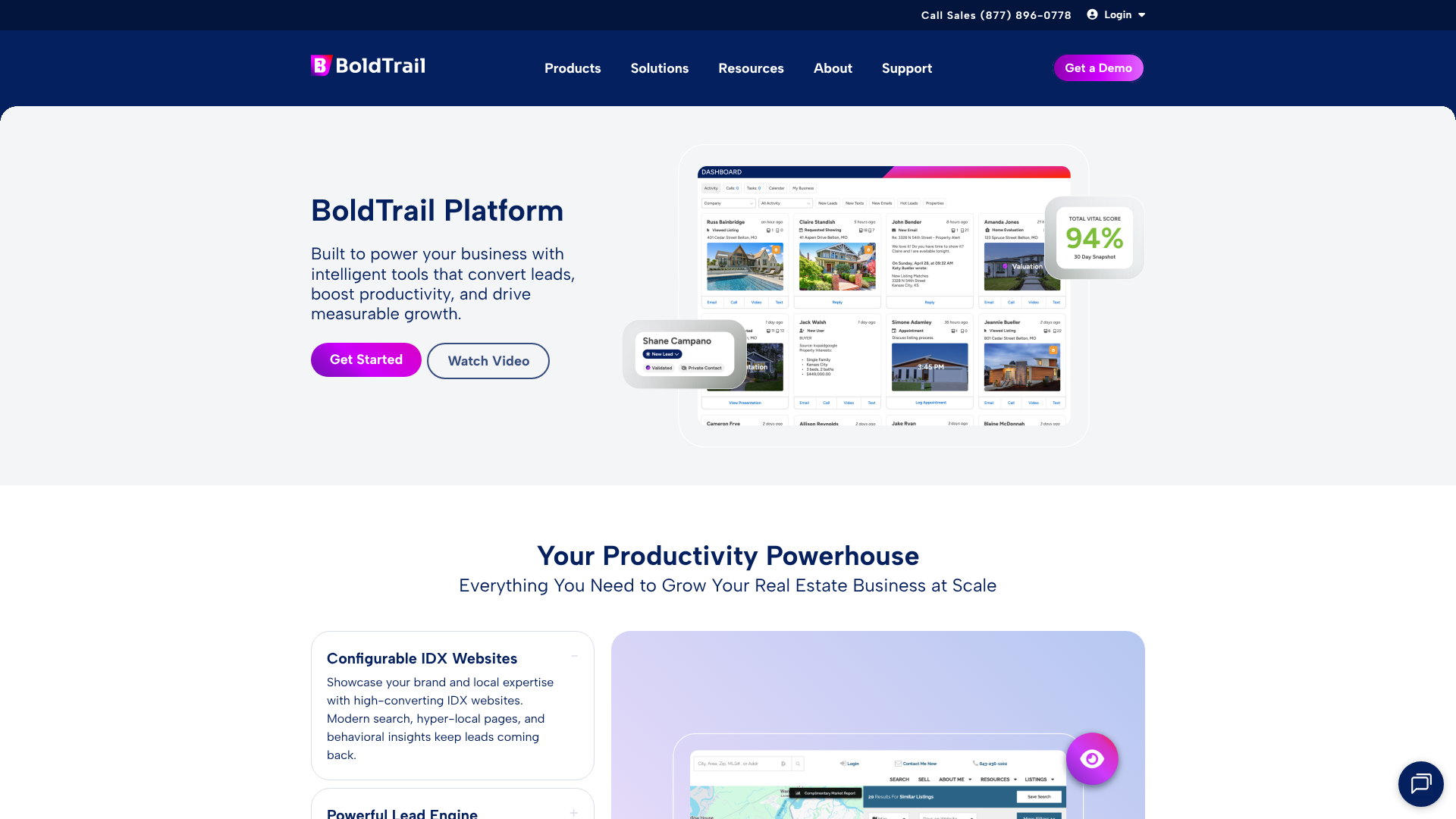
kvCORE is a powerful, comprehensive platform designed for brokerages and high-performing teams. It provides an end-to-end solution that includes a customizable IDX website, a smart CRM with behavioral automation, and extensive marketing tools. Its main strength lies in its ability to generate and nurture leads at scale.
- Key Features: Smart CRM, IDX websites, automated lead routing, built-in dialer, marketing autopilot.
- Pricing: Typically sold at the brokerage level. Agents should check if their brokerage offers it.
- Best For: Brokerages and large teams needing a robust, all-encompassing system.
Pros
- Extremely powerful lead generation and nurturing features.
- Behavioral automation triggers follow-ups based on client activity.
- Fully integrated system reduces the need for other tools.
Cons
- Can have a steep learning curve due to its complexity.
- Not typically available for individual agents to purchase.
2. BoomTown
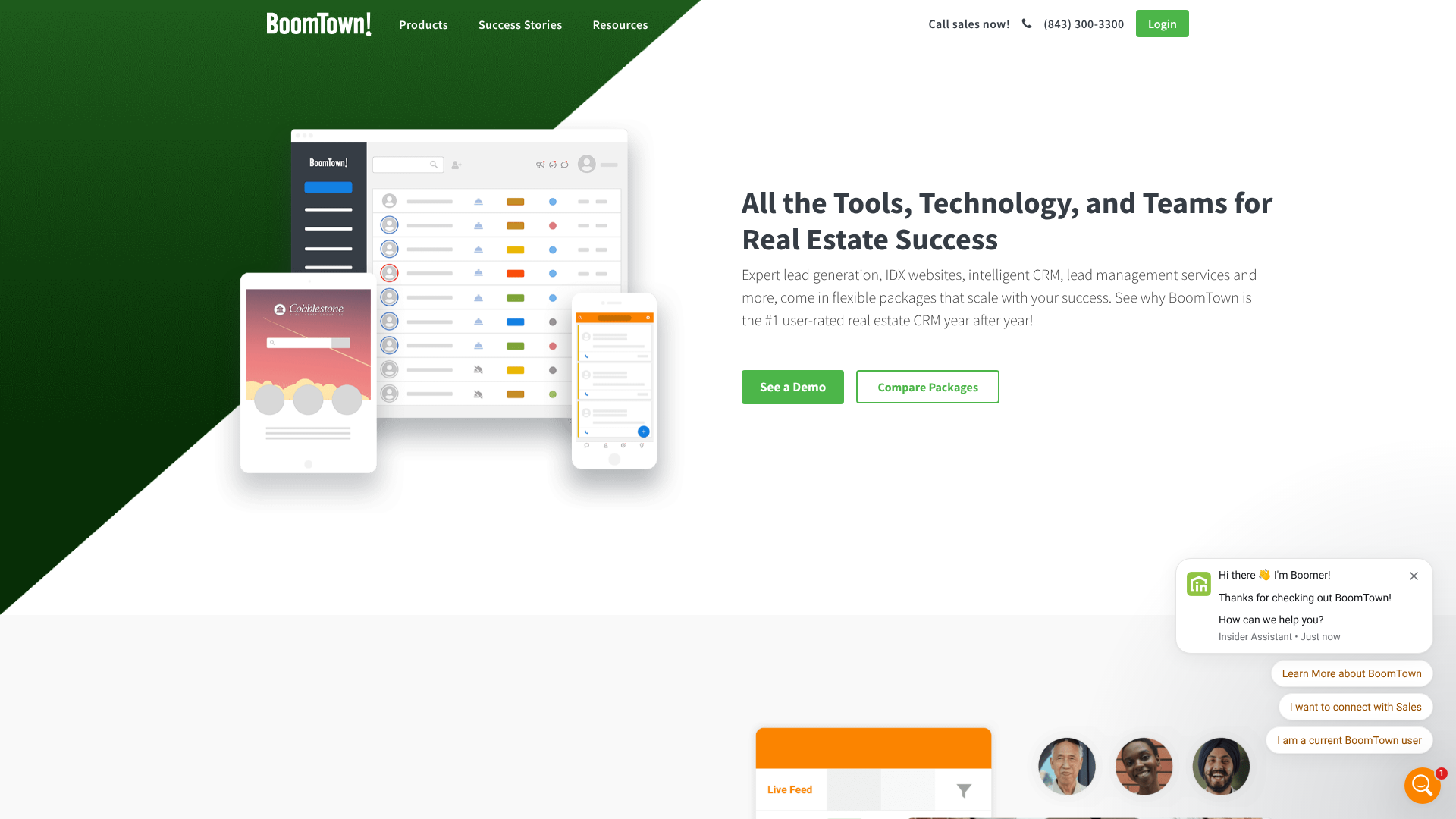
BoomTown is another top-tier platform that excels at lead generation and conversion. It combines a predictive CRM with high-performing IDX websites and a suite of digital marketing services. BoomTown is known for its excellent lead qualification services, which help agents focus on the most promising prospects.
- Key Features: Predictive CRM, IDX websites, lead qualification services, mobile app, success management.
- Pricing: Custom pricing based on market and team size. Visit their website for a quote.
- Best For: Teams and brokerages focused on converting online leads.
Pros
- Excellent at generating and qualifying leads.
- Predictive CRM helps agents know who to contact and when.
- Strong support and coaching to help users maximize ROI.
Cons
- Can be one of the more expensive options on the market.
- Some users find the website customization options limited.
3. Chime
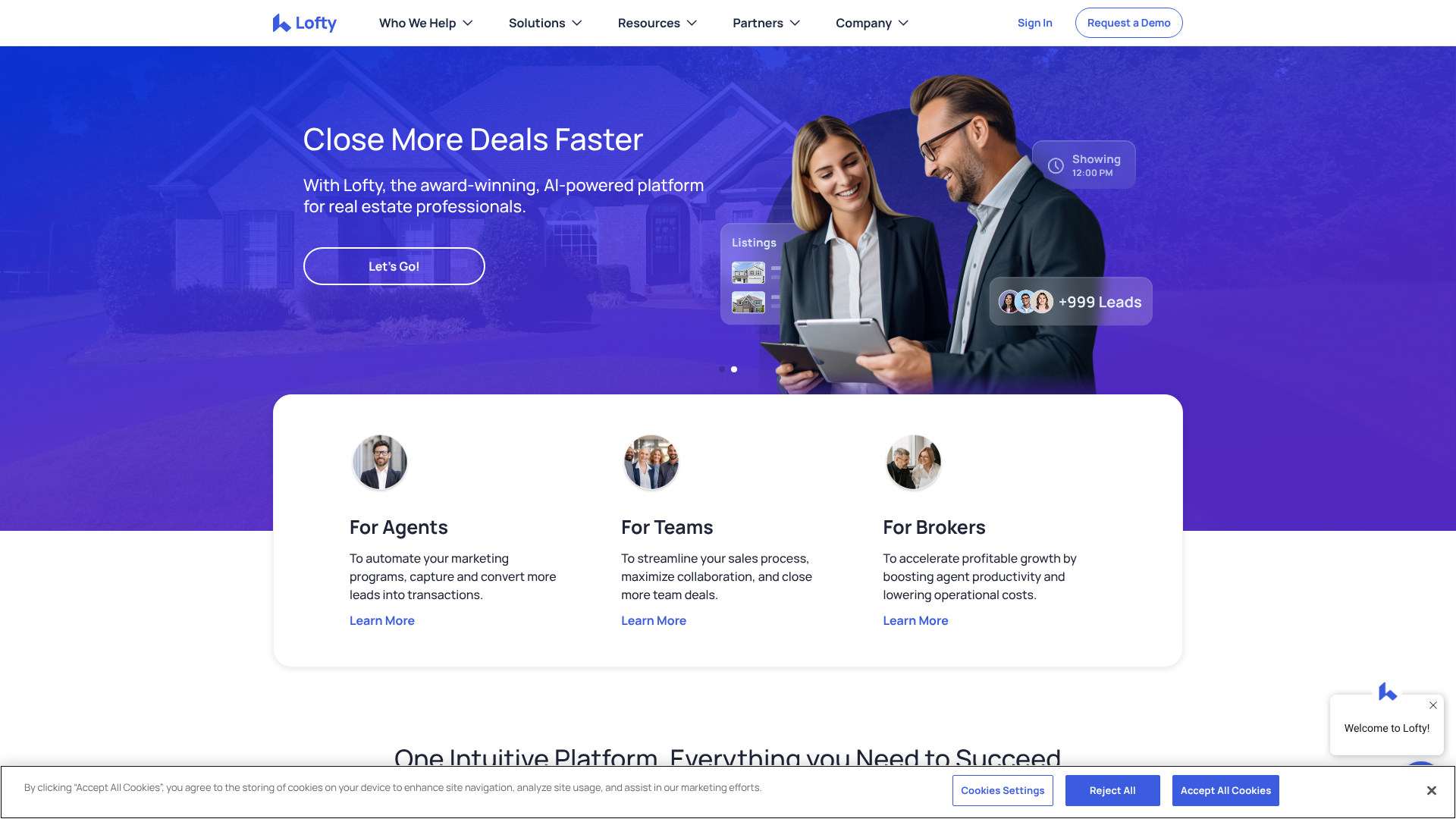
Chime offers a modern, AI-powered platform that includes an IDX website, a feature-rich CRM, and a suite of marketing tools. Its AI assistant, Anna, can engage with leads 24/7, qualifying them and setting appointments. This makes it a strong choice for agents who want to leverage automation to its fullest.
- Key Features: AI Assistant, IDX websites, Power Dialer, team management features, marketing automation.
- Pricing: Multiple tiers are available. Check their website for current pricing.
- Best For: Tech-savvy agents and teams who want to use AI to improve efficiency.
Pros
- AI assistant is very effective at lead qualification.
- Modern and intuitive user interface.
- Strong set of built-in marketing and communication tools.
Cons
- The cost can be a barrier for new or individual agents.
- Some features are only available on higher-tier plans.
CRM & Lead Nurturing
These tools focus specifically on managing your database and automating communication to convert more leads into clients.
4. Follow Up Boss
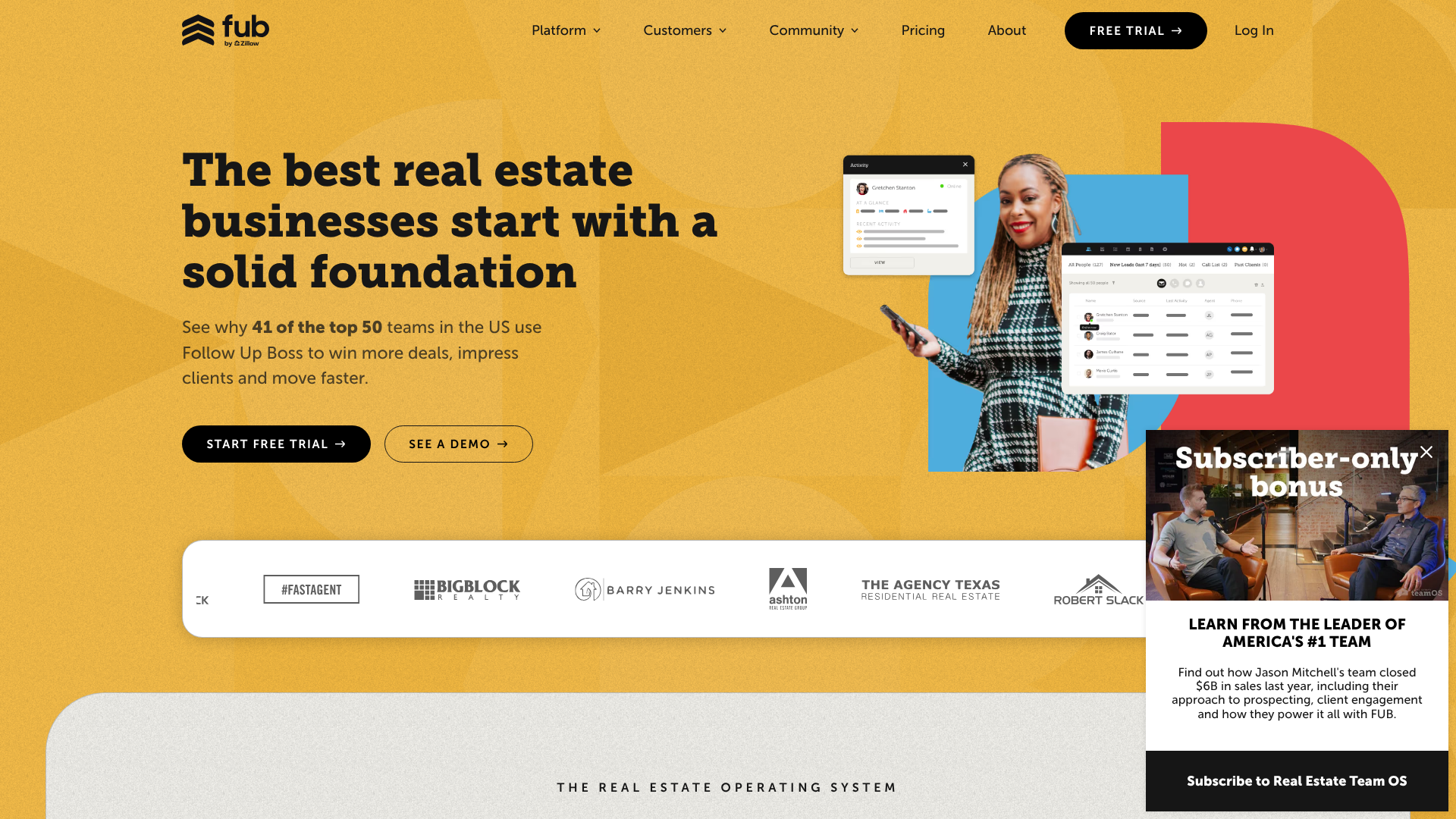
Follow Up Boss is one of the most popular and beloved CRMs in the industry, and for good reason. It's incredibly user-friendly and focuses on one thing: helping you follow up with your leads faster and more effectively. It integrates with over 250 lead sources, pulling all your contacts into one simple, actionable inbox.
- Key Features: Centralized inbox, automated action plans, batch emailing, built-in calling and texting, robust integrations.
- Pricing: Offers several plans for individuals and teams. Visit their site for details.
- Best For: Agents and teams of all sizes who want a simple, powerful CRM focused on conversion.
Pros
- Extremely easy to learn and use.
- Excellent integrations with hundreds of other real estate tools.
- Action Plans automate follow-up for different lead types.
Cons
- Does not include a website or IDX search functionality.
- Can become pricey for larger teams.
5. LionDesk
LionDesk provides a great balance of features and affordability. It's a CRM that includes email marketing, video email and texting, and a power dialer. Its standout feature is the ability to send personalized video messages directly to clients, which can significantly boost engagement and help you stand out.
- Key Features: CRM with contact management, video email and text, AI-powered lead follow-up, Power Dialer.
- Pricing: Offers very competitive monthly plans. Check their website for current rates.
- Best For: Individual agents and small teams looking for a feature-rich CRM at an affordable price.
Pros
- Video email and texting are built-in and easy to use.
- Excellent value for the number of features offered.
- AI assistant helps automate initial lead engagement.
Cons
- The user interface can feel a bit dated compared to some competitors.
- Some advanced features may require a higher-tier plan.
6. Wise Agent
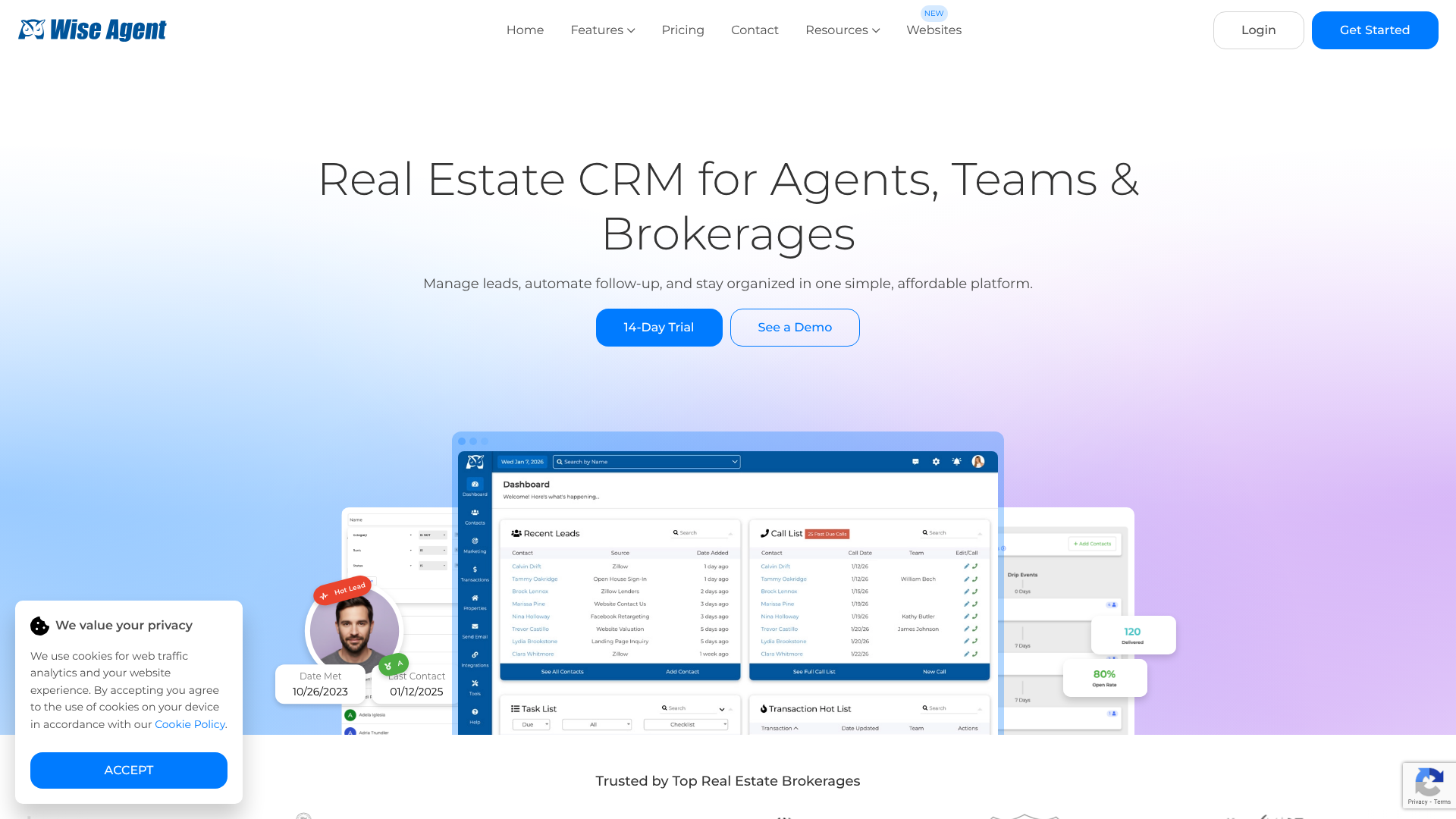
Wise Agent is a well-established CRM known for its comprehensive feature set and excellent customer support. It offers everything you'd expect from a CRM, plus transaction management checklists, marketing automation, and landing page creation. It's a solid, all-around tool that has been serving agents for years.
- Key Features: Contact management, transaction checklists, marketing automation, landing pages, time management tools.
- Pricing: Offers a single, affordable monthly plan with all features included.
- Best For: Agents who want a single platform for CRM and transaction management without a high price tag.
Pros
- Simple, all-inclusive pricing model.
- Combines CRM with robust transaction management features.
- Highly-rated customer support team.
Cons
- The interface is functional but lacks the modern design of newer platforms.
- Can feel overwhelming at first due to the sheer number of features.
Transaction Management
This tool is laser-focused on getting you from contract to close with less stress and paperwork.
7. Dotloop
Dotloop is an industry-leading transaction management platform that simplifies the entire process of closing a deal. It allows agents, clients, and other parties to edit, sign, and share documents from anywhere. Its real-time visibility ensures everyone involved knows the status of the transaction at all times.
- Key Features: E-signatures, document editing and storage, compliance workflows, mobile app, integrations with other tools.
- Pricing: Offers a free version with limited features and a premium version for agents.
- Best For: Any agent or brokerage needing a reliable and secure way to manage real estate transactions digitally.
Pros
- Intuitive and easy for clients to use.
- Provides a complete audit trail for compliance.
- Widely adopted, making collaboration with other agents easier.
Cons
- The free version is quite limited.
- Some users prefer the user interface of competing products.
AI & Productivity
This emerging category of tools uses AI to handle creative and administrative tasks.
8. Trof AI
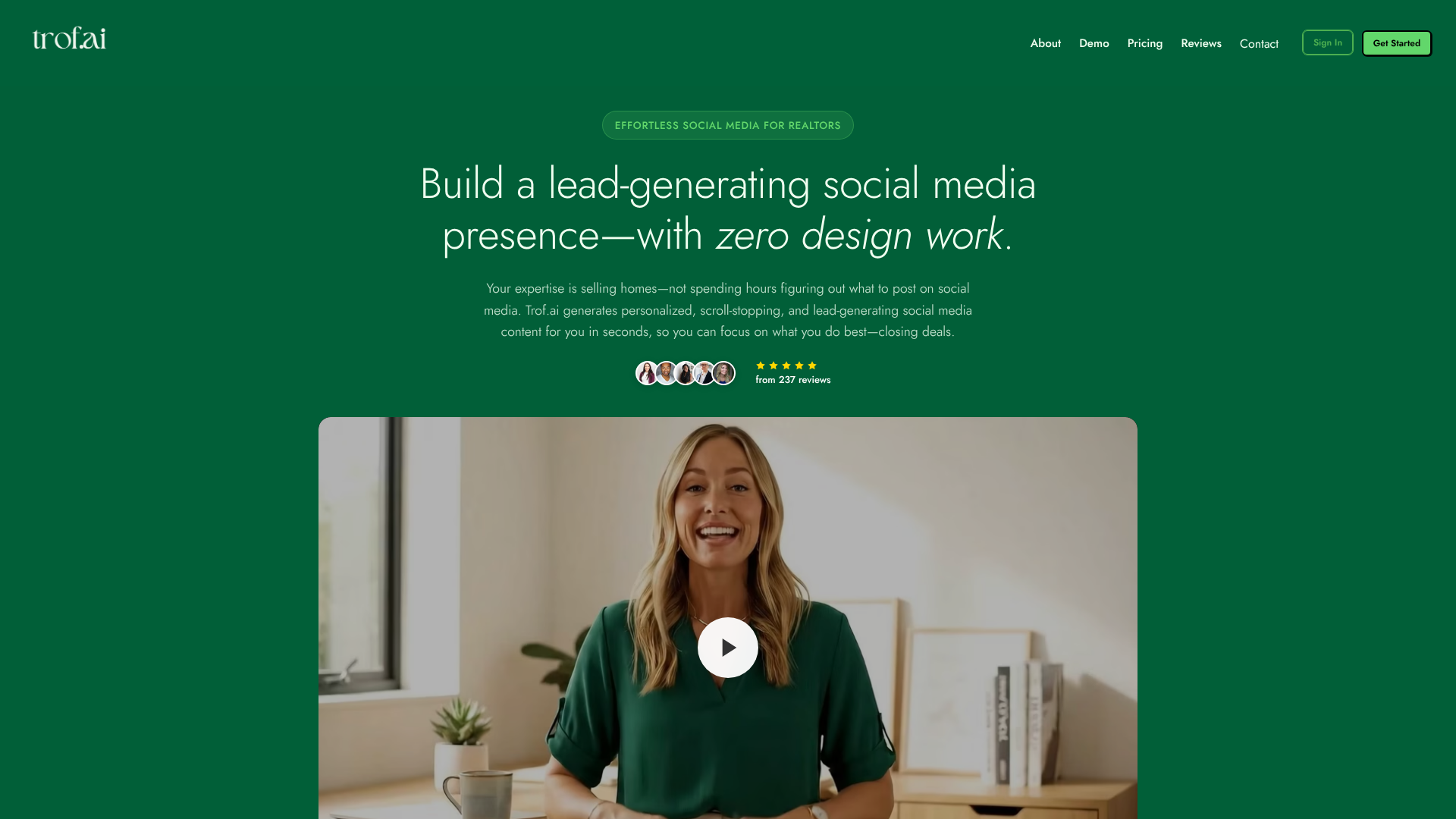
Trof AI is a specialized artificial intelligence tool built specifically for real estate professionals. It helps agents create high-quality content in a fraction of the time. You can use it to generate compelling property descriptions, blog posts, social media captions, and email newsletters, all optimized for the real estate industry.
- Key Features: AI-powered property description generator, social media content creator, email writer, blog post assistant.
- Pricing: Offers different subscription tiers based on usage.
- Best For: Agents who want to improve their marketing content but struggle with writing or lack the time.
Pros
- Specifically trained on real estate data for better results.
- Saves hours of time on content creation tasks.
- Helps maintain a consistent and professional marketing presence.
Cons
- As with any AI, the output may require some minor editing.
- It's a specialized tool, so it doesn't replace the need for a CRM.
Lead Generation & Websites
These platforms are designed to be your primary engine for attracting new online leads.
9. Real Geeks
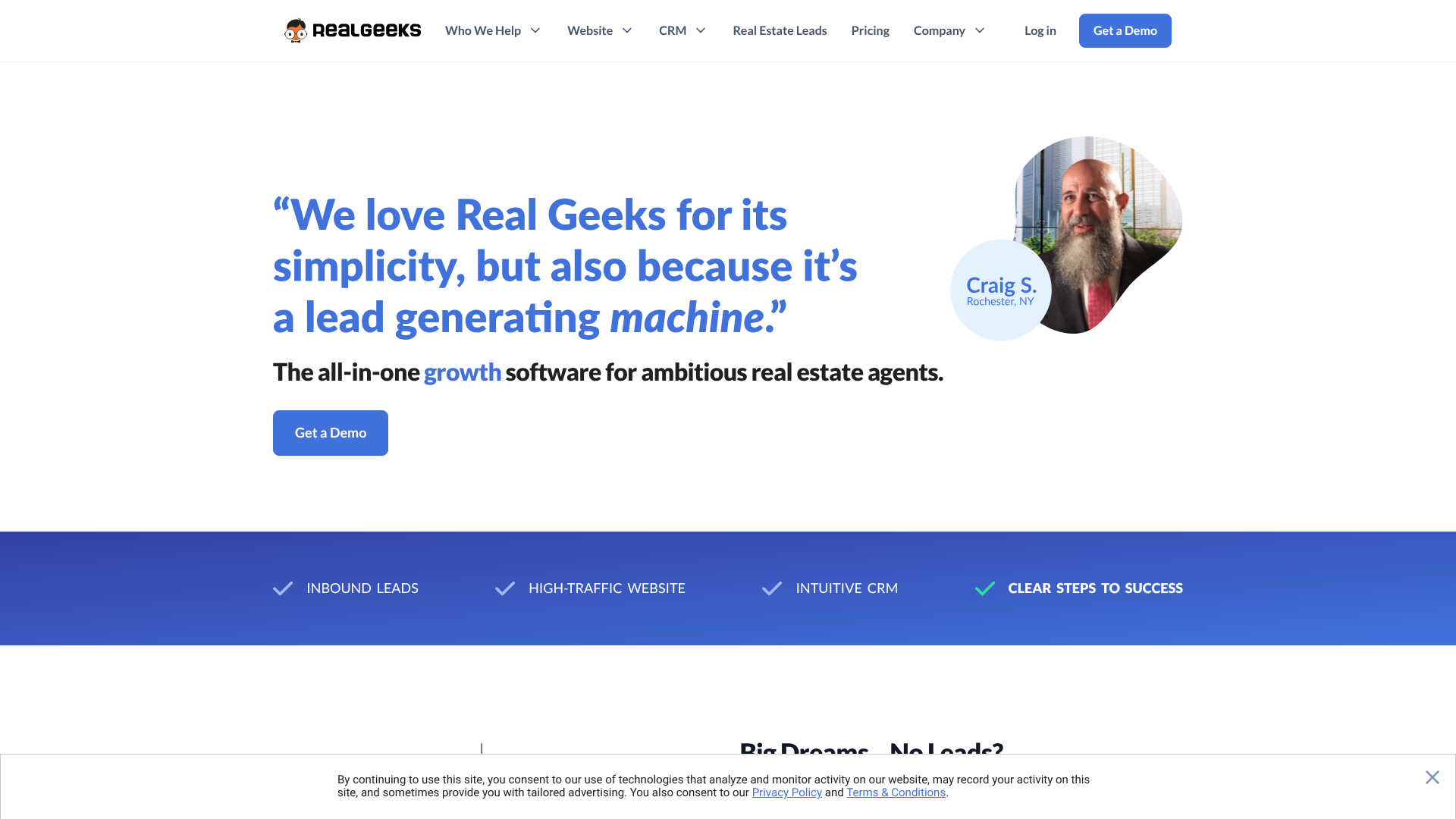
Real Geeks provides a powerful combination of a lead-capture IDX website and a CRM built for conversion. It's known for its fast, user-friendly websites that keep visitors engaged. The platform also includes tools like a Facebook marketing tool and automated home valuation landing pages to drive new leads.
- Key Features: High-performance IDX websites, lead management CRM, Facebook marketing tool, property valuation tool.
- Pricing: Monthly subscription fee plus a one-time setup fee. Visit their site for a demo.
- Best For: Agents and teams who want to generate their own leads through a branded website and Facebook ads.
Pros
- Websites are fast and optimized for lead capture.
- The CRM is straightforward and focused on lead follow-up.
- Good value for a combined website and CRM solution.
Cons
- The CRM is less feature-rich than standalone options like Follow Up Boss.
- Requires a commitment to running your own marketing campaigns.
10. Top Producer
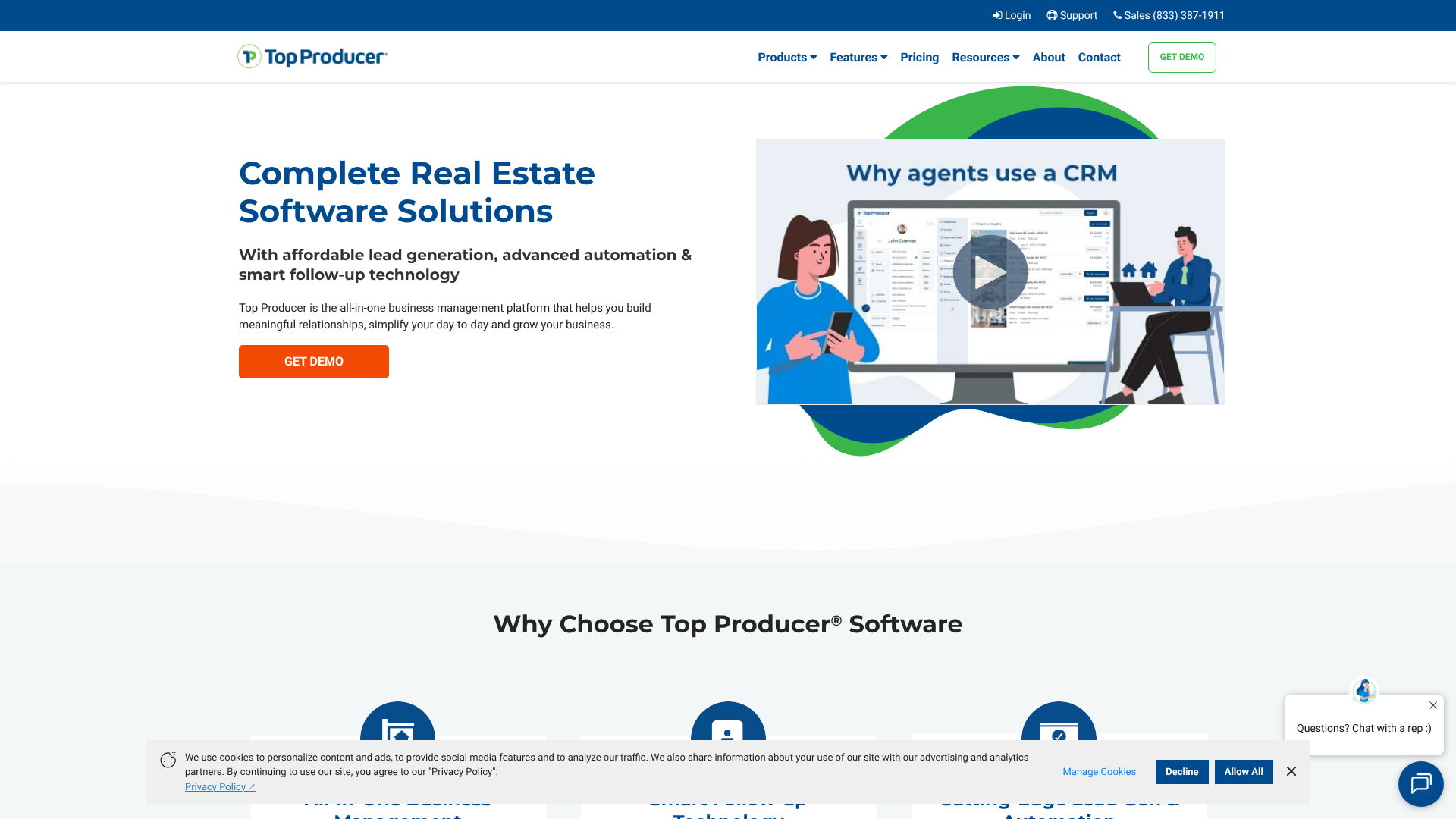
Top Producer is one of the original real estate CRMs and has evolved over the years to remain a relevant choice. Top Producer X CRM is its modern offering, designed to be intuitive and mobile-friendly. It helps agents manage relationships, track pipelines, and automate marketing from a single interface.
- Key Features: Contact and lead management, transaction workflows, email marketing, MLS integration.
- Pricing: Multiple plans are available. Check their website for current offerings.
- Best For: Agents who want a time-tested, reliable CRM from an established company.
Pros
- Deep integration with MLS data for property alerts and CMAs.
- Strong focus on relationship-based follow-up.
- Backed by a company with decades of experience in real estate tech.
Cons
- Some agents may find the design less modern than newer competitors.
- Can be more expensive than some other CRM-only options.
Comparing Costs: What to Expect from Agent Tools
Understanding the pricing structures of real estate tools is crucial for making an informed decision. Costs can vary dramatically, from less than $50 per month for a basic CRM to several thousand for an all-in-one brokerage platform. It's important to look beyond the monthly fee and consider the total value and potential return on investment.
Most software is sold on a subscription basis, typically with these models:
- Per User, Per Month: Common for CRMs like Follow Up Boss. The price scales directly with the number of agents on your team.
- Tiered Plans: Platforms like Chime offer different packages (e.g., Starter, Pro, Enterprise) with more features available at higher price points.
- Platform Fee + Add-ons: Some systems, like BoomTown or kvCORE, may have a base platform fee and then charge extra for services like PPC ad management or lead qualification.
Here is a general comparison of pricing approaches:
| Tool Category | Typical Price Range (per agent/month) | Common Pricing Model |
|---|---|---|
| Standalone CRM (e.g., LionDesk) | $30 – $100 | Per User, Per Month |
| Advanced CRM (e.g., Follow Up Boss) | $70 – $200+ | Per User, Per Month |
| All-in-One Platform (e.g., Chime) | $400 – $1,500+ (for a small team) | Tiered Platform Fee |
| Transaction Management (e.g., Dotloop) | $0 – $35 | Freemium / Per User |
| AI Content Tool (e.g., Trof AI) | $20 – $60 | Tiered Usage Plans |
Pro Tip: Always ask about setup fees, contracts, and cancellation policies. Some platforms require a one-time setup fee and an annual contract, which is a significant commitment.
Frequently Asked Questions (FAQ)

Here are answers to some common questions agents have when choosing technology for their business.
What equipment does a real estate agent need?
A successful real estate agent needs a combination of physical and digital equipment. Digitally, the essentials include a reliable smartphone, a laptop or tablet, and a core software stack: a CRM to manage clients, access to the local MLS, and a transaction management tool for e-signatures and documents. An IDX-enabled website is also crucial for capturing online leads.
Physically, agents need professional business cards, property signs and riders, lockboxes for listings, and a reliable vehicle for property tours. A high-quality camera or a professional photography service is also essential for creating attractive listing photos and virtual tours.
What does every real estate agent need?
At a foundational level, every real estate agent needs three things to operate effectively. First is a robust Customer Relationship Management (CRM) system. This is the non-negotiable hub for all client data and follow-up. Without a CRM, it's nearly impossible to manage a growing database and provide consistent service.
Second is direct access to their local Multiple Listing Service (MLS) to find properties, run comps, and list homes for sale. Third is a professional online presence, which includes a simple website and active social media profiles, to build credibility and attract modern consumers.
What is the best CRM for a new real estate agent?
For a new real estate agent, the best CRM is one that is affordable, easy to learn, and focused on building good habits. Tools like LionDesk or Wise Agent are excellent starting points because they offer a strong set of core features at a very reasonable price point. They provide the necessary tools for contact management and follow-up without the overwhelming complexity or high cost of larger, all-in-one platforms.
Are all-in-one real estate platforms worth it?
All-in-one platforms can be absolutely worth it, but it depends on the agent or team's needs. For a brokerage or a high-producing team, the value of having a single, integrated system for websites, lead generation, CRM, and marketing is immense. It eliminates data silos and streamlines operations significantly.
However, for a new or solo agent, the high cost and complexity might not be justified. In that case, building a more affordable stack of best-in-breed tools (like a WordPress website, Follow Up Boss for CRM, and Mailchimp for email) that integrate well can be a more practical and cost-effective approach.
Final Thoughts
Choosing the right real estate tools for agents is no longer a luxury—it's a fundamental requirement for building a sustainable and successful career. The technology you adopt becomes the backbone of your business, automating administrative tasks, ensuring consistent client communication, and providing the insights needed to grow strategically.
There is no single "best" tool for everyone. The ideal solution depends on your budget, business goals, and technical comfort level. Start by identifying your most significant challenges and seek out tools designed to solve them. Whether you opt for a powerful all-in-one platform or a curated stack of specialized apps, the goal is the same: to work smarter, not harder.
If you're looking for a powerful CRM to organize your business, consider exploring Follow Up Boss for its simplicity or LionDesk for its great value. For teams needing a complete solution, platforms like kvCORE or Chime offer an end-to-end system to manage your entire sales pipeline.