








How to Create a Real Estate Agent Marketing Plan: A 9-Step Guide
Succeeding in real estate requires more than just a license and a passion for properties; it demands a clear, strategic approach to attracting and converting clients. Many agents operate on a day-to-day basis, chasing leads without a cohesive strategy, which often leads to inconsistent results and burnout. A well-structured real estate agent marketing plan is the roadmap that separates top producers from the rest, providing direction, focus, and a repeatable system for growth.
This guide will walk you through the essential steps to build a powerful agent marketing plan from the ground up. You'll learn how to define your brand, identify your ideal clients, choose the right marketing channels, and measure your success. By the end, you'll have a blueprint to create a sustainable business that consistently generates leads and closes deals.
What You'll Learn
- A Strategic Roadmap: A marketing plan is a comprehensive strategy that guides your business goals, not just a simple checklist of daily tasks.
- Foundation First: Before choosing tactics, you must define your personal brand, target audience, and unique value proposition (UVP) to stand out.
- A Balanced Approach: The most effective plans combine modern digital marketing (like SEO and social media) with proven traditional tactics (like networking and direct mail).
- Technology is Key: Executing your plan efficiently requires the right tools, especially a Customer Relationship Management (CRM) system to manage and nurture leads.
- Measure and Adapt: Your marketing plan is a living document that requires regular tracking of key performance indicators (KPIs) to optimize for the best return on investment.
What Exactly is a Real Estate Agent Marketing Plan?
A real estate agent marketing plan is a detailed document that outlines your marketing strategy for a specific period, typically a year. It's not just a list of things to do; it's a strategic framework that answers critical questions about your business: What are your goals. Who are your ideal clients. How will you reach them.
How much will you spend. And how will you know if it's working.
Think of it as the business plan specifically for your marketing and lead generation efforts. It forces you to move from reactive, scattered actions—like boosting a random Facebook post or buying a one-off ad—to a proactive, integrated system. A solid plan ensures every marketing dollar and every hour you spend is a deliberate investment toward a specific, measurable outcome.
This strategic document typically includes an analysis of your current market, a clear definition of your target demographic, your unique value proposition (UVP), specific marketing and advertising tactics, a detailed budget, and key performance indicators (KPIs) to track your progress. It provides the clarity needed to make informed decisions and stay focused on activities that drive real business growth.





The Core Components of a Winning Agent Marketing Plan
Before you can build your step-by-step plan, you need to lay the groundwork. These foundational components are the pillars upon which all your marketing activities will stand. Skipping this stage is like building a house without a blueprint—it’s likely to be unstable and inefficient.
Define Your Foundation: Brand, Niche, and UVP
Your brand is your reputation. It’s what people think and feel when they hear your name. Start by defining your brand identity: are you the tech-savvy agent for millennials, the luxury property expert, or the trusted guide for first-time homebuyers? Your niche is the specific segment of the market you serve, which allows you to become a go-to expert.
Your Unique Value Proposition (UVP) is a clear statement that describes the benefit you offer, how you solve your client's needs, and what distinguishes you from the competition. A strong UVP might be: "I help first-time homebuyers in Austin navigate the complex purchasing process with educational resources and a data-driven approach, ensuring they find a home without the overwhelm."
Set SMART Goals: What Do You Want to Achieve?
Vague goals like "sell more houses" are impossible to act on. Use the SMART framework to set clear objectives:
-
Specific: State exactly what you want to accomplish. (e.g., "Increase my buyer-side transactions.")
-
Measurable: How will you track progress. (e.g., "Close 15 buyer-side transactions.")
-
Achievable: Is this goal realistic with your resources and market conditions.
-
Relevant: Does this goal align with your overall business vision. * Time-bound: When will you achieve this goal. (e.g., "…by the end of the fourth quarter.").
A SMART goal looks like this: "I will generate 60 qualified buyer leads through my website and social media channels over the next six months, resulting in 5 closed transactions."
Identify Your Ideal Client: Who Are You Serving?
You cannot effectively market to everyone. Create a detailed "client avatar" or persona for your ideal customer. Consider their demographics (age, income, family status), psychographics (values, lifestyle, challenges), and real estate needs. Where do they spend their time online.
What are their biggest fears about buying or selling a home.
Understanding your ideal client allows you to tailor your messaging, choose the right marketing channels, and create content that truly resonates with them. An agent targeting downsizing baby boomers will have a very different real estate marketing strategy than one targeting urban professionals looking for condos.
Analyze Your Competition and Market
Conduct a competitive analysis to understand what other successful agents in your area are doing. What are their strengths and weaknesses. What marketing channels are they using. Look for gaps in the market that you can fill.
For example, if no one is creating high-quality video content for your neighborhood, that's a huge opportunity.
Simultaneously, analyze your local market conditions. Are home prices rising or falling? Is it a buyer's or seller's market? Understanding these trends will help you craft relevant messaging and provide more value to your clients.
Establish Your Marketing Budget
Your marketing plan needs to be funded. A common rule of thumb for real estate agents is to allocate around 10% of their gross commission income (GCI) to marketing. For new agents without a steady income, it might be necessary to start with a fixed budget based on what you can afford to invest.
Break your budget down by category: digital advertising, CRM software, direct mail, client events, etc. This will help you control spending and measure the return on investment (ROI) for each channel. Remember, marketing is an investment in your business, not just an expense.
How to Build Your Real Estate Marketing Plan in 9 Actionable Steps
With your foundation in place, it's time to build the structure of your plan. Follow these nine steps to create a comprehensive and actionable marketing roadmap.
Step 1: Conduct a SWOT Analysis
A SWOT analysis is a simple but powerful framework for assessing your business. It involves identifying your:
- Strengths: What do you do well. (e.g., Strong negotiation skills, deep knowledge of a specific neighborhood). * Weaknesses: Where could you improve.
(e.g., Small online presence, limited budget). * Opportunities: What external factors can you use. (e.g., A new large employer moving to town, low interest rates). * Threats: What external factors could harm your business.
(e.g., New discount brokerages, rising interest rates).
This analysis provides a clear, honest picture of where you stand and helps you focus your efforts on capitalizing on strengths and opportunities while mitigating weaknesses and threats.
Step 2: Define Your Unique Value Proposition (UVP)
Using the insights from your SWOT analysis, refine your UVP. This is the core of your marketing message. It should quickly answer a potential client's question: "Why should I work with you over any other agent?" It’s not just a slogan; it’s a promise.
For example, if your strength is data analysis and an opportunity is a growing number of tech-industry buyers in your area, your UVP could be: "I use proprietary data analysis to give tech professionals a competitive edge in securing their ideal home in a fast-moving market."
Step 3: Pinpoint Your Target Audience
Get even more specific with your client avatar from the foundational stage. Instead of just "first-time homebuyers," narrow it down. For example: "First-time homebuyers aged 28-35 in the North Austin suburbs, with a household income of $120k+, who are active on Instagram and follow local food and lifestyle bloggers."
This level of detail makes your marketing decisions easy. You know exactly which social media platforms to use, what kind of content to create (e.g., "A Guide to North Austin's Best Parks and Schools"), and what language to use in your ads.
Step 4: Set Clear, Measurable Goals
Translate your high-level SMART goals into specific marketing objectives and key performance indicators (KPIs). For example, if your goal is to close 12 listings this year, your marketing objectives might be:
- Generate 200 seller leads through online channels.
- Achieve a 10% lead-to-appointment conversion rate.
- Secure one new listing per month.
Your KPIs would be things like Cost Per Lead (CPL), website traffic, social media engagement rate, and email open rate. These metrics tell you if your plan is on track.
Step 5: Choose Your Marketing Channels (The Marketing Mix)
A successful agent marketing plan uses a mix of channels to reach potential clients at different stages of their journey. Don't try to be everywhere at once. Choose a few channels that align with your target audience and budget, and master them.
Digital Marketing Strategies
- Website/IDX & SEO: Your website is your digital storefront. It should be professional, mobile-friendly, and feature an IDX feed for property searches. Focus on local SEO by creating neighborhood-specific pages and blog posts optimized for keywords like "homes for sale in [your neighborhood]."
- Content Marketing: Create valuable content that solves your audience's problems. This could be blog posts, YouTube videos explaining the home-buying process, or market update reports.
- Social Media: Choose platforms where your audience is active. Instagram and Facebook are great for visual property showcases and community building. LinkedIn is powerful for networking with professionals and building your B2B referral network.
- Paid Advertising (PPC): Use Google Ads and social media ads to target specific demographics and generate leads quickly. Facebook lead ads, for example, can be highly effective for capturing contact information.
Traditional Marketing Strategies
- Networking: Attend local community events, join business groups, and build relationships with other professionals like mortgage lenders and attorneys.
- Direct Mail: Postcards, especially "Just Listed" or "Just Sold" cards, are still effective for farming specific neighborhoods.
- Open Houses: A well-executed open house is both a sales tool for a specific property and a lead generation opportunity for you.
Relationship Marketing
- Referral System: According to the National Association of Realtors, referrals remain a top source of business. Create a formal system to ask for and reward referrals from past clients.
- Client Appreciation Program: Stay in touch with your past clients through regular check-ins, small gifts, or annual client appreciation events. This keeps you top-of-mind for future business and referrals.
Pro Tip: The 80/20 rule often applies to marketing. Find the 20% of activities that generate 80% of your results and double down on them. Don't spread yourself too thin across too many channels.
Step 6: Develop Your Content Strategy
Content is the fuel for your digital marketing engine. Plan your content in advance with a content calendar. Your topics should be based on the questions and pain points of your target audience. A good content mix includes:
-
Educational Content: How-to guides, market explanations, tips for buyers/sellers.
-
Community-Focused Content: Highlighting local businesses, events, and neighborhoods. * Promotional Content: Your listings, client testimonials, and success stories.
Step 7: Select Your Technology Stack
Executing a modern marketing plan is nearly impossible without the right technology. Your tech stack should automate tasks, manage leads, and provide valuable data.
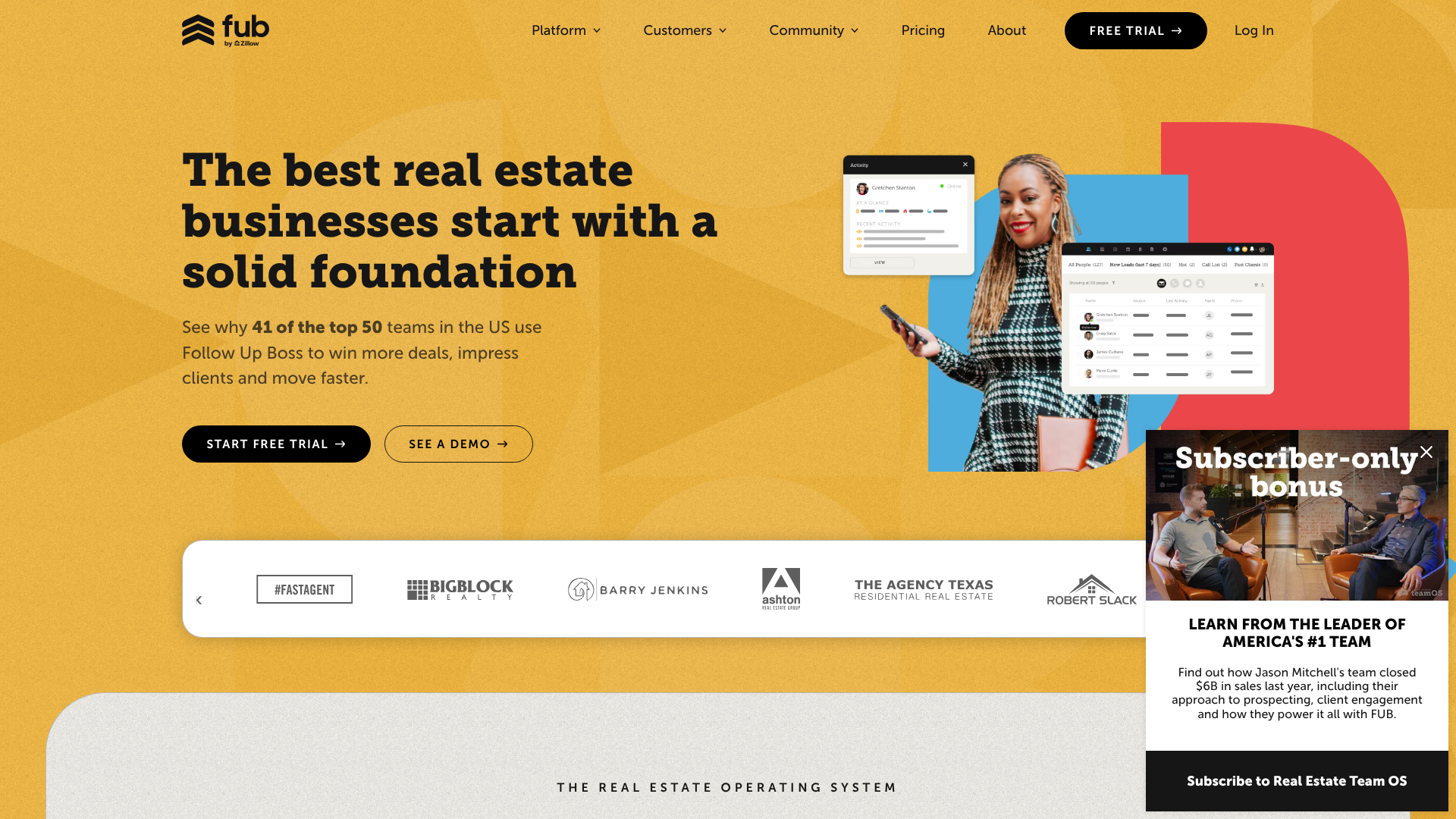
At the heart of your stack should be a Customer Relationship Management (CRM) system. A CRM helps you track every interaction with leads and clients, automate follow-up, and ensure no opportunity falls through the cracks. For agents focused on rapid lead response and team management, a platform like Follow Up Boss is designed specifically for this purpose, helping you engage leads within minutes.
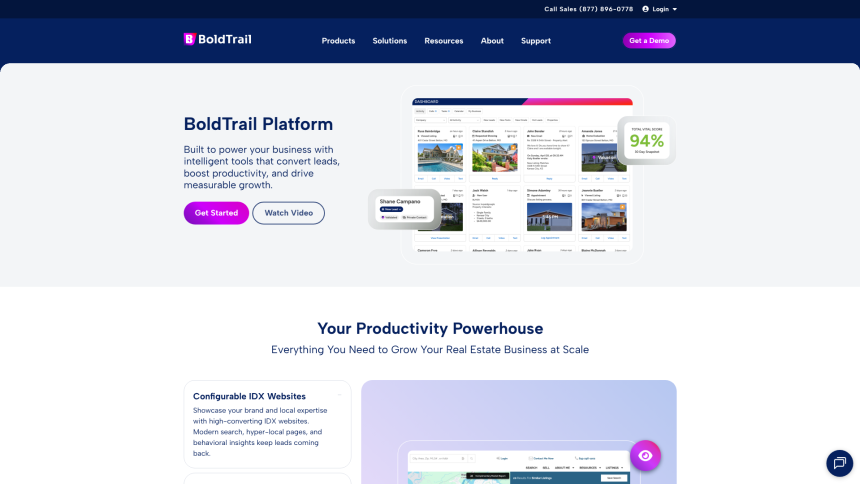
For those who prefer a more all-in-one solution, platforms like kvCORE bundle a website, IDX search, CRM, and marketing automation tools into a single system. If you want to add a personal touch with video, a CRM like LionDesk allows you to easily send video emails and texts. Finally, to streamline the deal itself, transaction management software like Dotloop helps manage paperwork and signatures digitally.
Step 8: Allocate Your Budget
With your channels and tools selected, assign a specific budget to each activity. For example:
- Facebook/Instagram Ads: $500/month
- CRM Software: $150/month
- Direct Mail Farming: $300/quarter
- Content Creation (Video Editor): $200/month
Having a detailed budget prevents overspending and allows you to calculate the ROI for each marketing channel. If you find that your Facebook ads are generating leads for $10 each while another source costs $100 per lead, you know where to shift your funds.
Step 9: Track, Measure, and Adjust
Your marketing plan is not a "set it and forget it" document. Schedule a monthly or quarterly review to analyze your KPIs. Are you hitting your goals. Which channels are performing best.
Where are you wasting money.
Use this data to make informed adjustments. If your blog content is driving a lot of organic traffic but not converting, maybe you need to add stronger calls-to-action. If your direct mail campaign has a low response rate, maybe you need to tweak the design or messaging. Continuous optimization is what turns a good plan into a great one.
Top Property Marketing Tactics to Include in Your Plan
While your overall business marketing is crucial, you also need a specific plan for each property you list. These property marketing tactics are designed to attract the maximum number of qualified buyers in the shortest amount of time.
Professional Photography and Videography
In today's market, professional photos are non-negotiable. Grainy, poorly lit smartphone pictures will kill interest before a buyer even reads the description. Invest in a professional real estate photographer who can capture high-quality, wide-angle shots. A cinematic video tour can also create an emotional connection and help the listing stand out.
Virtual Tours and 3D Walkthroughs
Since 2020, virtual tours have become a standard expectation. Technologies like Matterport allow potential buyers to "walk through" the home from their computer or phone. This is an incredibly powerful tool for attracting out-of-town buyers and filtering out less serious prospects.
Compelling Listing Descriptions
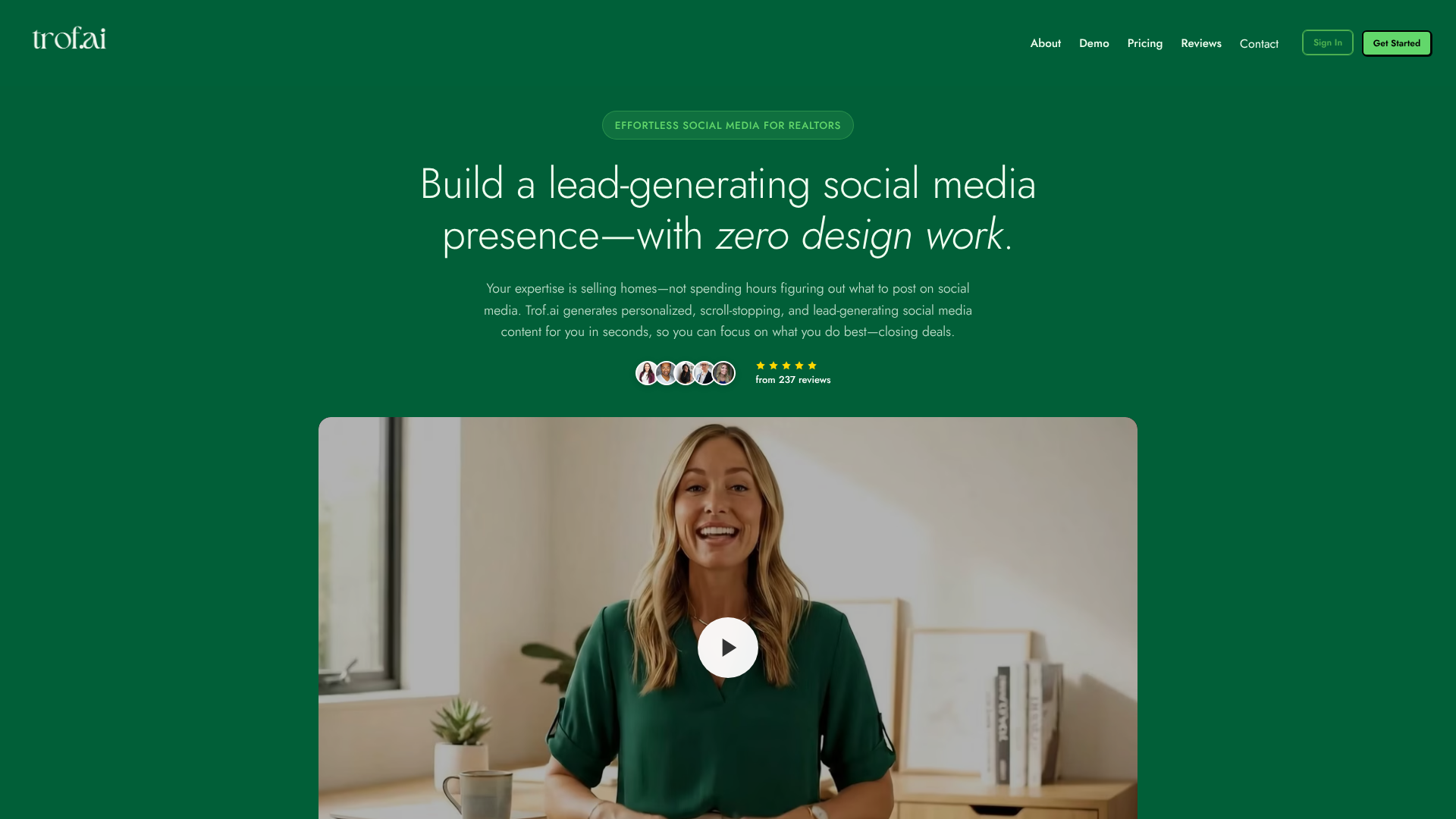
Your listing description should tell a story, not just list features. Instead of "3 bedrooms, 2 baths," paint a picture: "Enjoy morning coffee on the sun-drenched patio overlooking the private, landscaped backyard." Focus on the lifestyle and benefits the home offers. AI-powered tools like Trof AI can help you craft compelling, SEO-friendly narratives for your listings in a fraction of the time.
Targeted Social Media Advertising
Don't just post the listing on your Facebook page. Use the platform's powerful advertising tools to run targeted campaigns. You can create ads that are shown specifically to people in a certain zip code, income bracket, or who have shown interest in real estate websites. A "Coming Soon" campaign can build buzz before the property even hits the MLS.
Strategic Open House Promotion
Promote your open house for at least a week in advance. Use social media, your email list, and local online community groups. During the open house, use a digital sign-in app to capture visitor information directly into your CRM for easy follow-up.
Pros and Cons of Different Real Estate Marketing Approaches
Every marketing strategy has its trade-offs. Understanding these helps you choose the right mix for your goals, budget, and personality. Here’s a breakdown of the most common approaches.
| Marketing Approach | Pros | Cons |
|---|---|---|
| Digital Marketing (SEO, PPC) | Highly measurable ROI, scalable, can target specific demographics. | Can be expensive, SEO takes time to show results, high competition. |
| Content Marketing (Blog, Video) | Builds long-term authority and trust, creates a valuable asset, attracts organic leads. | Very time-intensive, results are not immediate, requires consistency. |
| Relationship Marketing (Networking) | Leads are often high-quality and pre-qualified, low direct financial cost. | Not easily scalable, relies heavily on personal effort and time. |
| Traditional Marketing (Direct Mail) | Can target specific geographic areas, tangible and hard to ignore. | Difficult to track ROI, can be expensive, often perceived as "junk mail." |
Frequently Asked Questions (FAQ)
What are the 4 P's of marketing in real estate?
The 4 P's are a classic marketing framework that applies well to real estate. They are:
-
Product: The property itself—its condition, features, and location. * Price: The listing price, which must be competitive and aligned with market value. * Place: This refers to the location of the property, but also where it's marketed (MLS, Zillow, social media).
-
Promotion: The specific activities you use to advertise the property, such as open houses, digital ads, and professional photos.
What are the 5 C's of a marketing plan?
The 5 C's provide a framework for market analysis when building your plan. They are:
-
Company: Your own strengths, weaknesses, and brand identity. * Customers: Your target audience, their needs, and their buying behavior. * Competitors: Other agents and brokerages in your market and their strategies.
-
Collaborators: Your network of partners, such as lenders, inspectors, and title companies. * Climate: The external market environment, including economic trends, regulations, and technology.
What is the 3-3-3 rule in real estate?
The 3-3-3 rule is a networking and follow-up guideline. While variations exist, a common interpretation is to make 3 new contacts, have 3 follow-up conversations, and write 3 personal notes every day. It's a simple system to ensure consistent relationship-building activities, which are vital for a referral-based business.
How much should a real estate agent spend on marketing?
A widely accepted benchmark is to invest about 10% of your gross commission income (GCI) back into marketing. For new agents who don't have a consistent GCI, it's better to start with a fixed monthly budget based on your business savings. The key is to track your spending and measure the return to ensure your investment is profitable.
What are the 7 parts of a marketing plan?
A comprehensive marketing plan typically includes seven key sections:
-
Executive Summary: A brief overview of the plan. 2. Target Audience: A detailed description of your ideal client.
-
Marketing Goals: Your specific, measurable (SMART) objectives. 4. Market Analysis: An assessment of your competition and the market climate (SWOT/5 C's).
-
Marketing Strategies: The channels and tactics you will use (the 4 P's). 6. Budget: A detailed breakdown of your expected expenses.
-
Metrics: The KPIs you will use to track success and ROI.
Final Thoughts: Your Plan is a Living Document
Creating a real estate agent marketing plan is one of the most impactful actions you can take for your business. It transforms you from a passive agent waiting for the phone to ring into a proactive business owner who is in control of their lead flow and growth trajectory. Remember that your plan is not carved in stone; it's a living document.
The market changes, new technologies emerge, and your goals will evolve. Revisit your plan quarterly to assess what's working, what's not, and where you can optimize. Consistency is the key to success, and your marketing plan is the tool that ensures you stay consistent, focused, and on the path to achieving your goals.
If you're ready to organize your leads and automate your follow-up to effectively execute your plan, exploring a CRM is a great next step. Tools like Follow Up Boss for team collaboration or LionDesk for video outreach can provide the structure you need to turn your strategy into closed deals.