









How to Build Real Estate Agent Marketing Strategies That Close More Deals
In a competitive market, relying on luck and referrals isn't enough to build a sustainable real estate business. The most successful agents operate with a clear plan, using a mix of proven real estate agent marketing strategies to consistently attract clients and fill their pipeline. This isn't about chasing every new trend; it's about building a repeatable system that works for you, your niche, and your market.
This guide will walk you through creating a powerful marketing engine from the ground up. We'll cover everything from defining your brand and choosing the right digital channels to leveraging technology that automates your growth. You'll learn actionable agent marketing ideas that you can implement immediately to stand out, build trust, and ultimately, close more deals.
What You'll Learn
- A Multi-Channel Approach is Key: Success in 2026 requires a balanced mix of digital strategies (like social media and SEO) and traditional, relationship-based tactics (like networking and referrals).
- Personal Branding Builds Trust: Your personal brand is your most valuable asset. It's how you differentiate yourself from competitors and connect with your ideal clients on a human level.
- Technology is a Force Multiplier: Modern real estate marketing tips are often powered by technology. Using a CRM and other tools is essential for managing leads, automating follow-up, and scaling your efforts efficiently.
- Consistency and Measurement Drive Results: The most effective property marketing strategies are executed consistently over time. Tracking your results is the only way to know what's working and where to focus your budget.
What Are Real Estate Agent Marketing Strategies? (The Foundation)
A real estate agent marketing strategy is a comprehensive, long-term plan designed to achieve specific business goals, such as generating a certain number of leads per month or increasing your market share in a target neighborhood. It goes far beyond simply placing an ad or posting on social media. It's the complete blueprint that dictates who you're trying to reach, what message you'll use, which channels you'll focus on, and how you'll measure success.
Think of it as the difference between randomly throwing darts at a board and being a skilled archer aiming for the bullseye. Random tactics might occasionally hit the mark, but a cohesive strategy ensures your efforts are coordinated, efficient, and consistently directed toward your ideal client. This plan integrates everything from your personal branding and website design to your content creation and lead nurturing process.
A solid strategy typically involves two main approaches: inbound and outbound marketing. Inbound marketing focuses on drawing customers in with valuable content and experiences tailored to them. This includes blogging, SEO, and social media. Outbound marketing involves proactively reaching out to potential clients, such as through direct mail, cold calling, or digital ads.
The most effective plans use a blend of both.
Core Pillars of a Winning Property Marketing Strategy

Before you can effectively market your services, you need a strong foundation. These three pillars are non-negotiable for any agent who wants to build a lasting business. They ensure your marketing efforts are targeted, memorable, and effective.



Pillar 1: Defining Your Niche and Ideal Client
Trying to be the agent for everyone often results in being the agent for no one. The most successful agents identify a specific niche and become the go-to expert for that segment of the market. A niche could be a specific type of property (luxury condos, historic homes), a particular client demographic (first-time homebuyers, military families, investors), or a geographic farm area.
When you define your niche, you can tailor your messaging, branding, and marketing materials to speak directly to the unique needs and pain points of that audience. For example, marketing to first-time homebuyers requires educational content about the buying process and financing options. Marketing luxury properties, on the other hand, demands high-end visuals and a focus on lifestyle and exclusivity.
Start by analyzing your market and your own strengths. Do you have a passion for a particular architectural style? Are you skilled at navigating the complexities of investment properties? Choosing a niche you're genuinely interested in will make your marketing feel more authentic and engaging.
Pillar 2: Building an Unforgettable Personal Brand
In real estate, people are hiring you, not just your brokerage. Your personal brand is the combination of your reputation, your values, and the unique experience you provide. It’s what people say about you when you’re not in the room. A strong brand builds trust and helps you stand out in a sea of competitors.
As noted in a popular thread on Instagram's @sellingsocial.co, many agents make the mistake of making their social media all about them and their accolades. The key is to build relationships at scale by providing value to your ideal client. Your brand should be rooted in your values and consistently communicated across all touchpoints, including:
- Professional Headshots and Logo: Invest in high-quality visuals that reflect your brand's personality.
- Unique Value Proposition (UVP): A clear, concise statement that explains what makes you different. What do you offer that other agents don't?
- Consistent Messaging: Your tone of voice and core messages should be the same on your website, social media, and print materials.
Pillar 3: Creating a High-Conversion Website
Your website is your digital storefront and often the first impression a potential client has of your business. It needs to be more than just an online brochure; it must be a lead generation tool. A professional, user-friendly website builds credibility and serves as the central hub for all your marketing efforts.
An effective agent website must include several key features: IDX integration for displaying up-to-date listings, prominent lead capture forms, compelling calls-to-action (CTAs), and valuable content like neighborhood guides and blog posts. It should also be mobile-responsive, as a significant portion of users will access it from their phones.
Building and maintaining a feature-rich website can be complex. This is where all-in-one real estate platforms shine. Solutions like kvCORE and Real Geeks provide agents with powerful, customizable websites that come with built-in IDX, CRM, and lead capture capabilities, taking the technical guesswork out of creating a strong online presence.
Top Real Estate Marketing Strategies for 2026
With your foundational pillars in place, it's time to execute. A successful marketing plan uses a mix of digital and traditional strategies to reach clients at different stages of their journey. Here are some of the most effective tactics for today's market.
Digital Marketing Strategies
Digital marketing is essential for reaching a broad audience and generating a consistent flow of inbound leads. It allows you to target specific demographics and track your return on investment with precision.
Content Marketing & Local SEO
Become the digital mayor of your town by creating content that answers the questions your ideal clients are asking. This positions you as a local expert and improves your website's ranking on Google. Create detailed neighborhood guides, blog posts about local market trends, and articles comparing the pros and cons of different suburbs. This is a long-term play that builds authority and attracts highly qualified organic traffic.
Social Media Marketing
Social media is about building community and relationships, not just posting listings. Choose one or two platforms where your ideal client spends their time and focus on providing value. For many agents, Instagram and Facebook are the most effective.
- Instagram: Use Reels to create short video tours of neighborhoods or offer quick real estate marketing tips. Use Stories for behind-the-scenes content and Q&A sessions to engage your audience.
- Facebook: Engage in local community groups (without being spammy) to establish yourself as a helpful resource. Use targeted Facebook Ads to promote your listings or drive traffic to a lead magnet, like a free home valuation guide.
Video Marketing
Video is the most engaging form of content online. It allows potential clients to connect with your personality and get a true feel for a property before ever stepping inside. Incorporate video into your strategy with high-quality listing videos, virtual tours, neighborhood profile videos, and client testimonial videos. A simple video introducing yourself on your website's homepage can significantly increase trust and connection.
Here's a great overview of building a digital marketing strategy that works today:
Email Marketing & Lead Nurturing
Not every lead is ready to transact immediately. Email marketing is your tool for staying top-of-mind and nurturing leads over time. Develop automated email drip campaigns for new leads that provide value, such as a series of emails with tips for first-time buyers or a monthly newsletter with local market updates.
This is where a powerful CRM is indispensable. Tools like Follow Up Boss or Chime are designed to automate these follow-up sequences, ensuring no lead falls through the cracks. They can trigger specific email campaigns based on a lead's behavior, such as which properties they viewed on your website.
Traditional & Relationship-Based Strategies
While digital is crucial, don't neglect the high-touch strategies that have built real estate empires for decades. These methods are excellent for building deep, local connections.
Networking and Community Involvement
Real estate is a local business. Immerse yourself in your community by attending local events, joining the Chamber of Commerce, or sponsoring a local youth sports team. The goal is to build genuine relationships and become a familiar, trusted face in the community. When people know, like, and trust you, they are more likely to work with you and refer you to others.
Strategic Direct Mail
Direct mail isn't dead; it's just more targeted. Hyper-local postcard campaigns in your farm area can be highly effective. Send out "Just Listed" or "Just Sold" postcards, market updates, or seasonal greetings. The key is consistency.
A one-time mailer is unlikely to generate results, but a consistent presence in mailboxes over several months can build name recognition.
Pro Tip: Elevate your direct mail by including a QR code that links to a video tour of the property or a landing page with a free home valuation tool. This bridges the gap between your physical and digital marketing efforts and makes your results trackable.
The Modern Open House
Transform your open houses from passive showings into active lead generation events. Require sign-ins (you can use a digital tool for this) to capture contact information. Have marketing materials ready, including information about the property, your business card, and a guide to the local area. Engage with every visitor, ask questions, and identify potential buyer or seller leads to add to your CRM for follow-up.
Choosing the Right Marketing Mix & Tools

With so many options, it can be overwhelming to decide where to focus your time and money. The right mix depends on your budget, your target market, and your personal strengths. A successful plan requires a realistic budget and the right technology to execute it efficiently.
How to Set a Realistic Marketing Budget
There's no single magic number for a marketing budget, but a common benchmark is to allocate around 10% of your gross commission income (GCI) to marketing. For new agents without a steady income, it's better to start small and focus on low-cost, high-effort activities like content creation and networking, then scale up as you close deals.
Break your budget down into categories. A sample allocation might look like this:
- Technology (30%): CRM software, website hosting, email marketing tools.
- Lead Generation (40%): Digital ads (Google/Facebook), Zillow/Realtor.com, direct mail.
- Branding & Content (20%): Professional photography, video production, content writing.
- Client Events & Gifts (10%): Closing gifts, client appreciation events.
According to the U.S. Small Business Administration, creating a detailed marketing budget is a critical step in developing your overall marketing plan. Track every dollar you spend and measure the return on investment (ROI) for each channel to optimize your spending over time.
Building Your Real Estate Tech Stack
Technology is what allows a single agent to market like a large brokerage. A well-chosen set of tools, or a "tech stack," can automate repetitive tasks, provide valuable data insights, and help you deliver a better client experience.
- The CRM is Your Core: A Customer Relationship Management (CRM) system is the brain of your marketing operation. It's where you store all your contacts, track interactions, and manage your sales pipeline. A real estate-specific CRM like LionDesk or Wise Agent includes features tailored for agents. For teams focused on rapid lead response and integration, Follow Up Boss is a leading choice.
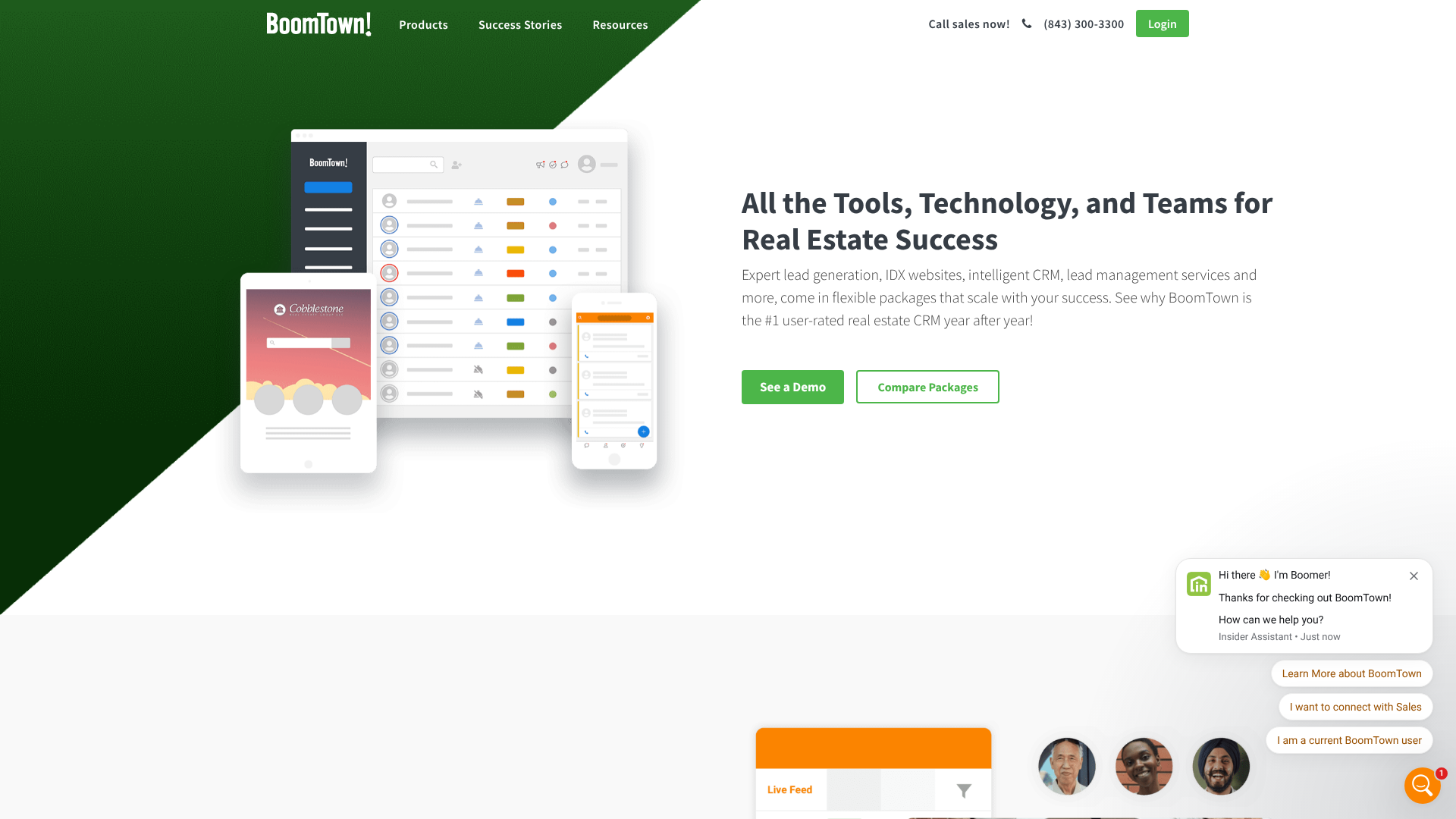
- All-in-One Platforms: For agents who want a single system to manage their website, CRM, and marketing automation, all-in-one platforms are a powerful option. BoomTown and kvCORE are comprehensive solutions that provide lead generation, a consumer-facing website, and a robust backend to manage it all.
- Transaction Management: To keep deals on track and reduce paperwork headaches, a transaction management tool is essential. Dotloop is a popular platform that streamlines the process from offer to close, with features for e-signatures and compliance.
- AI-Powered Tools: Artificial intelligence is making its way into real estate. Tools like Trof AI can help you write compelling property descriptions, social media captions, and email copy in a fraction of the time, freeing you up to focus on client-facing activities.
Comparing Top Real Estate Marketing Platforms
Choosing the right platform is a major decision that impacts your budget and daily workflow. Here’s a look at some of the top options, highlighting what they do best. Note that pricing for many of these platforms is customized and requires a demo.
| Platform | Best For | Key Features | Pricing Model |
|---|---|---|---|
| kvCORE | Brokerages and teams wanting an all-in-one solution | Lead-gen website, smart CRM, marketing automation, business analytics | Per-user monthly fee, often through brokerage |
| BoomTown | Teams and agents focused on paid lead generation | Predictive CRM, lead generation services, agent accountability tools | Monthly subscription + ad spend |
| Follow Up Boss | Agents and teams prioritizing speed-to-lead and integrations | Fast and intuitive CRM, robust mobile app, extensive third-party integrations | Tiered monthly subscription per user |
| Chime | Tech-savvy agents looking for AI-powered features | AI assistant for lead qualification, IDX website, power dialer | Tiered monthly subscription |
Pros and Cons of Key Platforms
kvCORE
- Pros: Extremely comprehensive feature set, strong for team management, excellent automation capabilities.
- Cons: Can have a steep learning curve, may be more than a solo agent needs.
BoomTown
- Pros: Excellent at generating and managing paid leads, provides great insights for team leaders.
- Cons: Can be expensive, heavily reliant on paid advertising.
Follow Up Boss
- Pros: Very easy to use, best-in-class for lead routing and follow-up, integrates with almost everything.
- Cons: Not an all-in-one solution; you need to bring your own website and lead sources.
Frequently Asked Questions About Agent Marketing Ideas
Here are answers to some of the most common questions agents have when developing their marketing plans.
What is the 3-3-3 rule in real estate?
The 3-3-3 rule is a guideline for agent follow-up and communication. While variations exist, a common interpretation is: attempt to contact a new lead within 3 minutes, follow up at least 3 times using different methods (call, text, email), and continue to nurture them for at least 3 weeks before moving them to a long-term campaign. The core principle is the importance of speed, persistence, and a multi-touch approach in converting new leads.
What are three common strategies used in real estate marketing?
Three of the most common and effective property marketing strategies are:
-
Digital Presence: Building a professional website with IDX and maintaining an active, value-driven presence on one or two social media platforms. 2. Niche and Geographic Farming: Focusing marketing efforts on a specific client type (like first-time buyers) or a specific neighborhood to become the recognized expert.
-
Relationship and Referral Marketing: Actively building relationships through community involvement and creating a systematic process for generating referrals from past clients and your sphere of influence.
What are the 7 P's of marketing in real estate?
The 7 P's are a classic marketing framework that applies well to real estate:
-
Product: Your services as an agent, as well as the properties you list. * Price: Your commission structure and the listing price of properties. * Place: The geographic areas you serve and your online presence (website, social media). * Promotion: How you advertise your services and listings (e.g., ads, content, open houses).
-
People: You, your team, your clients, and your professional network. Providing excellent service is key. * Process: The systems you use to manage clients from lead to close, ensuring a smooth experience. * Physical Evidence: Tangible elements that prove your value, such as branding (business cards, signs), client testimonials, and a professional office.
What are the 5 C's of marketing strategy?
The 5 C's provide a framework for analyzing the market landscape before building your strategy:
-
Company: Evaluating your own strengths, weaknesses, and brand positioning. * Customers: Deeply understanding your target client's needs, motivations, and buying behavior. * Competitors: Analyzing what other agents in your market are doing, what their strengths are, and where there are opportunities to differentiate. * Collaborators: Identifying potential partners, such as mortgage lenders, home inspectors, or stagers, who can help you provide better service.
-
Climate: Understanding the broader market environment, including economic trends, interest rates, and local regulations that could impact your business.
Final Thoughts: Building a Sustainable Marketing Engine
Developing effective real estate agent marketing strategies is an ongoing process, not a one-time task. The market is always changing, and your plan must be flexible enough to adapt. The key is to move beyond random acts of marketing and build a cohesive, intentional system that consistently attracts your ideal client.
Start by building a strong foundation with a clear niche and a memorable personal brand. Then, implement a balanced mix of digital and relationship-based tactics, powered by the right technology to keep you organized and efficient. Most importantly, be consistent. Marketing is a marathon, not a sprint, and the agents who commit to a long-term strategy are the ones who build lasting, successful careers.
If you're ready to organize your leads and automate your follow-up, exploring a CRM like Follow Up Boss or an all-in-one platform like kvCORE is a logical next step. Choosing the right tool can provide the structure you need to turn your marketing plan into a predictable source of business.