









Real Estate Agent Marketing Strategies: A Guide to Getting More Leads
In a competitive market, simply being a great real estate agent isn't enough to guarantee a steady flow of clients. You need a powerful and consistent approach to marketing to stand out, build your brand, and attract qualified leads. Developing effective real estate agent marketing strategies is the single most important factor in building a sustainable and profitable business, moving you from chasing deals to having them come to you.
This guide breaks down everything you need to know, from foundational principles to advanced digital tactics. We'll cover how to build a brand that resonates, create content that attracts your ideal clients, and use technology to automate your growth. Whether you're a new agent or a seasoned pro looking to scale, these steps will provide a clear roadmap to success.
What You'll Learn
- Foundational Branding: Discover why defining your niche and personal brand is the critical first step before spending a dollar on advertising.
- Digital Dominance: Learn how to create a high-converting website, master local SEO, and use social media to become a community authority.
- Lead Nurturing Systems: Understand the power of email marketing and CRM software to turn cold leads into closed deals automatically.
- Smart Tech Integration: Explore the best real estate software to streamline your marketing efforts, saving you time and increasing your ROI.
- Budgeting and ROI: Get practical advice on how to allocate your marketing budget effectively and measure what's working.
Understanding the Foundations: What Are Real Estate Marketing Strategies?
Real estate agent marketing strategies are not just a random collection of ads and social media posts. They represent a comprehensive, long-term plan designed to achieve a specific business goal, such as increasing lead generation by 30% or becoming the top agent in a specific neighborhood. It’s the overarching system that dictates how you find, attract, engage, and convert potential clients.
A solid strategy integrates multiple channels and tactics into a cohesive effort. It answers fundamental questions like: Who is my ideal client. Where do they spend their time online and offline. What problems do they have that I can solve.
What makes me different from the hundreds of other agents in my area. Without a strategy, your marketing efforts become disjointed, expensive, and ineffective.
Think of it as the difference between throwing darts in the dark and using a laser-guided system. Random agent marketing ideas, like boosting a Facebook post or printing flyers without a target audience, are the darts. A strategy is the system that identifies the target, aims precisely, and measures the result. It encompasses everything from your personal brand and value proposition to your content calendar, advertising budget, and client follow-up process.
The Core Benefits of a Cohesive Marketing Plan
Investing time in building a strategic marketing plan delivers tangible benefits that compound over time. The most significant advantage is moving from a reactive to a proactive business model. Instead of constantly hunting for your next client, a well-oiled marketing machine works for you 24/7, generating inbound leads and building your reputation even while you sleep.
Here are some of the key benefits:



- Consistent Lead Flow: A multi-channel strategy ensures you aren't reliant on a single source for leads. When referrals are slow, your local SEO and content marketing can pick up the slack, creating a more predictable and stable business.
- Higher Quality Leads: Strategic marketing allows you to target your ideal client profile. This means you attract leads who are a better fit for your services, whether you specialize in luxury homes, first-time buyers, or investment properties. This results in higher conversion rates and more enjoyable client relationships.
- Increased Brand Recognition and Authority: Consistently sharing valuable content and maintaining a professional online presence establishes you as a local market expert. When people in your community think of real estate, your name should be the first one that comes to mind. This authority builds trust and makes it easier to win listings.
- Improved ROI: A planned approach allows you to track your efforts and understand what's working. By analyzing metrics, you can double down on high-performing channels and cut spending on ineffective ones, ensuring your marketing dollars are invested wisely.
How to Build Your Marketing Blueprint: A Step-by-Step Guide
Creating a successful marketing plan involves a series of deliberate steps. This isn't about trying everything at once; it's about building a solid foundation and layering on tactics that align with your goals and budget. Follow this guide to construct your own powerful marketing engine.
Step 1: Define Your Brand and Niche
Before you create a website or post on social media, you must know who you are and who you serve. Trying to be the agent for everyone makes you the agent for no one. A strong brand starts with specialization. Are you the go-to expert for downtown condos, suburban family homes, or rural acreages.
Your niche dictates your messaging, your target audience, and where you focus your marketing efforts.
Your personal brand is your reputation. It's the combination of your unique value proposition, your personality, and the client experience you provide. Ask yourself: What do I want to be known for. Reliability.
Hyper-local knowledge. Tech-savvy marketing. Once you define this, ensure it's reflected consistently across your headshots, logo, website copy, and social media presence.
Step 2: Build Your Digital Foundation (Website & Local SEO)
Your website is your digital storefront. It should be more than an online business card; it must be a lead-generation tool. Key features of an effective real estate website include a modern, mobile-friendly design, an integrated IDX property search, and clear calls-to-action (CTAs) that encourage visitors to sign up for market updates or schedule a consultation.
Once your site is live, you need people to find it. This is where local Search Engine Optimization (SEO) comes in. The most crucial element for a real estate agent is your Google Business Profile (GBP). Claim and fully optimize your profile with high-quality photos, your service areas, and a detailed description.
Most importantly, actively solicit reviews from every single happy client. Positive reviews are a massive ranking factor and build immediate social proof.
Beyond GBP, create content on your website that targets local keywords, such as "homes for sale in [Neighborhood Name]" or "best schools in [City Name]." These hyper-local blog posts or community pages establish your expertise and attract organic search traffic from people looking to move to your area.

Step 3: Master Content and Social Media Marketing
Content marketing is about providing value and building relationships before you ever ask for a sale. Instead of just posting listings, create content that answers your audience's questions and solves their problems. This positions you as a trusted advisor, not just a salesperson.
Video is the most powerful medium for real estate. Here are some proven video ideas:
- Neighborhood Tours: Showcase what it's like to live in the communities you serve. Highlight parks, restaurants, and local events.
- Property Walkthroughs: Go beyond photos with a guided video tour of your listings. Post these on YouTube, Instagram Reels, and TikTok.
- Educational Content: Create short videos explaining the home-buying process, defining real estate terms, or offering market updates.
Choose one or two social media platforms where your target audience is most active and focus on being consistent there. For most agents, this will be Facebook and Instagram. Use these platforms to share your video content, post client testimonials, and engage with your community. The goal is to build a following of local residents who see you as the go-to real estate resource.
Pro Tip: Use an AI writing assistant to help brainstorm content ideas and write social media captions. A tool like Trof AI can help you create hyper-local blog posts and market updates in a fraction of the time, allowing you to maintain consistency without burning out.
Step 4: Implement a Powerful Email Marketing System
Your email list is your most valuable marketing asset because you own it. Unlike social media followers, you have a direct line of communication with your subscribers that isn't controlled by an algorithm. The primary goal of your website and social media should be to capture email addresses.
Once you have a lead, you need a system to nurture them. This is where a Customer Relationship Management (CRM) tool is essential. A real estate CRM like Follow Up Boss or LionDesk helps you organize your contacts and automate your follow-up with email drip campaigns. You can set up different campaigns for different lead types, such as first-time homebuyers, sellers, or past clients.
A simple yet effective strategy is a weekly email newsletter. This keeps you top-of-mind with your entire sphere of influence (SOI). Your newsletter could feature a "Deal of the Week," a local market statistic, or a link to your latest blog post or video. The key is consistency and value.
Step 5: Leverage Paid Advertising Strategically
Organic marketing takes time to build momentum. Paid advertising on platforms like Facebook, Instagram, and Google can deliver leads more quickly. However, running ads without a strategy is a fast way to lose money. Your ads should always point to a dedicated landing page with a clear offer, such as a free home valuation or a downloadable guide for buyers.
Facebook and Instagram ads are excellent for targeting specific demographics and interests in your local area. You can run ads to promote a new listing, drive traffic to a blog post, or generate leads directly with lead forms. Google Ads can be effective for capturing high-intent searchers, such as people typing "realtor near me." This is generally more expensive but can yield higher-quality leads.
Start with a small, manageable budget. Test different ad creatives, copy, and targeting options to see what performs best. Track your cost per lead (CPL) and return on ad spend (ROAS) closely to ensure your campaigns are profitable.

Step 6: Cultivate Referrals and Your Sphere of Influence (SOI)
According to the National Association of REALTORS®, a significant portion of business for agents comes from referrals and repeat clients. Your SOI—your network of past clients, friends, family, and local business contacts—is a goldmine. Nurturing these relationships is one of the highest-ROI marketing activities you can do.
Your CRM is your best friend here. Use it to keep track of important dates like client anniversaries and birthdays. A simple, personalized check-in call or email can go a long way. Host client appreciation events, send small holiday gifts, and actively ask for referrals.
Make it easy for people to refer you by providing them with your digital business card. The goal is to stay top-of-mind so that when someone in their network mentions real estate, your name is the first one they think of.
Step 7: Integrate Technology to Automate and Scale
As your business grows, you can't do everything manually. Technology is the key to scaling your marketing without working 80 hours a week. An all-in-one real estate platform can be a powerful investment. These systems combine many of the tools you need into a single ecosystem.
Platforms like kvCORE or BoomTown often include a lead-generating website, a robust CRM, and marketing automation features. They can automatically send property alerts to new leads, launch email drip campaigns, and even use AI to predict which leads are most likely to transact. While they represent a significant investment, they can provide the infrastructure needed to scale a team and manage a high volume of leads effectively.
Choosing the Right Tools: Top Recommendations for Your Tech Stack
Building an effective marketing system requires the right set of tools. Your "tech stack" can range from a few essential applications to a fully integrated, all-in-one platform. The right choice depends on your budget, business goals, and technical comfort level. Here's a look at some of the top options to power your property marketing strategies.
All-in-one platforms are designed to be a complete business solution. They typically include a website with IDX, a CRM, lead generation tools, and marketing automation. They are ideal for agents or teams who want a single, integrated system to manage their entire client lifecycle.
On the other hand, a best-of-breed approach involves selecting individual tools for each function (e.g., a separate CRM, a separate website builder, a separate email tool). This offers more flexibility but requires you to manage integrations between the different platforms.
| Tool Category | All-in-One (Example: kvCORE) | Best-of-Breed (Example: Follow Up Boss) | Key Consideration |
|---|---|---|---|
| Core Function | Combines website, CRM, and marketing | Specialized CRM for lead follow-up | Do you want one system or flexibility? |
| Website | Included, often template-based | Requires a separate website (e.g., Real Geeks) | Customization vs. convenience. |
| Lead Nurturing | Built-in automated campaigns | Advanced, highly customizable action plans | Level of automation and control needed. |
| Cost | Higher monthly fee for the entire platform | Pay for each tool separately; can be more or less | Total cost of ownership. |
| Best For | Teams and brokerages needing a unified system | Individual agents or teams focused on lead conversion | Your business size and primary goal. |
Top Real Estate Software Recommendations
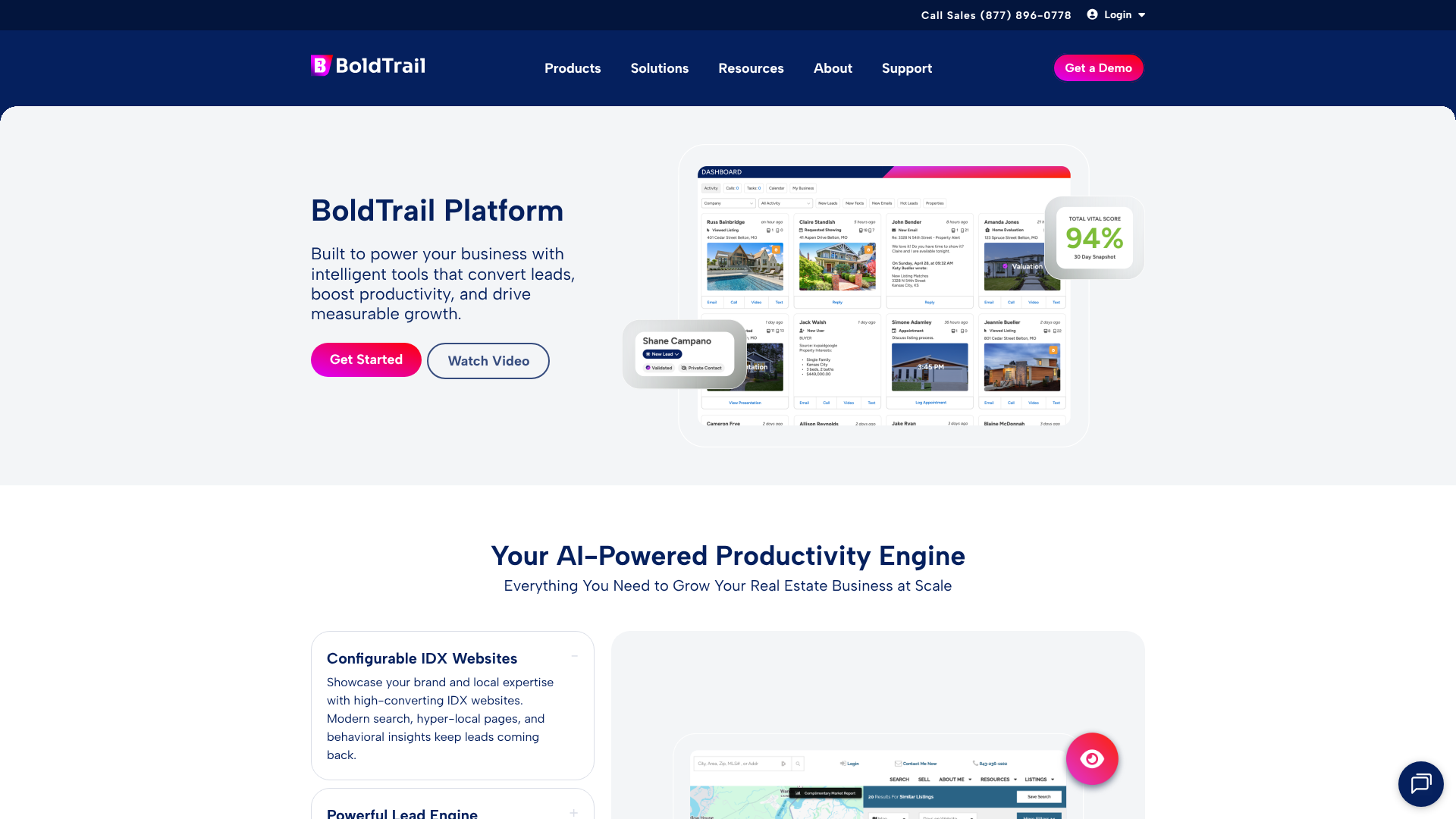
- For All-in-One Power: kvCORE and Chime are leading platforms that provide a comprehensive suite of tools, from lead generation to transaction management. They are built for agents and teams who want to scale their operations on a single platform.
- For Best-in-Class CRM: Follow Up Boss is widely regarded as one of the best CRMs for lead follow-up and conversion. It integrates with hundreds of other apps, allowing you to build a custom tech stack around a powerful central hub.
- For Budget-Conscious Agents: Wise Agent offers a feature-rich CRM at a more accessible price point, making it a great choice for new agents or those with a tighter budget.
Budgeting for Success: Pricing and Cost Considerations
Your marketing budget will be a key factor in determining which strategies you can implement. There's no one-size-fits-all number, but a common guideline is to reinvest 5-10% of your gross commission income (GCI) back into marketing. When you're starting out, this percentage might need to be higher to build initial momentum.
Your costs can be broken down into several categories:
- Technology & Software: This includes your CRM, website hosting, email marketing service, and any other tools. Costs can range from under $100/month for a basic CRM to over $1,000/month for an advanced all-in-one platform.
- Paid Advertising: This is your budget for Google Ads, Facebook ads, or other paid channels. You can start with as little as $10-$20 per day and scale up as you find profitable campaigns.
- Content Creation: This could include costs for professional photography, videography, or hiring a writer. While you can create a lot of content yourself for free, investing in quality can pay dividends.
- Traditional Marketing: This includes expenses for direct mail, flyers, and client appreciation events.
When evaluating costs, focus on the potential return on investment (ROI). A $500/month CRM might seem expensive, but if it helps you close just one extra deal per year, it has more than paid for itself. Track your lead sources and conversion rates diligently to understand which of your marketing investments are generating the most revenue.
Weighing Your Options: Pros and Cons of Popular Strategies
Every marketing strategy comes with its own set of advantages and disadvantages. The most successful agents use a balanced approach, combining different methods to create a resilient lead generation system. Understanding the pros and cons helps you allocate your resources effectively.
| Marketing Strategy | Pros | Cons | Ideal For |
|---|---|---|---|
| Local SEO & Content | High ROI over time, builds authority, generates free organic leads. | Takes a long time to see results (6-12 months), requires consistent effort. | Agents with a long-term vision who are willing to invest time in content creation. |
| Social Media Marketing | Excellent for brand building, community engagement, and visual storytelling. | Can be time-consuming, organic reach is declining, requires constant content. | Agents who enjoy creating content and engaging with their community online. |
| Paid Advertising | Fast results, highly scalable, precise targeting capabilities. | Can be expensive, requires expertise to manage, stops working when you stop paying. | Agents who need leads quickly and have a dedicated budget for advertising. |
| Email Marketing / CRM | High ROI, builds relationships, automates follow-up, you own the list. | Requires a consistent effort to grow your list and provide value. | Every agent. This is a non-negotiable foundational strategy. |
| Direct Mail / Farming | Tangible, less digital noise, effective for hyper-local geographic targeting. | Can be expensive, difficult to track ROI, often perceived as junk mail. | Agents focusing on a specific neighborhood (geo-farming) with a consistent budget. |
Pro Tip: Don't try to master all of these at once. Pick one or two strategies to focus on for the next 90 days. For new agents, the best combination is often focusing on your SOI and mastering one digital channel, like local SEO via your Google Business Profile.
Frequently Asked Questions About Real Estate Marketing
Navigating the world of real estate marketing can bring up a lot of questions. Here are clear, direct answers to some of the most common ones.
What are the 4 P's of marketing real estate?
The 4 P's are a classic marketing framework that applies well to real estate. They are Product, Price, Place, and Promotion.
- Product: This is the property itself. Your marketing should highlight its best features, condition, and unique selling points through high-quality photos, videos, and compelling descriptions.
- Price: This is the listing price. It must be set strategically based on a comparative market analysis (CMA) to attract buyers while meeting the seller's goals.
- Place: This refers to the property's location, which is a primary driver in real estate. Marketing should heavily feature the benefits of the neighborhood, schools, and local amenities.
- Promotion: This covers all the activities you use to market the property, such as online advertising, social media campaigns, open houses, and email blasts. These are the tactics discussed throughout this guide.
What is the 3-3-3 rule in real estate?
The 3-3-3 rule is a guideline for agents to maintain consistent communication and prospecting. It stands for making 3 contacts with new leads, 3 contacts with your sphere of influence (SOI), and 3 contacts with past clients every single day. This simple, actionable rule helps ensure you are consistently nurturing relationships across all parts of your sales funnel, from new prospects to your most loyal advocates. It's a framework for building habits that lead to a predictable pipeline.
What are the most effective marketing techniques in real estate?
The most effective techniques combine digital reach with personal connection. As of 2026, the top strategies include: 1) Hyper-local video content (neighborhood tours, market updates) distributed on YouTube and social media. 2) A fully optimized Google Business Profile with a steady stream of new client reviews. 3) Consistent email marketing to your sphere of influence to nurture relationships and generate referrals.
4) A client-focused website with an easy-to-use IDX search. These techniques work together to build authority, generate inbound leads, and create a sustainable business.
What is the best marketing strategy for a new real estate agent?
For a new agent, the best strategy is to focus on low-cost, high-impact activities. First, diligently work your Sphere of Influence (SOI). Let everyone you know that you are in real estate and ask for their support and referrals. Second, master your Google Business Profile. It's a free tool that can generate high-quality local leads if optimized correctly with photos and reviews. Third, pick one social media platform and go deep.
Create valuable content consistently to build a local following. Avoid spreading yourself too thin or spending a lot on ads until you have a consistent GCI.
Final Thoughts: Building a Sustainable Marketing Engine
Effective real estate agent marketing strategies are not about finding a single magic bullet. They are about building a diversified, consistent system that works for you day in and day out. Success comes from layering foundational branding with powerful digital tactics and leveraging technology to create scalable processes.
Start by defining your brand and building your digital foundation with a professional website and an optimized Google Business Profile. From there, focus on creating valuable content, particularly video, to establish yourself as a local authority. Nurture every lead and relationship with a reliable CRM and consistent email communication.
Whether you choose an all-in-one platform like kvCORE to manage your entire system or build a custom stack around a powerful CRM like Follow Up Boss, the key is to commit to the process. Your marketing is an investment in the long-term health of your business. By implementing these strategies, you can build a predictable, profitable, and rewarding real estate career.