









Custom Real Estate Software: A Buyer's Guide for Modern Agencies
Off-the-shelf real estate software often feels like a compromise. It does 80% of what you need but leaves critical gaps in your workflow, forcing you to use awkward workarounds or multiple disconnected apps. For a growing agency or brokerage, these inefficiencies add up, costing time and lost opportunities. This is where the idea of building or adopting custom real estate software becomes so appealing—a solution built specifically for how you do business, not how a software developer thinks you should.
This guide is for agency owners, brokers, and team leaders who are weighing their options. We'll break down the difference between fully bespoke software and highly customizable platforms, explore the costs and benefits, and help you decide which path is right for your business. We'll cover everything from essential features to the critical build-versus-buy decision, giving you a clear framework for moving forward.
What to Know
- Two Paths to Custom: You can either build a completely new application from scratch (fully bespoke) or adopt a powerful, highly customizable SaaS platform that can be tailored to your specific workflows.
- It's a Strategic Investment: Moving to a tailored solution is more than a tech upgrade; it's a business decision that can create a significant competitive advantage by streamlining operations and improving client service.
- Costs Vary Widely: A fully custom build can cost anywhere from $50,000 to over $500,000, while customizable platforms typically involve monthly per-user fees, setup costs, and a much lower total cost of ownership.
- Focus on Your Core Problem: Before choosing a solution, clearly define the specific problem you're trying to solve. Are you struggling with lead follow-up, transaction management, or agent productivity? The right solution directly addresses your biggest pain point.
What Exactly Is Custom Real Estate Software?
Custom real estate software is any digital tool or platform designed or configured to meet the unique operational needs of a specific real estate business. Unlike generic, one-size-fits-all products, these solutions are built to align perfectly with your agency's workflows, branding, and long-term goals. This approach moves beyond simply using software to actively shaping it into a strategic asset.
However, the term "custom" can mean two very different things in practice. It's crucial to understand the distinction between them before you start your search.
1. Fully Bespoke Property Software
This is what most people think of when they hear "custom." Fully bespoke software is built from the ground up by a team of developers, exclusively for your business. Every feature, button, and workflow is designed according to your exact specifications. You own the code and have complete control over its development and future.
This path offers the ultimate level of personalization. If you have a truly unique business model—like a specialized property niche or a proprietary sales process—a bespoke solution can be built to support it perfectly. The trade-off is significant cost, a long development timeline (often 6-12+ months), and the ongoing responsibility for maintenance, security, and updates.
2. Highly Customizable SaaS Platforms
This is the more common and accessible route for most real estate agencies. These are existing, market-tested SaaS (Software as a Service) platforms that are designed with flexibility in mind. While you don't build them from scratch, they offer extensive customization options through APIs, custom data fields, workflow automation builders, and third-party integrations.
You can create tailored real estate solutions by connecting best-in-class tools or by configuring the platform's internal features to match your processes. For example, you can build custom lead routing rules, create unique transaction checklists, and design personalized marketing campaigns all within the software. This approach gives you many of the benefits of a custom solution—like improved efficiency and a better user experience—at a fraction of the cost and with much faster implementation.




The Core Benefits: Why Go Custom?

Whether you build from scratch or choose a highly adaptable platform, moving away from generic software offers powerful advantages that can redefine how your agency operates. The goal is to turn your technology from a necessary expense into a revenue-generating asset.
Unmatched Workflow Efficiency
The primary benefit is creating a system that works the way your team works. You can automate repetitive tasks, eliminate redundant data entry, and design processes that mirror your proven sales funnel. Instead of forcing your agents to adapt to clunky software, the software adapts to them. This can reduce agent onboarding time by over 30% and free up dozens of hours per agent each month.
Scalability That Grows With Your Brokerage
Generic software often hits a ceiling. As you add more agents, expand into new markets, or increase your transaction volume, off-the-shelf tools can start to lag. A custom or customizable solution is built with growth in mind. You can add new features, increase user capacity, and integrate new technologies as your business evolves, ensuring your software never becomes a bottleneck.
A Unique Competitive Advantage
When all your competitors are using the same handful of tools, a custom solution can set you apart. You can offer a superior client experience through a branded client portal, use proprietary data analytics to find opportunities others miss, or empower your agents with tools that help them close deals faster. This unique tech stack becomes part of your value proposition, helping you attract top talent and win more listings.
Enhanced Data Security and Ownership
With a fully bespoke system, you have complete control over your data security protocols. You're not reliant on a third-party vendor's security infrastructure. For highly customizable SaaS, you benefit from enterprise-grade security managed by the provider, which is often more advanced than what a single agency could build on its own. In both cases, you have clearer ownership and control over your most valuable asset: your client data.
Seamless Integration with Your Existing Tools
A tailored solution can act as a central hub that connects all the other tools you rely on. Whether it's your accounting software, marketing platforms, or transaction management system, a custom API or deep integration capabilities ensure data flows smoothly between systems. This creates a single source of truth and eliminates the need to constantly switch between different applications.
Key Features to Demand in Your Tailored Real Estate Solution
When evaluating or designing a custom system, certain features are non-negotiable for a modern real estate business. These capabilities form the backbone of an effective platform that drives productivity and growth. Here’s what your solution should include.
Advanced CRM and Lead Management
This is the heart of any real estate software. Your CRM should go beyond just storing contacts. Look for features like:
-
Custom Lead Routing: Automatically assign leads to the right agents based on source, location, price point, or agent performance. * Behavioral Tracking: See which properties clients are viewing, what emails they're opening, and when they are most active on your website.
-
Automated Follow-up Plans: Create custom drip campaigns and task reminders to ensure no lead ever falls through the cracks.
Transaction and Document Management
Closing a deal involves dozens of documents, deadlines, and stakeholders. A great system centralizes this entire process. While some custom solutions build this from scratch, many integrate with specialized platforms like Dotloop, which provides a streamlined environment for e-signatures, compliance tracking, and document storage. Key features include customizable checklists, automated deadline reminders, and a secure portal for all parties to access relevant files.
IDX/MLS Integration and Property Listings
Your software must have a reliable, fast, and flexible integration with your local MLS. This allows you to display up-to-date listings on your website and gives your agents access to property data directly within their CRM. A custom solution can offer advanced search capabilities, saved search alerts for clients, and unique ways to feature properties that generic IDX websites can't match.
Marketing Automation and Analytics
Modern real estate marketing is data-driven. Your software should empower you to create, execute, and track marketing campaigns at scale. This includes email marketing, social media posting, and digital ad management. Crucially, it must provide clear analytics that show you which marketing channels are generating the most leads and the highest ROI, allowing you to double down on what works.
Client Portals and Communication Tools
Enhance the client experience by giving them a dedicated, branded space to collaborate with their agent. A client portal can provide access to saved searches, favorited properties, important documents, and direct messaging. This creates a transparent and professional experience that builds trust and sets you apart from competitors who rely on scattered emails and text messages.
AI-Powered Insights and Predictive Analytics
Artificial intelligence is no longer a futuristic concept; it's a practical tool. Some advanced platforms are incorporating AI to analyze your database and predict which past clients are most likely to move in the next 6-12 months. Tools like Trof AI specialize in this, providing agents with a prioritized list of contacts to re-engage. This proactive approach turns your CRM from a passive database into an active lead-generation machine.
The Big Decision: Build vs. Buy (A Highly Customizable Platform)
This is the most critical decision you'll make. Building a fully bespoke application is a massive undertaking, while choosing a customizable platform involves finding the right balance of features, flexibility, and cost. There's no single right answer—the best choice depends on your budget, timeline, technical resources, and business goals.
Here’s a breakdown to help you decide.
| Factor | Fully Bespoke Build | Highly Customizable SaaS Platform |
|---|---|---|
| Initial Cost | Very High ($50,000 – $500,000+) | Low to Moderate (Setup fees + monthly subscription) |
| Timeline | Long (6-18+ months) | Fast (Days or weeks to implement) |
| Flexibility | Unlimited | High (Within the platform's framework) |
| Maintenance | Your responsibility | Handled by the provider |
| Risk | High (Bugs, delays, budget overruns) | Low (Proven, market-tested technology) |
| Best For | Large enterprises with unique models | Most small, mid-sized, and large agencies |
When to Build from Scratch
Opting for a fully bespoke build makes sense in a few specific scenarios:
- You have a truly unique business model: If your core operations are so different that no existing software can support them, a custom build may be necessary.
- You are a large, national brokerage: For enterprises with thousands of agents, the cost of a custom build can be justified by the massive scale and specific compliance needs.
- You plan to license the software: If your goal is to create a proprietary platform that you can sell to other real estate companies, you must build it yourself.
For most, however, the time, cost, and risk associated with a ground-up build are prohibitive.
When to Choose a Customizable Platform
For the vast majority of real estate teams and brokerages, a highly customizable SaaS platform is the smarter choice. These systems offer 95% of the flexibility of a custom build without the associated headaches. They are built by dedicated tech companies with deep expertise in real estate, and you benefit from their continuous innovation, security updates, and customer support.
Platforms like kvCORE or BoomTown are designed as all-in-one solutions that can be configured to manage everything from lead generation to closing. Others, like Follow Up Boss, focus on being the absolute best CRM on the market, with an open API that allows you to connect it with hundreds of other best-in-class tools to create your perfect tech stack.
Pro Tip: Start by mapping your ideal workflow on a whiteboard. Detail every step from lead capture to post-closing follow-up. Then, evaluate customizable platforms based on how closely they can replicate that ideal workflow. This process ensures you choose a tool based on your needs, not just a flashy feature list.
Top Customizable Real Estate Software Platforms to Consider
If you've decided that a customizable platform is the right path, you're in luck. The market is filled with powerful options that can feel like they were built just for you. Here are a few top contenders that offer deep customization and are trusted by thousands of agents.
1. kvCORE
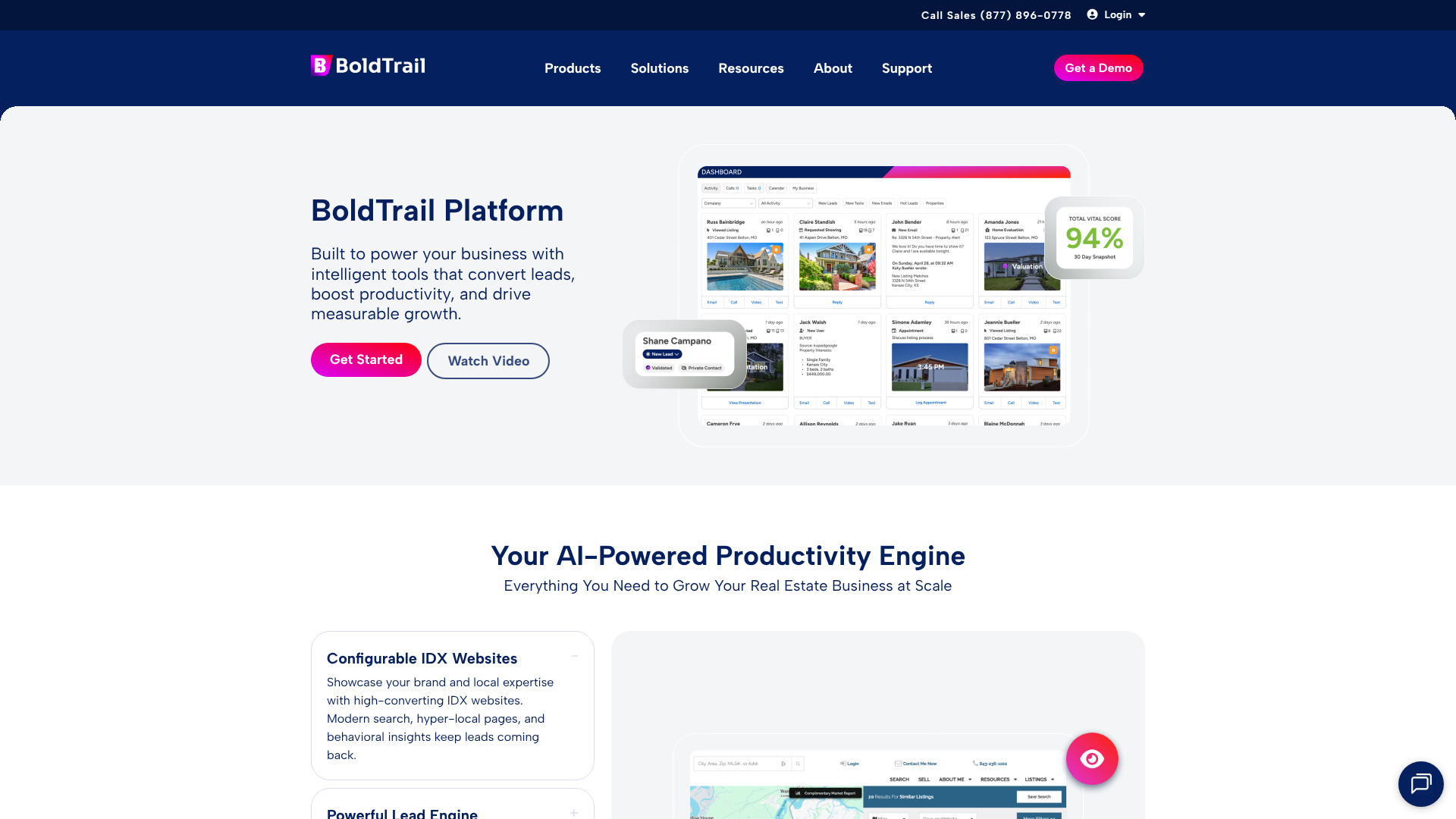
kvCORE is an all-in-one platform designed for brokerages and teams that want a single system to manage their entire business. It combines a powerful CRM with lead generation tools, a customizable IDX website, marketing automation, and business analytics. Its strength lies in its comprehensive nature, eliminating the need to piece together multiple different tools.
Pros
- All-in-One Solution: Consolidates your website, CRM, and marketing into one platform, simplifying your tech stack.
- Powerful Automation: Offers sophisticated behavioral automation that can nurture leads based on their online activity.
- Built-in Lead Gen: Includes tools like a built-in dialer and property boost advertising to help you generate new business.
Cons
- Can Be Complex: The sheer number of features can lead to a steep learning curve for new users.
- Less Flexibility for Solo Agents: Primarily designed and priced for teams and brokerages.
2. Follow Up Boss
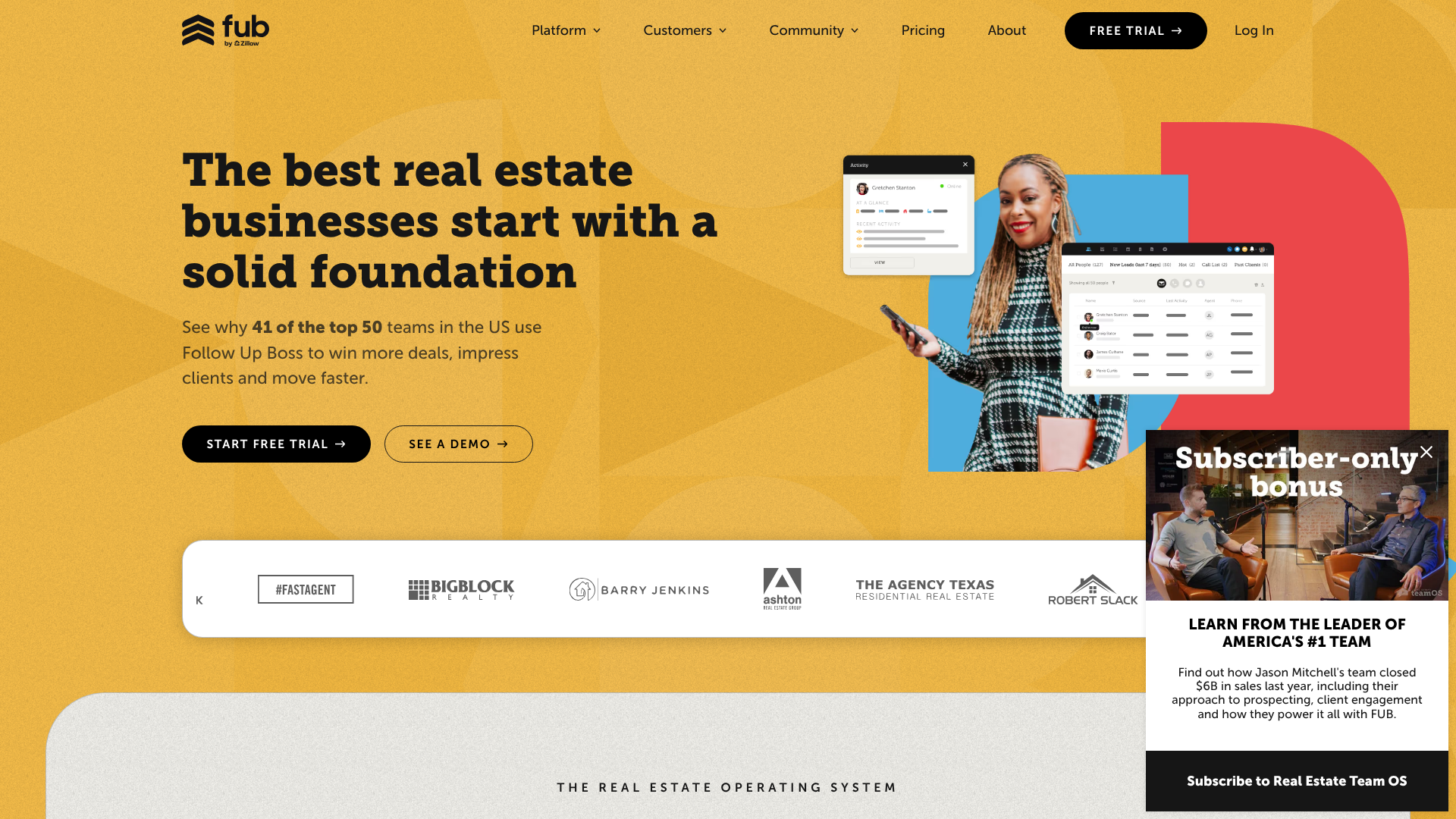
Follow Up Boss is widely regarded as one of the best CRMs in the real estate industry. It focuses on doing one thing exceptionally well: lead conversion. Its clean interface, lightning-fast speed, and powerful integrations make it a favorite among top-producing teams. It's built with an open API, making it one of the most customizable CRMs available.
Pros
- Best-in-Class CRM: Simple, intuitive, and incredibly effective at helping agents follow up with leads.
- Extensive Integrations: Connects with over 250 other real estate tools, allowing you to build your perfect tech stack.
- Excellent Mobile App: Empowers agents to manage their entire pipeline from their phone.
Cons
- Not an All-in-One: You will need to pair it with other tools for your website, transaction management, etc.
- Pricing is Per-User: Can become costly for very large teams, though many find the ROI justifies the expense.
3. Wise Agent
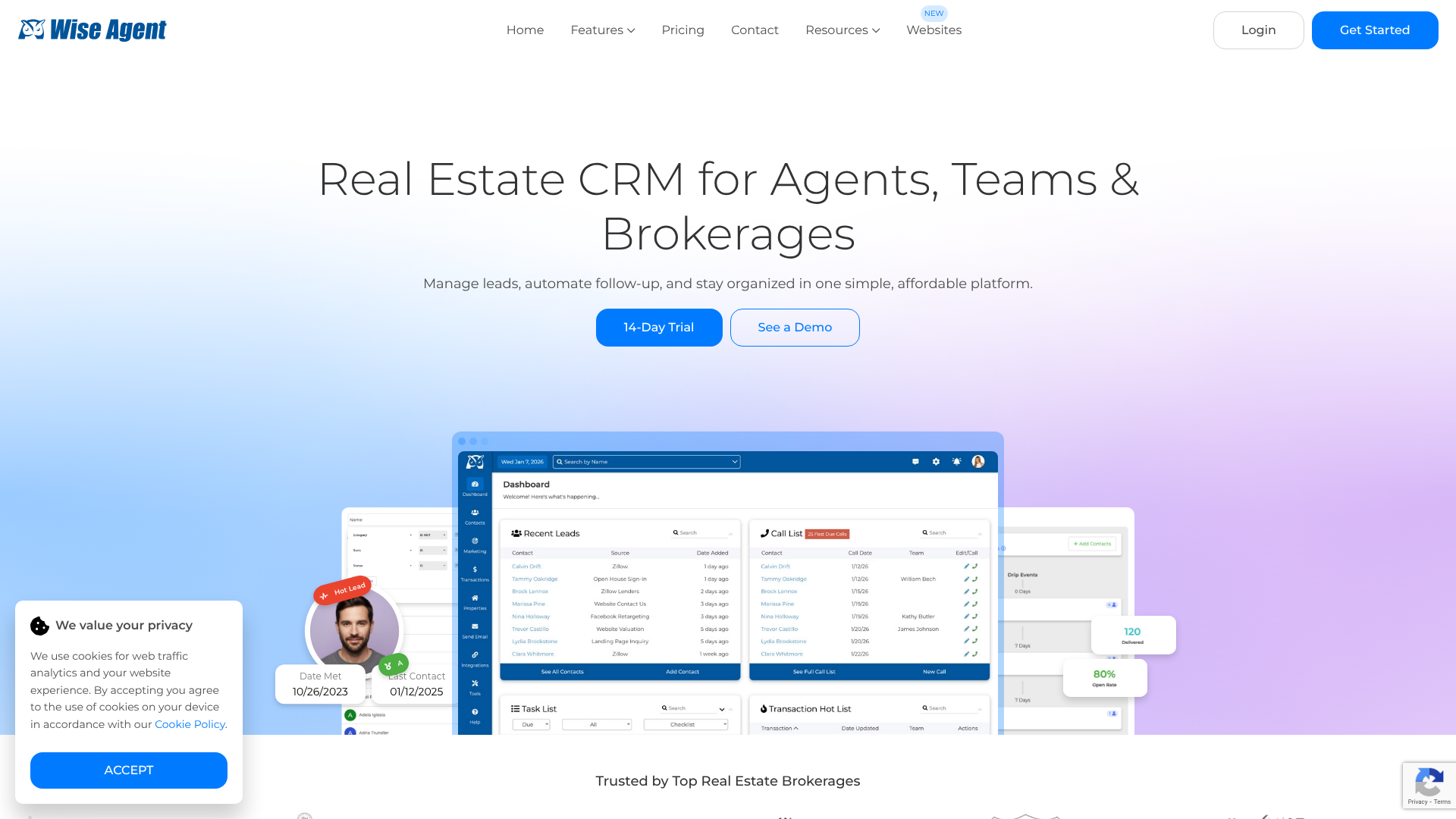
Wise Agent is a feature-rich CRM that offers incredible value for its price. It provides a wide range of tools, including contact management, marketing automation, transaction checklists, and even a landing page builder. It's a great option for agents and teams who want a powerful, customizable system without a hefty price tag.
Pros
- Affordable Pricing: Offers a comprehensive feature set at a very competitive price point.
- Great Customer Support: Known for its responsive and helpful 24/7 customer service.
- All-in-One Functionality: Includes many tools that other CRMs charge extra for.
Cons
- Interface Can Feel Dated: While functional, the user interface isn't as modern as some competitors.
- Learning Curve: With so many features packed in, it can take some time to learn how to use everything effectively.
Understanding the Costs: Pricing Custom Real Estate Software
Budget is one of the biggest factors in the custom software decision. The costs can range from a few hundred dollars a month to a seven-figure investment, so it's essential to understand what drives the price.
The Cost of a Fully Custom Build
Building bespoke software is a major financial commitment. The final price depends on several factors:
- Scope and Complexity: The more features you need, the more it will cost. A simple internal dashboard is far cheaper than a public-facing marketplace with AI features. * Development Team: The cost of developers varies significantly based on their location and experience.
An onshore team in the U.S. will cost more than an offshore team. * Technology Stack: The programming languages and platforms used can influence the cost.
As a rough estimate, a simple custom application might start around $50,000, while a complex, enterprise-grade platform can easily exceed $500,000. This does not include ongoing costs.
The Cost of Customizable SaaS Platforms
This model is much more predictable. Pricing is typically based on a monthly or annual subscription, often on a per-user basis. Costs can range from $50 per month for a basic CRM to $1,500+ per month for an all-in-one platform for a large team. Many platforms, like Chime or Real Geeks, also have one-time setup or onboarding fees, which can range from a few hundred to several thousand dollars.
Don't Forget Hidden Costs
Regardless of the path you choose, be sure to budget for additional expenses:
- Ongoing Maintenance (for custom builds): Budget around 15-20% of the initial development cost annually for maintenance, bug fixes, and updates.
- Data Migration: Moving your existing contacts and data into a new system can be complex and may require professional help.
- Training and Onboarding: Your team will need time and resources to learn the new system.
- Third-Party Subscriptions: If you're using a customizable platform, you'll still need to pay for any additional tools you integrate with it.
Pros and Cons: A Balanced View
Making the right decision requires a clear-eyed look at both the advantages and disadvantages of investing in a tailored software solution.
Pros of a Tailored Solution
- Perfect Fit for Your Workflow: The software is built or configured to match your exact processes, maximizing efficiency.
- Gives You a Competitive Edge: Unique features and a better client experience can help you stand out in a crowded market.
- Scales with Your Business: The system can evolve as your agency grows, so you won't outgrow it.
- Centralized Data: Creates a single source of truth for all your client, property, and transaction information.
Cons of a Tailored Solution
- High Initial Cost (especially for custom builds): The upfront investment can be substantial.
- Long Implementation Time: A full custom build can take many months or even years to complete.
- Maintenance Responsibility (for custom builds): You are responsible for all updates, security, and bug fixes.
- Risk of Poor Execution: A custom project can fail if not managed properly, leaving you with a costly and unusable product.
Frequently Asked Questions (FAQ)
How much does custom real estate software cost?
The cost varies dramatically. A fully custom-built application can range from $50,000 to over $500,000, depending on its complexity. Highly customizable SaaS platforms are more affordable, typically costing between $100 to $1,500 per month for a team, plus potential setup fees.
How long does it take to develop bespoke property software?
Developing a fully bespoke software solution is a lengthy process. A simple application might take 4-6 months, while a more complex platform can easily take 12-18 months or longer from initial design to final launch. In contrast, a customizable SaaS platform can often be implemented and configured in just a few weeks.
What's the main difference between custom and off-the-shelf software?
The key difference is flexibility. Off-the-shelf software forces you to adapt your business processes to its features. Custom or customizable software adapts to your business. It's designed to support your unique workflows, not dictate them, giving you greater efficiency and a competitive advantage.
Do I need a developer to manage a customizable SaaS platform?
No, you typically don't. These platforms are designed to be managed by non-technical users. While some advanced customizations or API integrations might benefit from a developer's help, the day-to-day administration, workflow building, and report generation can all be handled by your existing team.
Final Thoughts
Choosing the right real estate software is one of the most impactful decisions a brokerage leader can make. While the idea of a completely bespoke solution built from scratch is enticing, the reality is that for most agencies, the time, cost, and risk are simply too high. The modern real estate software landscape offers a powerful and practical alternative: highly customizable platforms.
These systems provide the best of both worlds—the flexibility to create tailored workflows and a unique client experience, combined with the reliability, security, and continuous innovation of a market-leading tech company. By carefully evaluating your needs and exploring the top customizable options, you can build a tech stack that not only solves today's problems but also serves as a foundation for future growth.
If you're ready to explore what a customizable platform can do for your business, consider checking out the solutions mentioned in this guide. For an all-in-one system, kvCORE is a powerful choice. If you want the best CRM on the market to build your stack around, Follow Up Boss is an industry leader. And for a budget-friendly yet feature-packed option, Wise Agent delivers exceptional value.