








How to Use a Real Estate Agent Practice Test to Pass on Your First Try
Passing the real estate licensing exam is the final hurdle between you and your new career. The best way to ensure you're prepared is by using a high-quality real estate agent practice test. These tools simulate the actual exam environment, helping you master the material, manage your time, and walk into the testing center with confidence. This guide will walk you through everything you need to know about selecting and using practice exams to your advantage.
Successfully passing your real estate test isn't just about memorizing facts; it's about understanding concepts and applying them under pressure. An effective study plan built around practice questions is the most reliable path to achieving a passing score, often on the very first attempt. We'll break down how to find the best resources and create a strategy that works for you.
What You'll Learn
- Why Practice Tests Are Essential: Understand how a real estate quiz can significantly boost your chances of passing by simulating the real exam and identifying knowledge gaps.
- How to Choose the Right Prep Tool: Learn the key features to look for in an agent practice exam, from question quality and explanations to performance tracking.
- Effective Study Strategies: Discover a step-by-step method for using practice tests to not just measure your knowledge, but to actively improve it and build confidence.
- Top Recommendations and Pricing: Get an overview of some of the most popular and effective real estate exam prep platforms available today, along with what you can expect to pay.
- Common Pitfalls to Avoid: Learn about the common mistakes aspiring agents make when using practice tests and how to steer clear of them for a better outcome.
What Exactly Is a Real Estate Agent Practice Test?
A real estate agent practice test is a preparatory tool designed to simulate the official state and national licensing exams that aspiring agents must pass. It consists of multiple-choice questions covering the same core topics you'll encounter on the actual test, such as property ownership, contracts, financing, agency law, and real estate mathematics. The primary goal is to familiarize you with the format, timing, and types of questions you will face.
These practice exams are more than just a simple real estate quiz. They are structured to mirror the real thing in length and difficulty. For example, the official exam is typically composed of 100 to 150 questions with a time limit, and a good practice test will replicate these conditions. This allows you to not only test your knowledge but also practice your time management skills, which are critical for success.
Think of it as a dress rehearsal. By taking an agent practice exam, you get a realistic preview of the testing experience, which helps reduce anxiety and build the confidence needed to perform well on exam day. It's a low-stakes way to identify your strengths and, more importantly, your weaknesses before they can impact your official score.
Why Practice Tests Are Your Most Powerful Study Tool

While reading textbooks and attending pre-licensing courses are foundational, incorporating a real estate agent practice test into your study routine is what truly solidifies your knowledge. The benefits go far beyond simple memorization; they actively prepare your brain for the specific challenges of the exam.
First, practice tests are the best way to identify your knowledge gaps. You might feel confident about contract law but struggle with financing concepts. A practice exam provides immediate, objective feedback, showing you exactly which topics require more of your attention. This allows you to focus your study time efficiently instead of re-reading material you already know.



Second, they help you master time management. The real estate test is timed, and many well-prepared candidates fail simply because they run out of time. Regularly taking timed practice tests trains you to pace yourself, answer questions efficiently, and allocate the right amount of time to more complex problems. You'll learn to quickly identify and answer easy questions first, saving more time for challenging ones.
Finally, these simulations reduce test-day anxiety. The fear of the unknown is a major source of stress for test-takers. By repeatedly exposing yourself to the exam format, question style, and time constraints through practice, the actual test will feel familiar and far less intimidating. This mental preparation is just as important as knowing the material.
Key Features to Look for in an Agent Practice Exam
Not all practice tests are created equal. To get the most value from your study sessions, it's important to choose a platform that offers features designed for effective learning. When evaluating different options for a real estate quiz, look for these key components.
-
High-Quality, Updated Questions: The questions should closely mirror what's on the current national and state exams. Real estate laws and regulations can change, so ensure the provider updates their content regularly. The best platforms have questions written by real estate professionals and instructors.
-
Detailed Answer Explanations: This is perhaps the most critical feature. A practice test that only tells you if you were right or wrong is of limited use. You need detailed explanations for every question, both correct and incorrect. These explanations teach you the underlying concepts and legal principles, which is how true learning occurs.
-
National and State-Specific Sections: The real estate exam has two parts: a national portion covering general principles and a state-specific portion covering local laws. Your practice tool must offer questions for both. Many aspiring agents focus too much on the national content and are caught off guard by state-specific questions.
-
Performance Analytics and Tracking: A good platform will track your progress over time. It should provide analytics that break down your performance by topic area (e.g., 85% in Contracts, 60% in Finance). This data-driven feedback is invaluable for pinpointing your weak spots and watching your scores improve as you study.
-
Multiple Test Modes: Look for flexibility. An effective tool might offer a timed "exam simulation" mode, an untimed "practice" mode, and topic-specific quizzes. This allows you to start with focused practice on weak areas and then move on to full-length timed exams as your confidence grows.
How to Choose the Right Real Estate Practice Test for You
With numerous providers offering exam prep, selecting the right one can feel overwhelming. Your choice should align with your learning style, budget, and study needs. Here’s a practical approach to making the right decision.
First, consider the source and its reputation. Look for established education companies like PrepAgent, Kaplan, or The CE Shop, which have a long track record of helping students pass. Read reviews and testimonials from recent test-takers in your state. Their experiences can provide insight into the quality and relevance of the practice questions.
Next, evaluate the free offerings. Most reputable companies provide a free real estate agent practice test with a limited number of questions. Take advantage of these trials. This gives you a feel for the platform's interface, the quality of its questions, and the depth of its answer explanations without any financial commitment.
See if the style of explanation clicks with your way of learning.
Finally, assess the overall value, not just the price. A cheap option with outdated questions and poor explanations is a waste of money and time. It's better to invest a bit more in a comprehensive package that includes features like video lessons, digital flashcards, and access to instructors for questions. Consider what you need to succeed and choose the package that best provides those resources.
Top Recommendations for Real Estate Exam Prep in 2026
To help you get started, here are a few of the most highly-regarded platforms known for their effective real estate exam prep tools. These companies consistently receive positive feedback for helping students pass their licensing exams.
1. PrepAgent
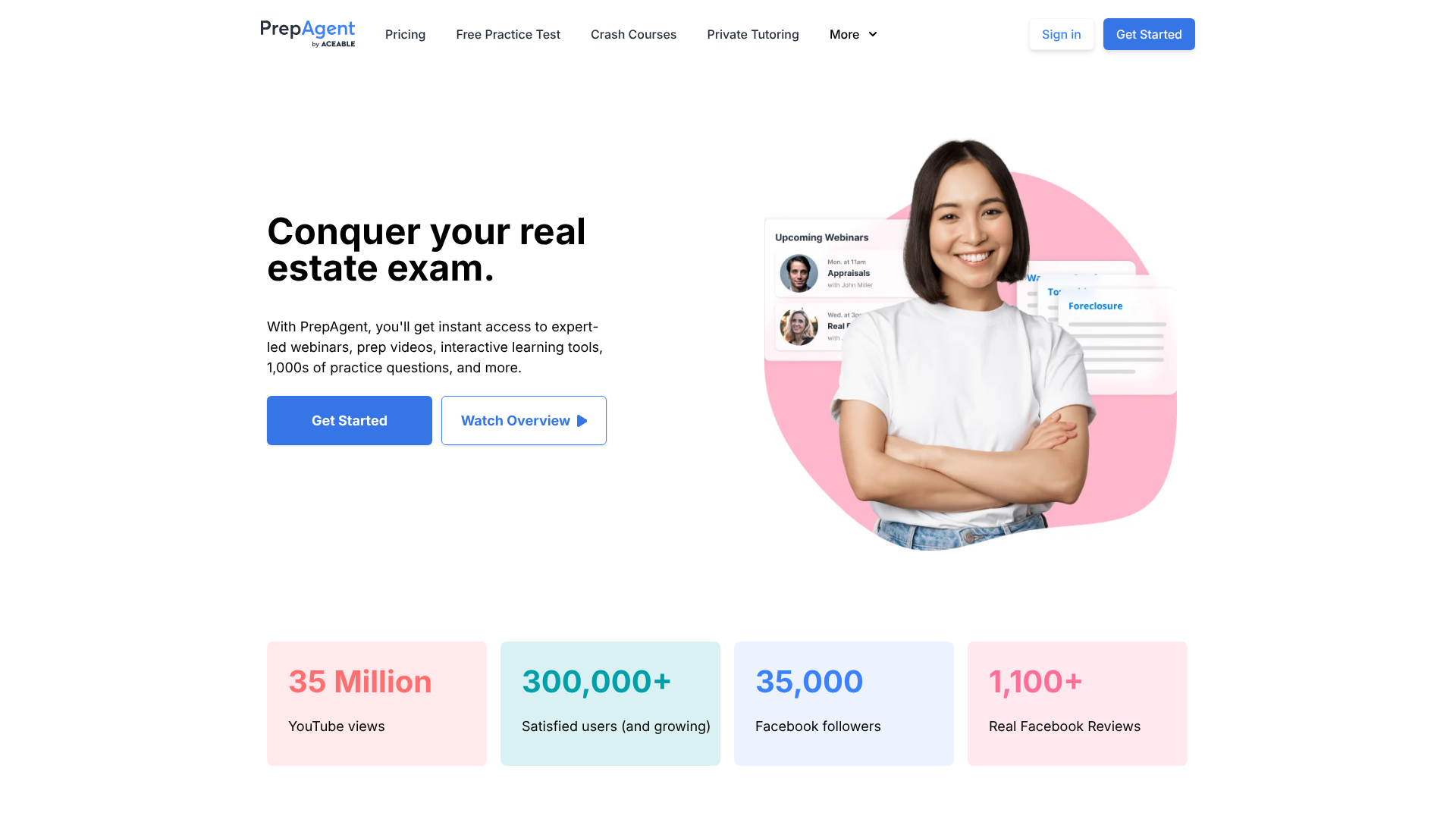
PrepAgent is a favorite among aspiring agents, known for its engaging teaching style and comprehensive resources. They offer live online webinars, recorded videos, and an extensive bank of practice questions for both national and state exams.
- Pros: Interactive webinars, excellent audio lessons for on-the-go learning, and a focus on memory aids and key concepts. Their question bank is robust and comes with clear, concise explanations.
- Cons: The subscription model is time-based (e.g., one week, one month, one year), so you need to estimate your study timeline accurately to get the best value.
2. Kaplan Real Estate Education (KapRE)
Kaplan is a giant in the test prep industry, and their real estate division is no exception. They offer a highly structured learning path with a variety of packages, from simple practice question banks to full pre-licensing course bundles.
- Pros: Highly reputable, structured curriculum, and a large bank of high-quality questions. Their exam prep tools often include performance trackers that adapt to your needs.
- Cons: Can be one of the more expensive options, especially for their more comprehensive packages.
3. The CE Shop
While known for its modern and mobile-friendly pre-licensing courses, The CE Shop also offers excellent exam prep products. Their platform is designed for self-paced learning and is accessible on any device.
- Pros: User-friendly interface, high student pass rates, and packages that often include digital flashcards and an exam-readiness assessment. Their content is consistently updated.
- Cons: Some users may prefer a more traditional, textbook-style approach, whereas The CE Shop is entirely digital.
Understanding the Costs: Pricing for Real Estate Quizzes
Investing in a good real estate practice test is an investment in your career, but costs can vary significantly. Understanding the different pricing models and what you get for your money will help you make an informed choice. Prices generally range from around $50 for basic access to a question bank to several hundred dollars for a comprehensive package.
Most providers offer tiered packages. A basic tier might include just the practice question bank. A mid-tier package could add digital flashcards and summary guides. A premium tier often includes video lessons, live webinars, and sometimes even a pass guarantee, where you get a refund or extended access if you don't pass the exam.
Here’s a general comparison of what you might find:
| Feature | Basic Tier (~$50-$100) | Mid-Tier (~$100-$200) | Premium Tier (~$200+) |
|---|---|---|---|
| Practice Question Bank | Yes | Yes | Yes |
| Detailed Explanations | Yes | Yes | Yes |
| Performance Tracking | Basic | Advanced | Advanced |
| Digital Flashcards | No | Yes | Yes |
| Video/Audio Lessons | No | Sometimes | Yes |
| Live Webinars | No | No | Yes |
| Pass Guarantee | No | Sometimes | Yes |
When comparing costs, consider the length of access. Some subscriptions are for 30 or 60 days, while others might last for six months or a year. Choose a duration that realistically fits your study schedule. Don't just opt for the cheapest plan; select the one that provides the tools you need to feel fully prepared.
The Pros and Cons of Using Practice Tests

While a real estate agent practice test is an invaluable study aid, it's helpful to understand both its advantages and potential pitfalls. Using them correctly is key to maximizing their benefits.
Pros
- Realistic Simulation: The closest you can get to the real exam experience without it being official. This builds familiarity and reduces anxiety.
- Efficiently Identifies Weaknesses: Data-driven feedback shows you exactly where to focus your study efforts, saving you hours of unproductive review.
- Improves Knowledge Retention: Actively recalling information to answer a question (a process called active recall) is far more effective for long-term memory than passively reading a textbook.
- Builds Confidence: Each practice test you take and review boosts your confidence. Seeing your scores improve over time provides powerful motivation.
Cons
- Risk of Memorizing Questions: If you use only one source and take the same tests repeatedly, you might start memorizing the specific questions and answers rather than learning the underlying concepts. To avoid this, use a provider with a large question bank or supplement with a second source.
- False Sense of Security (or Panic): Scoring very high on a practice test might lead to overconfidence, causing you to ease up on studying. Conversely, a low score can cause unnecessary panic. Remember that they are learning tools, not perfect predictors of your final score.
- Cost: While there are free options, the most effective prep tools require a financial investment, which can be a barrier for some.
A Step-by-Step Guide to Maximizing Your Practice Test Score
Simply taking a practice test isn't enough. You need a strategy to turn those results into real knowledge. Follow these steps to get the most out of every agent practice exam you take.
Step 1: Take a Baseline Test
Before you dive deep into studying, take a full-length, timed practice exam. Don't worry about the score. The purpose of this first test is to establish a baseline. It will give you an honest assessment of your current knowledge and highlight the areas that need the most work right from the start.
Step 2: Analyze Your Results Thoroughly
This is the most important step. After completing a test, don't just look at your score. Go through every single question, including the ones you got right. For each question:
- If you got it wrong: Read the detailed explanation until you fully understand why the correct answer is right and why your answer was wrong. Don't move on until the concept is clear.
- If you got it right: Don't skip it! Make sure you got it right for the right reason. Did you truly know the answer, or did you just make a lucky guess? Read the explanation to reinforce the concept in your mind.
Step 3: Focus Your Study on Weak Areas
Use the analytics from your practice test to guide your study plan. If you scored poorly on questions about real estate finance, dedicate your next few study sessions to that topic. Re-read the relevant chapters in your textbook, watch videos, and then take topic-specific quizzes until your scores improve.
Pro Tip: Create your own flashcards for concepts you consistently get wrong. The physical act of writing down the question and answer helps solidify the information in your memory. Focus on vocabulary and legal principles that are tripping you up.
Step 4: Simulate Real Exam Conditions
As you get closer to your exam date, make your practice sessions as realistic as possible. Take full-length, timed exams in a quiet environment without distractions. Turn off your phone and don't take breaks other than those allowed in the actual test. This builds the mental stamina required for the real thing.
Step 5: Rinse and Repeat
Continue this cycle of testing, analyzing, and focused studying. With each cycle, you'll see your scores climb and your confidence grow. Many students who struggle with the exam, particularly with tricky areas like math, find this structured approach to be the key. As one user on a real estate Facebook group mentioned, failing multiple times can be incredibly frustrating, especially with math problems.
A targeted practice approach helps overcome these specific hurdles.
Frequently Asked Questions About the Real Estate Test
Here are answers to some common questions aspiring agents have about using practice exams and preparing for the real test.
How many practice questions should I do before the real estate exam?
There's no magic number, but quality is more important than quantity. A good goal is to work through several hundred unique questions from a reputable source. The key is to ensure you are thoroughly reviewing the explanations for each one. Completing 500 questions with detailed review is far more effective than rushing through 2,000 questions without learning from your mistakes.
Are free real estate practice tests reliable?
Free tests can be a great starting point to get a feel for the exam format and a specific provider's platform. However, they often have a limited number of questions that may not be as up-to-date as paid versions. Use them as a supplementary tool or for an initial assessment, but consider investing in a paid resource for your core preparation, as they typically offer more comprehensive and current material.
What is a passing score on the real estate exam?
A passing score typically ranges from 70% to 75%, but this varies by state. It's crucial to check the specific requirements for your state's licensing board. For example, the California Department of Real Estate requires a score of 70% to pass the salesperson exam. Always aim for scores well above the minimum on your practice tests to give yourself a comfortable buffer.
How long should I study for the real estate exam?
The ideal study time depends on your background and schedule. Most experts recommend dedicating 2-3 months to prepare after completing your pre-licensing coursework. This allows for a steady, consistent study schedule without cramming. A structured plan of 5-10 hours per week during this period is a common and effective approach.
Final Thoughts: Your Next Steps After Passing the Exam
Passing your real estate exam is a monumental achievement that opens the door to an exciting new career. The diligent preparation you do now, centered around a high-quality real estate agent practice test, is the single most important factor in your success. By simulating the exam, analyzing your performance, and focusing on your weak areas, you're not just studying—you're training to win.
Remember to choose a prep tool with updated questions, detailed explanations, and robust analytics. Use a strategic cycle of testing and reviewing to build both your knowledge and your confidence. With the right approach, you can walk into the testing center fully prepared to earn your license on the very first try.
Once you've passed your exam and are ready to build your business, the right technology becomes essential for managing clients and deals. As you start your career, consider exploring a reliable CRM to keep your new business organized. Platforms like Follow Up Boss or Wise Agent are designed to help new agents manage leads, track communication, and close their first deals successfully.