









Real Estate Software for Investors: A 2026 Buyer's Guide
Successful real estate investing in 2026 is a game of speed, accuracy, and efficiency. Gone are the days of relying solely on spreadsheets and gut feelings. To find profitable deals and manage a growing portfolio, you need powerful systems. The right real estate software for investors can automate tedious tasks, provide critical data for decision-making, and give you a significant edge over the competition.
These platforms are no longer a luxury; they are a fundamental part of a modern investor's toolkit.
This guide will walk you through everything you need to know about choosing the best platform for your specific needs. We'll break down the different types of software, the essential features to look for, and how to align a tool with your unique investment strategy, whether you're flipping houses, wholesaling, or building a rental empire.
What to Know
- Categorize Your Needs: Investor software isn't one-size-fits-all. It falls into three main categories: deal analysis (finding and vetting properties), property management (handling tenants and finances), and CRM (managing leads and relationships).
- Focus on Core Features: Prioritize tools with accurate property data, comprehensive financial calculators (like ROI and cash-on-cash return), and robust reporting. These features form the backbone of any solid investment analysis.
- Match Software to Strategy: Your investment approach dictates your software needs. A house flipper requires strong rehab estimation and comp analysis tools, while a landlord needs excellent rent collection and expense tracking features.
- Don't Overlook the CRM: As you scale, managing contacts—from motivated sellers to contractors and lenders—becomes critical. A dedicated Customer Relationship Management (CRM) tool is essential for organizing your pipeline and ensuring no opportunity is missed.

What is Real Estate Software for Investors?
Real estate software for investors is a specialized category of digital tools designed to streamline every stage of the investment lifecycle. This includes finding potential properties, analyzing their financial viability, managing the acquisition process, overseeing the property or portfolio, and eventually, managing its sale. It replaces manual processes, cluttered spreadsheets, and guesswork with data-driven workflows and automation.
The evolution of these tools has been significant. Early investors might remember using Microsoft Excel to build their own cash flow models. While functional, this approach was time-consuming, prone to errors, and lacked real-time market data. Today's real estate investment software integrates directly with data sources like the MLS, public records, and market trend reports to provide instant, actionable insights.
To better understand the landscape, it helps to break these platforms into three primary types:
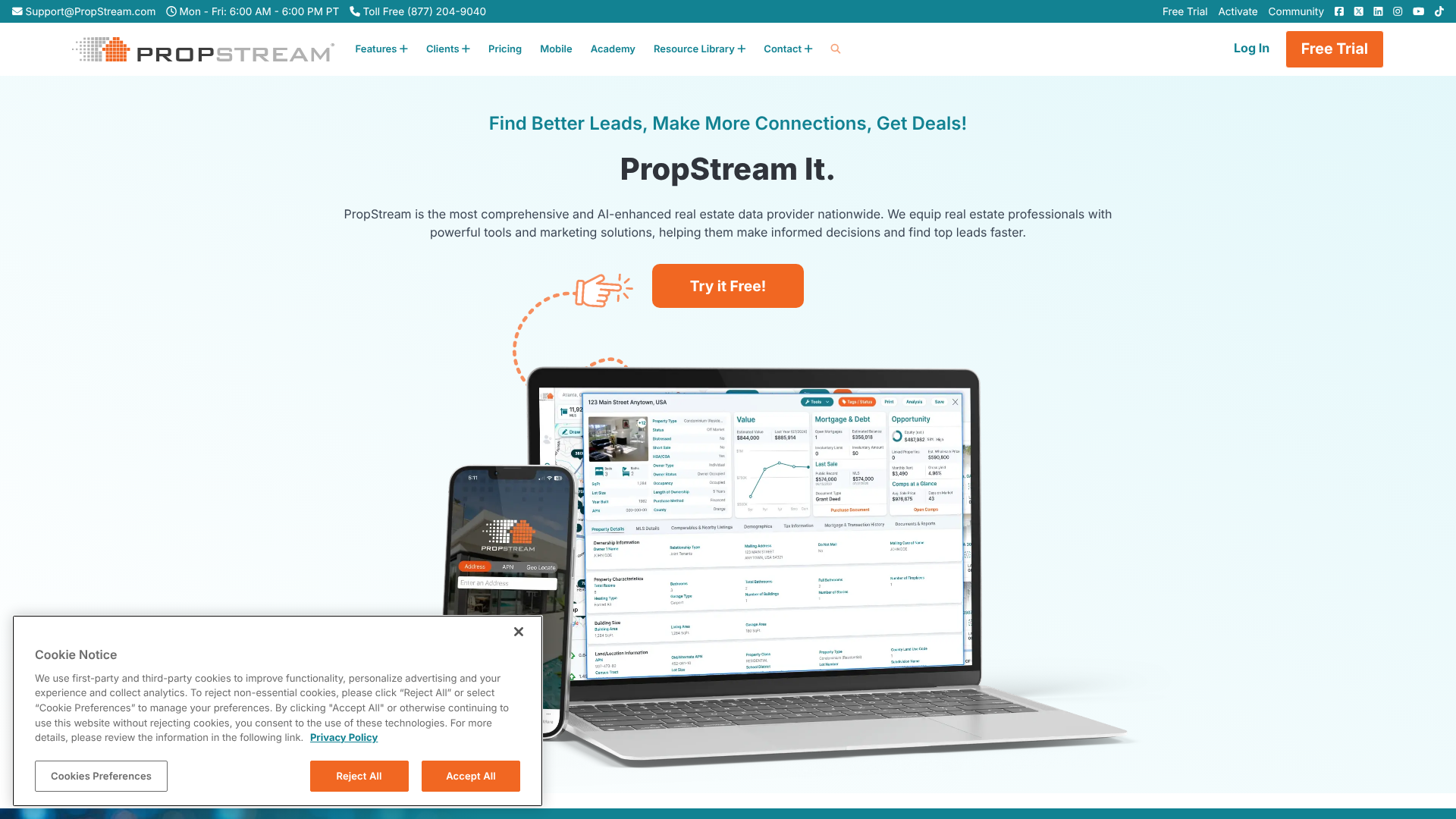
- Deal Finding & Analysis Software: These tools are built for the acquisition phase. They help investors find off-market deals, pull comparable sales (comps), estimate after-repair value (ARV), and calculate potential profitability with detailed financial models. Platforms like PropStream and DealCheck are well-known in this space.
- Property & Portfolio Management Software: Once you own a property, especially a rental, this software becomes crucial. It handles the operational side of things: collecting rent online, tracking income and expenses, managing maintenance requests, screening tenants, and generating financial reports for tax time. Tools like Stessa and Baselane focus on this area.
- Investor CRM & Marketing Platforms: As your investment business grows, it becomes a lead-generation machine. You're constantly talking to sellers, buyers, agents, lenders, and contractors. An investor-focused CRM helps you manage these relationships, track your deal pipeline, and automate follow-up. This is where you can use powerful platforms to organize your entire business operation, ensuring opportunities don't fall through the cracks.



The Core Features Every Investor Should Look For
When evaluating different investor real estate tools, the sheer number of features can be overwhelming. Not all features are created equal, and the most important ones depend on your strategy. However, a set of core functionalities provides the foundation for any successful investor's tech stack. Here’s a breakdown of what to look for.
Deal Analysis & Financial Modeling
This is the heart of any software focused on acquisitions. The platform must be able to run the numbers quickly and accurately. Look for built-in calculators for key metrics like Return on Investment (ROI), Cash-on-Cash Return, Capitalization (Cap) Rate, and Internal Rate of Return (IRR). For flippers, a reliable After-Repair Value (ARV) calculator and rehab cost estimator are non-negotiable.
Lead Generation & Data Aggregation
Great deals are often found, not bought on the open market. Top-tier software provides access to databases of distressed properties, such as pre-foreclosures, tax liens, and inherited homes. The ability to filter this data by specific criteria (e.g., location, equity percentage, property type) and run skip tracing to find owner contact information is a powerful feature for sourcing off-market opportunities.
Contact & Lead Management (CRM)
An organized investor is a profitable investor. A CRM is your central database for every person involved in your business. It should allow you to track motivated sellers, cash buyers, private lenders, real estate agents, and contractors. Look for features like pipeline management to visualize where each deal is in your process, task reminders for follow-ups, and note-taking to log every interaction. Platforms like LionDesk or Follow Up Boss excel at this, helping you build and nurture the relationships that fuel your business.
Property Management & Accounting
For buy-and-hold investors, this is paramount. The software should offer a tenant portal for online rent payments and maintenance requests. On the back end, you need robust expense tracking, the ability to categorize spending for tax purposes (e.g., repairs vs. capital improvements), and the power to generate profit and loss statements for each property and your entire portfolio.
Transaction Management
Buying and selling real estate involves a mountain of paperwork. A good system provides secure cloud storage for all your documents, from purchase agreements to closing statements. Features like e-signatures and compliance checklists streamline the closing process, ensuring all necessary steps are completed on time. A tool like Dotloop is specifically designed to manage this workflow, creating a central hub for every document and signature in a transaction.
Marketing Automation
Finding deals often requires proactive marketing. Some platforms include tools to launch direct mail campaigns, email drip sequences, or targeted social media ads. This is especially useful for investors who are actively trying to find motivated sellers. An all-in-one platform like kvCORE can provide the infrastructure to build a brand, generate leads, and automate communication with potential sellers.
How to Choose the Right Real Estate Investment Software
Selecting the right software is a strategic decision that can significantly impact your business's growth and profitability. With so many options available, it's easy to get distracted by flashy features. The best approach is to start with your own needs and work backward. Here is a step-by-step framework to guide your decision.
1. Define Your Investment Strategy
Your strategy is the single most important factor. The perfect tool for a wholesaler is often a poor choice for a long-term rental investor.
- For Wholesalers & Flippers: You need software that excels at lead generation, deal analysis, and marketing. Your priorities are finding motivated sellers, accurately estimating ARV and repair costs, and managing a large list of cash buyers. A strong CRM is essential.
- For Buy-and-Hold Investors: Your focus is on long-term performance and operational efficiency. You need excellent property management software for investors with features for tenant screening, online rent collection, expense tracking, and portfolio-level financial reporting.
- For Commercial or Multifamily Investors: Your analysis is more complex. You'll need software that can handle detailed rent roll analysis, model complex financing structures, and calculate metrics specific to commercial properties.
2. Assess Your Technical Skill Level
Be honest about your comfort with technology. Some platforms are incredibly intuitive and designed for beginners, with clean interfaces and guided workflows. Others are highly customizable and powerful but come with a steeper learning curve. If you're not tech-savvy, choosing a complex system can lead to frustration and underutilization. Always look for platforms that offer a free trial or a live demo to get a feel for the user experience before you commit.
3. Consider Your Budget and Pricing Models
Software costs can range from free to thousands of dollars per year. Understand the different pricing structures:
- Monthly Subscription (SaaS): The most common model. You pay a recurring fee for access. This can be a flat rate or tiered based on the number of users or properties.
- Per-Unit Fee: Common in property management software, where you pay a small fee (e.g., $1-$2) per rental unit per month.
- One-Time Fee: Less common now, but some older, desktop-based software still uses this model.
- Freemium: Offers a basic, free version with the option to upgrade to a paid plan for more advanced features.
Don't just look at the sticker price. Consider the total cost of ownership, which includes potential setup fees, data charges (like for skip tracing), and costs for any necessary integrations.
4. Plan for Scalability: Will the Software Grow With You?
A tool that works for your first property should also work for your fiftieth. Ask yourself if the software can handle an expanding portfolio. Does the pricing become prohibitive as you add more units or users? Can it support a team with different roles and permission levels? Choosing a scalable platform from the start saves you the major headache of migrating your entire system down the road.
Pro Tip: Before committing to any software, map out your entire investment workflow, from finding a lead to closing a deal or placing a tenant. Identify the biggest bottlenecks in your current process. The best software for you is the one that solves your most significant pain point right now.

Top Real Estate Software Categories for Investors in 2026
Instead of a single "best of" list, it's more helpful to look at the top contenders within each major category. The best tech stack often involves using a combination of specialized tools that excel at their specific function. Here are some top options to consider based on your primary need.
For Finding & Analyzing Deals
To build authority and provide a complete picture, it's important to acknowledge the market leaders in this space. Tools like PropStream are known for their extensive public record data, allowing investors to find and filter for specific types of properties (e.g., high equity, vacant). DealCheck is another popular choice, praised for its fast and intuitive deal analysis calculator that works on both desktop and mobile.
For Managing Leads & Scaling Your Business (CRMs)
Once you start generating leads, a spreadsheet quickly becomes unmanageable. A dedicated CRM is essential for professionalizing your operations and ensuring consistent follow-up. This is where many investors find a massive return on their investment.
- Follow Up Boss: While popular with agents, Follow Up Boss is a powerhouse for investors who prioritize communication. Its strength lies in centralizing all your texts, emails, and calls into one simple timeline. It's ideal for investors running a team or working closely with multiple agents to source deals, as it ensures everyone is on the same page and leads are responded to instantly.
- LionDesk: LionDesk is an excellent all-around CRM that is both affordable and feature-rich. It's particularly strong for investors who want to use video marketing to connect with sellers, as it has built-in video email and texting. Its AI-powered lead follow-up can also help you engage and qualify seller leads automatically, saving you valuable time.
- Wise Agent: For investors who are just starting out or are budget-conscious, Wise Agent offers a tremendous amount of functionality for its price point. It includes transaction management checklists, marketing automation, and robust contact management, providing a solid foundation to build your investment business on.
For Streamlining Transactions
Closing a deal involves coordinating with multiple parties and managing dozens of documents. A transaction management platform brings order to this chaos.
- Dotloop: Dotloop is an industry standard for a reason. It creates a collaborative digital workspace for each transaction. You, your agent, the seller's agent, and the closing attorney can all access, edit, and sign documents in one place. Its interactive checklists and compliance tracking features ensure that nothing is missed on the path to closing.
For All-in-One Marketing & Operations
For investors looking to build a significant brand and generate a high volume of leads, an integrated platform that combines a website, CRM, and marketing automation can be a powerful solution.
- kvCORE: This is more than just a CRM; it's a complete business platform. kvCORE provides you with a professional, lead-generating website, a smart CRM to manage incoming leads, and a suite of marketing tools to nurture them. It's a great fit for the investor who is scaling up and wants a single, integrated system to manage their entire online presence and lead flow.
Understanding Pricing and Total Cost of Ownership
Budgeting for real estate investment software requires looking beyond the monthly subscription fee. The true cost includes the base price plus any additional expenses required to make the tool fully functional for your business. Understanding these potential costs upfront will help you make a more informed decision and avoid surprises.
Common pricing structures you'll encounter include:
- Tiered Subscriptions: Most SaaS platforms offer several pricing tiers (e.g., Basic, Pro, Enterprise). The Basic tier might be suitable for a solo investor, but as you add team members or need advanced features like marketing automation, you'll need to upgrade to a more expensive plan.
- Per-User Fees: Many CRMs charge on a per-user, per-month basis. This is an important consideration if you plan to build a team. A platform that costs $100/month for a single user could cost $500/month for a team of five.
- Usage-Based Costs: Some features come with their own costs. For example, sending direct mail, skip tracing to find phone numbers, or using an integrated power dialer will often incur additional fees based on your usage.
Here’s a general breakdown of what you can expect to pay for different types of software:
| Software Category | Typical Price Range (per month) | Key Cost Drivers |
|---|---|---|
| Deal Analysis Tools | $50 – $150 | Amount of data, number of markets, skip tracing credits |
| Investor CRMs | $50 – $250+ | Number of users, advanced automation, dialer features |
| Property Management | $0 – $2 per unit | Number of units, online payment processing fees |
| Transaction Management | $25 – $60 | Per-transaction fees vs. flat subscription, number of users |
Pro Tip: Always take advantage of free trials. Spend a week actively using the software for your real-world tasks. This is the best way to determine if the workflow suits you and if the value it provides justifies the cost. Don't be swayed by a long feature list; focus on how well it solves your core problems.
The Pros and Cons of Using Investor Real Estate Tools
Integrating technology into your investment business offers huge advantages, but it's also important to be aware of the potential downsides. A balanced perspective will help you maximize the benefits while mitigating the risks.
Pros
- Data-Driven Decision Making: The biggest advantage is replacing gut feelings with hard data. Software allows you to analyze dozens of potential deals in the time it would take to manually analyze one, leading to more confident and profitable decisions.
- Increased Efficiency and Time Savings: Automation handles repetitive tasks like follow-up reminders, financial reporting, and rent collection. This frees up your time to focus on high-value activities like negotiating deals and raising capital.
- Improved Organization: A centralized system for contacts, documents, and property data eliminates the chaos of scattered files and spreadsheets. Nothing gets lost, and all critical information is accessible from anywhere.
- Scalability: The right software provides the infrastructure to grow. It allows you to manage more leads, more properties, and more team members without your systems breaking down.
Cons
- Cost: Quality software is an investment. The monthly subscription fees can add up, especially if you use multiple specialized tools. It's a business expense that needs to be justified by a clear return on investment.
- Learning Curve: Every new platform requires time to learn. The initial setup and training period can temporarily slow you down before it speeds you up. Complex software can be particularly challenging to master.
- Data Overload and Analysis Paralysis: With so much data at your fingertips, it can be tempting to analyze every possible variable. This can lead to "analysis paralysis," where you spend so much time analyzing deals that you never actually make an offer.
- Over-Reliance on Technology: Software is a tool, not a replacement for human judgment and due diligence. Market conditions, neighborhood quality, and property condition are nuances that a calculator can't always capture. You still need to visit properties and understand your local market.
Frequently Asked Questions (FAQ)
What is the best software for a beginner real estate investor?
For a beginner, the best software is one that is simple, intuitive, and focuses on the fundamentals. A great starting point is a tool focused on deal analysis, like DealCheck, because it teaches you how to properly run the numbers on a potential investment. Paired with a simple, free property management tool like Stessa for your first rental, this combination covers the basics without overwhelming you with complex features or high costs.
Can I use free software for real estate investing?
Yes, there are several high-quality free options available, particularly in the property management space. Platforms like Baselane and Stessa offer free plans that are very effective for managing a small portfolio of rental properties. While you can use spreadsheets for deal analysis, dedicated free calculators from sites like BiggerPockets are a better option. However, for serious lead generation and CRM, free tools are often too limited, and you'll likely need to invest in a paid solution as you grow.
How is investor software different from agent software?
While there is some overlap, the core focus is different. Agent software is primarily designed to serve clients. Its features revolve around MLS access, showing schedules, client communication portals, and marketing listings. Investor software, on the other hand, is built around the profitability of the asset.
Its key features are financial modeling, ROI calculation, rehab estimation, and portfolio performance tracking. An investor is their own client, so the software is built to maximize their personal return.
Do I need a CRM as a real estate investor?
In the beginning, you might be able to manage with a spreadsheet. But the moment you start marketing for deals and talking to multiple sellers, agents, and lenders simultaneously, a CRM becomes essential. It's the system that prevents leads from being forgotten and ensures you follow up consistently. Professional investors run their acquisitions like a sales business, and a CRM is the standard tool for managing any sales pipeline.
What's more important: deal analysis or property management software?
This depends entirely on your strategy and current stage. Deal analysis software is critical for everyone because you make your money when you buy. A bad purchase can't be fixed by great management. However, for a buy-and-hold investor, property management software becomes equally important after the acquisition, as it drives the long-term profitability and efficiency of your rental portfolio.
Flippers and wholesalers, on the other hand, may never need property management software.
Final Thoughts: Making Your Decision
Choosing the right real estate software for investors is a foundational step in building a scalable and professional operation. The key is to move beyond the search for a single "best" platform and instead focus on building a tech stack that solves your specific problems and aligns with your investment strategy.
Start by clearly identifying your biggest bottleneck. Is it finding good deals. Is it managing your contacts and follow-ups. Or is it the day-to-day chaos of managing your rental properties.
The answer will point you toward the type of software that will provide the most immediate impact on your business.
If your primary challenge is organizing your deal flow and professionalizing your outreach, a dedicated CRM is the logical next step. Tools like Follow Up Boss can transform your communication, while a platform like LionDesk offers a powerful all-in-one solution for marketing and lead management. For those bogged down by paperwork, streamlining your closing process with a tool like Dotloop can save countless hours and reduce stress. Don't be afraid to start small, use free trials, and build your toolkit over time as your needs evolve.