









Real Estate Software for Investors: A 2026 Buyer's Guide
Successful real estate investing in 2026 is less about gut feelings and more about data-driven decisions. The right real estate software for investors can be the difference between a profitable portfolio and a collection of costly mistakes. These platforms automate tedious tasks, provide critical market data, and help you manage everything from finding deals to collecting rent, allowing you to scale your business efficiently.
Whether you're flipping houses, managing a rental portfolio, or wholesaling properties, the sheer volume of data, contacts, and documents can be overwhelming. Using spreadsheets and sticky notes simply doesn't work at scale. This guide will walk you through how to choose the best tools for your specific strategy, what features matter most, and which platforms are leading the market today.
What You'll Learn
- Types of Investor Software: Not all tools are the same. We'll break down the main categories, including deal analysis, property management, and CRM platforms, so you can find what fits your needs.
- Essential Features: Discover the non-negotiable features your software should have, from accurate cash flow projections and comparable property analysis to automated communication and document management.
- How to Choose: Learn a simple framework for selecting the right software based on your investment strategy, budget, and technical skills.
- Top Recommendations: Get a curated list of top-performing software for different investor needs, helping you narrow down your options quickly.
What Exactly is Real Estate Software for Investors?
Real estate software for investors is a broad category of digital tools designed to streamline and optimize the entire investment lifecycle. It's not a single application but an ecosystem of platforms, each specializing in a different stage of the process. Think of it as a digital toolkit that replaces manual spreadsheets, disorganized file folders, and time-consuming research.
At its core, this software helps you make smarter, faster, and more profitable decisions. It achieves this by organizing complex information and automating repetitive workflows. For example, instead of manually searching county records for property data, a deal-finding tool can pull this information in seconds. Instead of calculating cash flow on a clunky spreadsheet, an analysis tool can run dozens of scenarios instantly.
To understand the landscape, it's helpful to break down real estate investment software into four primary categories:
- Deal Finding & Analysis Software: These platforms are your digital bloodhounds. They sift through millions of property listings, public records, and market trends to help you find undervalued properties and potential deals, both on and off-market. They then provide calculators to analyze profitability, estimate repair costs, and project return on investment (ROI).
- Property Management Software: Once you own a property, these tools help you manage it. This category, often called property management software for investors, handles everything from listing vacancies and screening tenants to collecting rent online, tracking maintenance requests, and managing finances. They are essential for landlords who want to automate day-to-day operations.
- CRM & Lead Management Software: For active investors like wholesalers and flippers, managing relationships is key. A Customer Relationship Management (CRM) system helps you track leads (e.g., motivated sellers, cash buyers), manage communication, and automate follow-up. It ensures no potential deal falls through the cracks.
- Transaction Management Software: These tools focus on the closing process. They provide a centralized platform for managing documents, collecting electronic signatures, and coordinating with agents, lenders, and title companies to ensure a smooth closing.
Some platforms are all-in-one solutions that try to cover multiple categories, while others are highly specialized. The right choice depends entirely on your investment strategy and the specific problems you need to solve.
The Core Benefits: Why Every Investor Needs These Tools
Investing in real estate software isn't just about convenience; it's about gaining a competitive edge. The modern market is fast-paced and data-heavy. Investors who rely on manual methods are often slower to react and more prone to errors. Using dedicated investor real estate tools provides tangible benefits that directly impact your bottom line.
Automate Tedious Tasks and Save Hundreds of Hours
Think about the time you spend pulling comps, calculating potential returns, or chasing down rent payments. These are low-value, repetitive tasks that consume a significant portion of your time. Software automates them. A good platform can generate a detailed property analysis report in minutes, a task that could take hours manually.



Property management software can send automatic rent reminders and late fees, saving you from awkward phone calls.
This automation frees you up to focus on high-value activities that actually grow your business, such as negotiating deals, building relationships with lenders, and finding new opportunities. The time savings alone often provide a positive return on the software's cost.
Make Data-Driven Decisions, Not Emotional Ones
One of the biggest risks in real estate is making an emotional decision. It's easy to fall in love with a property's potential and overlook the cold, hard numbers. Software removes this emotional bias by forcing you to look at the data. It calculates key metrics like cap rate, cash-on-cash return, and net operating income based on real numbers and market data.
By presenting a clear, unbiased financial picture, these tools help you objectively compare different investment opportunities. You can quickly see which property offers the best potential return and which ones are too risky. This analytical approach leads to a more stable and profitable portfolio over the long term.
Scale Your Portfolio with Confidence
Managing one or two properties on a spreadsheet is manageable. Managing ten, twenty, or a hundred is impossible without a system. Real estate software provides the scalable infrastructure you need to grow your portfolio without becoming overwhelmed.
Property management platforms allow you to oversee dozens of units from a single dashboard. CRMs let you manage a pipeline of hundreds of leads without losing track of a single conversation. This ability to manage complexity is what allows investors to scale from a side hustle to a full-fledged business.

A Buyer's Guide: How to Choose the Right Real Estate Investment Software
With so many options on the market, selecting the right software can feel daunting. The key is to avoid getting distracted by flashy features and instead focus on what aligns with your specific investment goals. Use this framework to make a smart decision.
First, Define Your Investing Strategy
The "best" software is relative. A tool that's perfect for a landlord might be useless for a house flipper. Start by clarifying your primary investment strategy:
- Landlord (Buy and Hold): Your focus is on long-term cash flow and tenant management. You need strong property management software for investors with features like online rent collection, tenant screening, and maintenance tracking.
- House Flipper (Fix and Flip): You need tools for finding undervalued properties, accurately estimating repair costs (ARV), and managing renovation projects. Deal analysis and project management features are critical.
- Wholesaler: Your business is about finding deals and building a buyers list. A powerful CRM for managing leads (motivated sellers and cash buyers) and a deal-finding tool for locating off-market properties are your top priorities.
- BRRRR Investor: This strategy combines elements of flipping and renting. You'll need a mix of tools: strong deal analysis for the initial purchase and rehab, and solid property management for the rental phase.
Key Features to Look For
Once you know your strategy, you can identify the must-have features. Look for platforms that excel in these areas:
- Accurate Deal Analysis: The software should be able to calculate key metrics like ROI, cap rate, cash flow, and cash-on-cash return. It should also allow you to adjust variables like vacancy rates, management fees, and financing terms.
- Comparable Sales (Comps): To determine a property's value, you need access to recent, relevant sales data. The best tools pull comps directly from the MLS or public records and allow you to adjust them for property differences.
- Lead and Contact Management (CRM): If you're an active investor, you need a system to track conversations, schedule follow-ups, and manage your pipeline of potential deals. Look for features like email integration and task automation.
- Document Management: Real estate involves a mountain of paperwork. A good platform will offer secure cloud storage for contracts, leases, and inspection reports. Features like e-signatures can dramatically speed up the closing process.
- Financial Tracking and Reporting: For landlords, the ability to track income and expenses per property is essential for tax purposes and performance analysis. Look for tools that can generate profit and loss statements and connect to your bank accounts.
Budget and Pricing Models
Software pricing varies widely. Common models include:
- Free/Freemium: Some tools (like Stessa) offer a free core product, with paid add-ons for premium features. This is a great starting point for new investors.
- Monthly Subscription (SaaS): Most platforms charge a recurring monthly or annual fee. This can be a flat rate or tiered based on the number of properties, users, or features.
- Per-Use or One-Time Fee: Some older, Excel-based analysis tools may charge a one-time purchase fee.
Be realistic about your budget, but also consider the cost of not using software. A single bad deal avoided or a few hours saved each week can easily justify a monthly subscription.
Pro Tip: Many SaaS platforms offer a free trial or a demo. Always take advantage of this to test the software's user interface and see if it feels intuitive to you before committing to a subscription.
Integrations: Does It Play Well with Others?
No single piece of software does everything perfectly. The best solutions integrate with other tools you already use. For example, your property management software might integrate with QuickBooks for accounting, or your CRM might connect with marketing tools like Mailchimp.
Look for platforms that offer integrations through services like Zapier, which allows you to connect thousands of different apps and create automated workflows. This creates a flexible tech stack that can adapt as your business grows.
Top Real Estate Software for Investors in 2026: A Category Breakdown
Now that you know what to look for, let's explore some of the top options on the market. We've broken them down by their primary function to help you find the right tool for the job.
For Deal Finding & Analysis
These tools are designed to help you find and vet investment opportunities quickly.
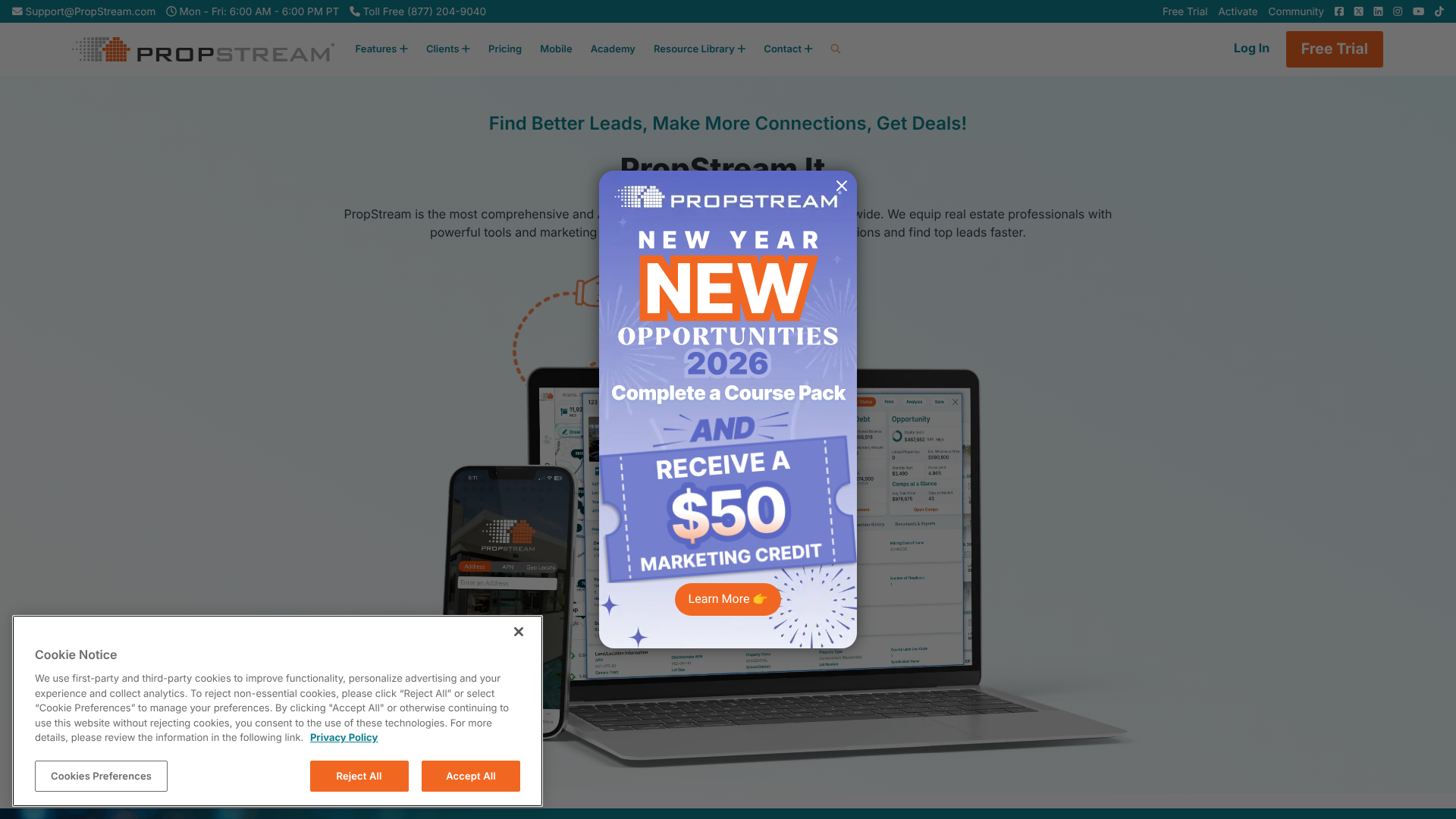
1. PropStream
PropStream is a favorite among active investors for its vast database of property information. It provides access to MLS data, public records, and foreclosure information across the country. Its strength lies in its powerful filtering capabilities, allowing you to build highly targeted lists of potential off-market deals (e.g., properties with high equity, absentee owners, or tax liens).
- Best for: Wholesalers, flippers, and agents looking for off-market leads.
- Key Features: Nationwide property data, 120+ search filters, built-in skip tracing, marketing tools.
2. DealCheck
DealCheck is a user-friendly analysis tool that helps you run the numbers on any property in minutes. You can analyze rental properties, flips, BRRRRs, and even commercial buildings. It calculates all the essential metrics and generates professional PDF reports that you can share with partners or lenders.
- Best for: New and experienced investors who need a fast, reliable way to analyze deals on the go.
- Key Features: Rental, flip, and BRRRR calculators; detailed cash flow projections; comps analysis; shareable reports.
For Property & Portfolio Management
These platforms help landlords automate the management of their rental properties.
1. Stessa
Stessa is a free asset management tool designed specifically for rental property owners. It provides a high-level dashboard of your portfolio's performance, tracking income, expenses, and appreciation. It simplifies bookkeeping by allowing you to link bank accounts and automatically categorize transactions, which is a huge time-saver during tax season.
- Best for: Buy-and-hold investors with one or more rental properties.
- Key Features: Free to use, automated income/expense tracking, portfolio performance dashboard, secure document storage, tax-ready financial reports.
2. Baselane
Baselane goes a step further by integrating property management with landlord-specific banking. It offers free business checking accounts for each property, making it easy to keep finances separate. It also includes tools for online rent collection, bookkeeping, and analytics, making it a powerful all-in-one financial platform for landlords.
- Best for: Investors who want an integrated banking and property management solution.
- Key Features: Free landlord banking, online rent collection, automated bookkeeping, tenant screening, performance analytics.
For CRM & Lead Management
For investors who deal with a high volume of leads, a CRM is non-negotiable. It's the central hub for all your communication and relationship management.
1. LionDesk
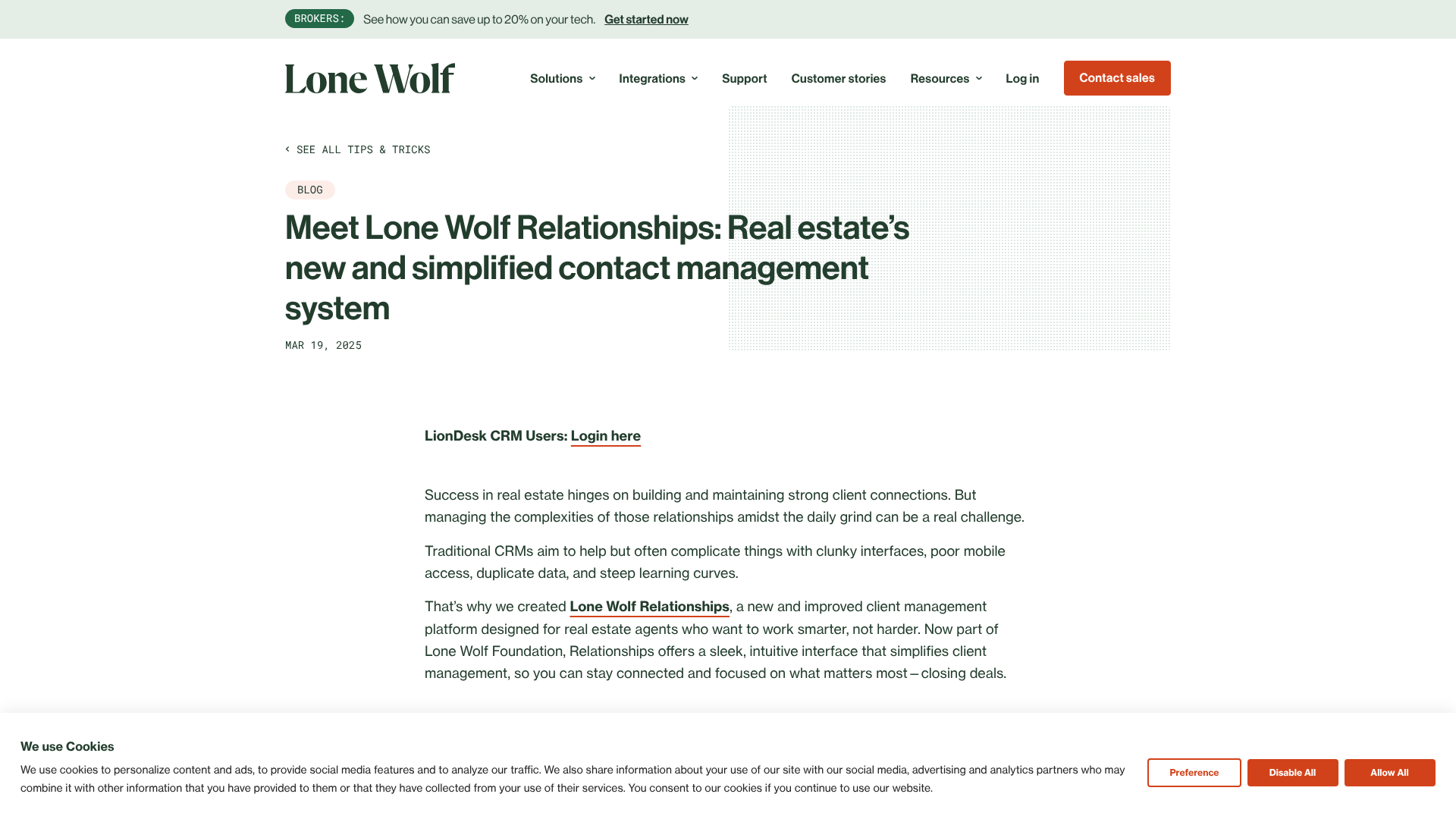
LionDesk is a powerful CRM that is popular with real estate agents but also highly effective for investors, especially wholesalers. Its strength is in communication automation. You can set up automated email and text message drip campaigns to nurture leads over time.
Its AI assistant, Gabby, can even engage with new leads on your behalf to qualify them.
- Best for: Wholesalers and active investors who need to manage and nurture a large database of sellers and buyers.
- Key Features: Multi-channel communication (email, text, calls), AI lead follow-up, video messaging, task management.
2. Follow Up Boss
Follow Up Boss is another top-tier CRM known for its simplicity and focus on action. It consolidates all your leads from various sources (like your website, Zillow, etc.) into one simple inbox. It excels at team collaboration, allowing you to assign leads and track performance across your entire team.
For investors running a team, this is a major advantage.
- Best for: Investor teams and those who prioritize speed and ease of use in their lead management.
- Key Features: Centralized lead inbox, automated action plans, team collaboration tools, robust reporting.
| Feature | LionDesk | Follow Up Boss |
|---|---|---|
| Primary Focus | Communication Automation & AI | Lead Consolidation & Team Workflow |
| Best For | Solo investors, wholesalers | Investor teams, high-volume lead gen |
| AI Features | Yes, AI Assistant for lead engagement | No, focuses on manual/automated plans |
| Pricing Model | Tiered, starts around $25/month | Tiered, starts around $57/month/user |
| Free Trial | Yes, 30 days | Yes, 14 days |
For Transaction Management
Once you have a deal under contract, these tools ensure the closing process is efficient and organized.
1. Dotloop
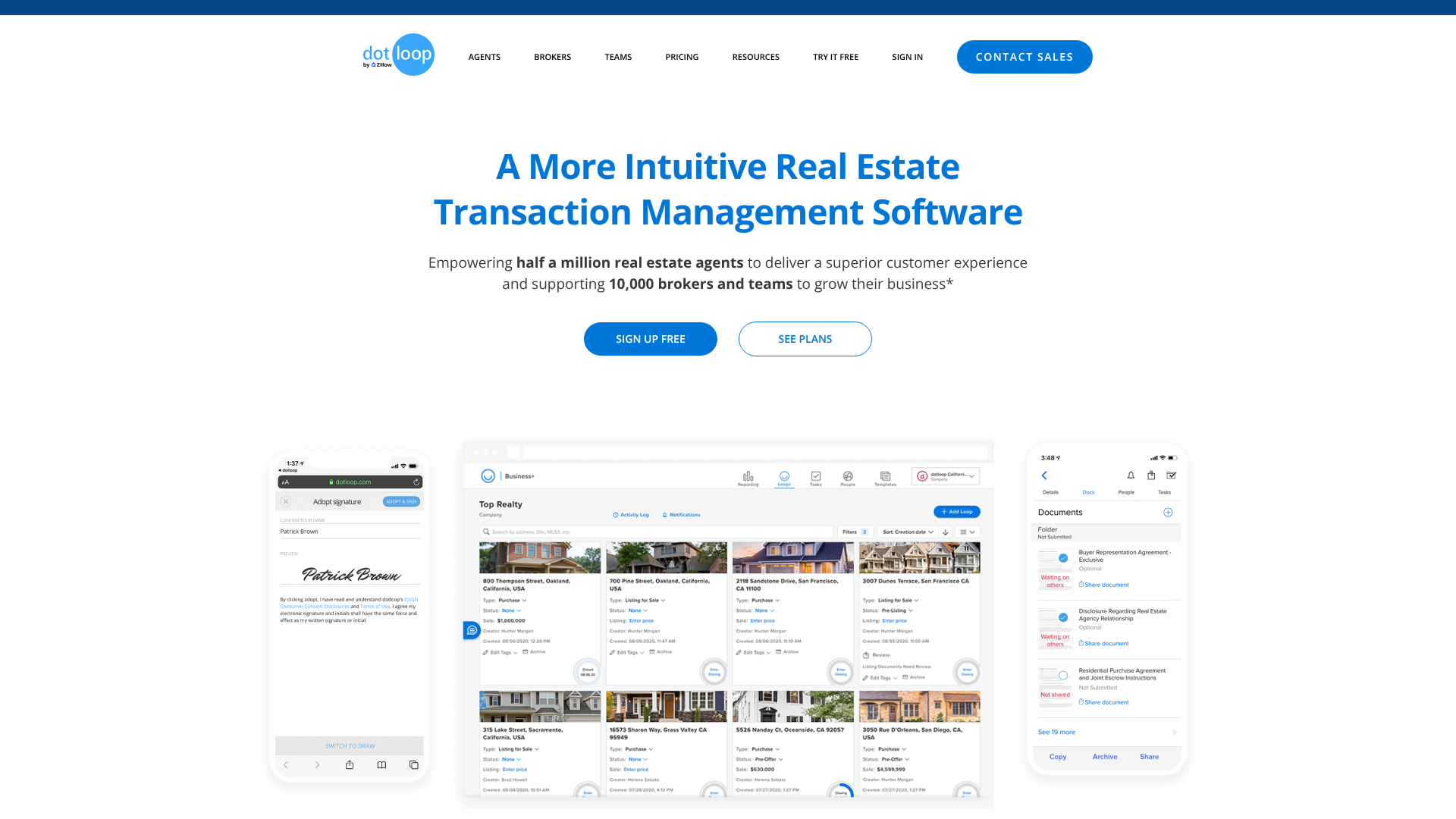
Dotloop is a leading transaction management platform that streamlines the entire process from offer to close. It combines e-signatures, document storage, and compliance checklists into one collaborative workspace. For an investor doing multiple deals a year, this can save countless hours of chasing signatures and managing paperwork.
You can create templates for your most-used documents, ensuring consistency and accuracy on every deal.
- Best for: Flippers, wholesalers, and any investor who needs to manage contracts and closing documents efficiently.
- Key Features: E-signatures, document templates, compliance workflows, real-time visibility into transaction status.
Comparing the Costs: What Should You Expect to Pay?
Understanding the financial commitment is a crucial part of choosing your software. The price of real estate investment software can range from completely free to several hundred dollars per month, depending on its complexity and target user.
For investors just starting out, free tools are an excellent way to get organized without a significant upfront investment. Platforms like Stessa offer robust portfolio tracking at no cost, making them a no-brainer for new landlords. The business model for these free tools often involves making money from optional, paid services like insurance or lending.
Most specialized software, particularly CRMs and advanced deal-finding platforms, operate on a Software-as-a-Service (SaaS) model. You'll pay a recurring monthly or annual fee. These fees can range from:
- $25 – $50 per month for entry-level CRM or analysis tools suitable for a single user.
- $50 – $150 per month for more advanced platforms with automation, team features, and larger data capacities. PropStream and many CRMs fall into this category.
- $150+ per month for enterprise-level solutions designed for large teams or investment firms that require extensive customization and support.
When evaluating cost, look beyond the sticker price. Consider the value it provides. If a $100/month subscription helps you find one extra deal per year or saves you 10 hours of administrative work per month, it's easily worth the investment. Always check for annual payment discounts, which can often save you 10-20% compared to paying monthly.

Pro Tip: Create a "tech stack" budget. Instead of buying one expensive, all-in-one platform that does everything mediocrely, you might get better results by subscribing to two or three best-in-class tools that specialize in what you need most (e.g., PropStream for deal finding + Follow Up Boss for CRM + Stessa for management).
The Pros and Cons of Using Specialized Investor Tools
While the benefits are significant, it's important to have a balanced perspective. Adopting new technology comes with its own set of challenges.
Advantages
- Efficiency and Speed: The most obvious benefit. Software automates manual work, allowing you to analyze more deals and manage more properties in less time.
- Accuracy and Consistency: Computers don't make calculation errors. Using software ensures your financial projections are accurate and that you're applying the same analysis criteria to every potential deal.
- Centralized Information: All your data—property details, tenant information, contracts, financials—is stored in one place, accessible from anywhere. This organization is critical for scaling.
- Professionalism: Sending a professionally generated report to a lender or partner builds credibility and shows that you're a serious investor.
Potential Drawbacks
- Cost: Subscription fees can add up, especially if you use multiple tools. It's an ongoing operational expense that needs to be factored into your budget.
- Learning Curve: Every new piece of software requires time to learn. Some complex platforms can be overwhelming at first, and you'll need to invest time in training to get the most out of them.
- Analysis Paralysis: With so much data at your fingertips, it can be easy to get stuck over-analyzing deals instead of taking action. It's important to use the data to make a decision, not to endlessly search for the "perfect" deal.
- Data Inaccuracy: The software is only as good as the data it uses. While top platforms have reliable data sources, you should always do your own due diligence and verify critical information before making a final investment decision.
Frequently Asked Questions (FAQ)
Here are answers to some common questions investors have about real estate software.
What software do real estate investors use?
Real estate investors use a variety of software depending on their strategy. The most common categories are deal analysis tools (like DealCheck), property data platforms (like PropStream), property management software (like Stessa or Baselane), and CRMs for lead management (like Follow Up Boss or LionDesk). Many successful investors build a "stack" of several specialized tools rather than relying on a single all-in-one solution.
What is the best real estate portfolio management software?
For most individual investors managing their own rental portfolios, Stessa is widely considered the best starting point because it's free and provides excellent performance tracking and financial organization. For investors who need more comprehensive property management features like tenant communication and maintenance coordination, platforms like DoorLoop or TenantCloud are popular paid alternatives. The "best" option depends on the size of your portfolio and whether you need tenant-facing features.
Is there a better option than Zillow?
Yes, for investors, there are much better options than Zillow. While Zillow is great for retail buyers, its data (like the "Zestimate") is not always accurate enough for investment analysis. Professional-grade platforms like PropStream and Realtor.com (for MLS access) provide more detailed, accurate, and timely data. For finding off-market deals, services that aggregate public records and provide specific filters for investor-friendly properties are far superior to consumer-facing sites like Zillow.
What is the 3-3-3 rule in real estate?
The 3-3-3 rule is a general guideline for home buyers, but investors can adapt its principles. It traditionally suggests: 1) You can afford a home that costs up to 3 times your annual gross income. 2) You should have at least 3 months of mortgage payments saved in an emergency fund. 3) You should aim for a mortgage term of no more than 3 decades (30 years).
For investors, these numbers are just a starting point. A more critical analysis involves calculating the property's specific cash flow, ROI, and ability to cover its own expenses, rather than relying on personal income.
Final Thoughts: Making Your Decision
Choosing the right real estate software for investors is a strategic decision that can significantly impact your efficiency and profitability. The key is to start with a clear understanding of your investment strategy and the specific bottlenecks in your current process. Don't chase the software with the most features; choose the one that solves your biggest problems.
For landlords, a solid property management platform is the priority. For flippers and wholesalers, a powerful deal-finding and CRM system is essential. Start with a free tool or a free trial to get a feel for how these platforms work. As your portfolio grows and your needs become more complex, you can invest in more advanced solutions.
If you're an active investor managing a pipeline of leads, a CRM is a must-have. Tools like LionDesk can help you automate your outreach, while Follow Up Boss is excellent for organizing your workflow and collaborating with a team. For streamlining your closings, a transaction management tool like Dotloop can be invaluable. By thoughtfully building your tech stack, you'll be equipped to make smarter decisions, save time, and scale your real estate business effectively.