









Real Estate Salesperson vs Real Estate Agent: Key Differences Explained
When you decide to buy or sell a home, you'll encounter various professionals, but the terminology can be confusing. The debate over a real estate salesperson vs real estate agent is a common point of uncertainty for clients and aspiring professionals alike. While these terms are often used interchangeably in casual conversation, they have distinct legal and professional meanings that are important to understand. Knowing the difference helps clarify the structure of the real estate industry and the qualifications of the person guiding you through one of life's biggest transactions.
In practice, the person you hire to show you homes or list your property is almost always both. "Salesperson" refers to the official license they hold from the state, while "agent" describes the role they perform in representing you. This guide will break down the nuances, licensing requirements, and responsibilities associated with each term, giving you a clear picture of who's who in the world of real estate.
What to Know
- It's About Terminology: "Real estate salesperson" is the official, legal title for the license an individual holds. "Real estate agent" is the common job title used to describe their role in representing clients.
- Supervision is Required: Both a salesperson and an agent must work under the supervision of a licensed real estate broker. They cannot operate their own brokerage or work independently.
- Identical Responsibilities: For the consumer, there is no practical difference in day-to-day duties. Both professionals are licensed to help clients buy, sell, or rent properties.
- State Laws Vary: Real estate is regulated at the state level, so the exact terminology, licensing hours, and requirements can differ from one state to another.
The Core Distinction: A Matter of Semantics
The fundamental difference between a real estate salesperson and a real estate agent comes down to legal definition versus common usage. Think of it like a person who graduates with a Juris Doctor degree. That degree is their official qualification, but in their professional life, they are called a lawyer. The real estate industry works in a similar way.
A real estate salesperson is an individual who has met the state's minimum education and testing requirements to earn a license to facilitate real estate transactions. This is their official designation on their license. However, to legally practice, they must be sponsored by and work under a licensed real estate broker.
A real estate agent is the title most people use to refer to a salesperson. This term emphasizes their role in acting as an "agent" for their client, meaning they have a fiduciary duty to represent their client's best interests. In essence, all licensed salespeople who are actively helping clients are acting as real estate agents. For all practical purposes, when you hire an agent, you are hiring a licensed salesperson.
What is a Real Estate Salesperson? A Deep Dive
To truly understand the role, it's best to look at the official side of the profession—the license that grants the authority to practice. The title "salesperson" is the starting point for nearly every career in real estate sales and is the legal foundation upon which the profession is built.
The Official Definition
A real estate salesperson is a professional who holds a state-issued license to represent buyers and sellers in real estate transactions. This license is contingent upon the salesperson being affiliated with a sponsoring broker. The broker is legally responsible for the salesperson's actions, provides supervision and training, and manages the brokerage's trust accounts where client funds are held. A salesperson cannot legally receive a commission directly from a client; all compensation must be paid through their supervising broker.
This structure ensures a level of oversight and accountability in the industry. It protects consumers by making sure that new professionals have guidance and that all transactions are handled in compliance with state and federal laws. The broker's oversight is a critical component of the salesperson's legal ability to practice.




Licensing Requirements for a Salesperson
Becoming a licensed real estate salesperson is a multi-step process that is strictly regulated by each state's real estate commission or board. While specifics vary, the general path is consistent across the country and is designed to ensure a baseline level of competency and ethical conduct. The journey typically involves several key stages.
First, candidates must complete a required number of pre-licensing education hours from an approved school. This can range from as little as 40 hours in some states to over 180 hours in others. These courses cover essential topics like real estate law, contract law, principles of agency, property valuation, finance, and ethics. The goal is to provide a comprehensive foundation in the legal and practical aspects of the industry.
After completing the coursework, the applicant must pass a state-administered real estate exam. This exam usually has two parts: a national portion covering general real estate principles and a state-specific portion covering local laws and regulations. Once the exam is passed, the candidate must undergo a background check and submit a formal application with the state, which includes proof of sponsorship from a licensed broker. Only after the state approves the application and issues the license can the individual legally operate as a real estate salesperson.
Day-to-Day Roles and Responsibilities
The daily work of a real estate salesperson is dynamic and client-focused. They are responsible for guiding clients through every step of the buying or selling process. For sellers, this includes conducting a comparative market analysis (CMA) to determine an appropriate listing price, marketing the property through various channels, hosting open houses, and negotiating offers on the seller's behalf.
For buyers, a salesperson's duties involve understanding the buyer's needs and budget, finding and showing suitable properties, writing and submitting offers, and negotiating for the best possible terms. Beyond these core tasks, they also coordinate with other professionals involved in the transaction, such as mortgage lenders, home inspectors, appraisers, and title companies, to ensure a smooth process from contract to closing.

What is a Real Estate Agent? Understanding the Common Term
While "salesperson" is the legal license, "agent" is the title that defines the relationship with the client. It’s the term you'll see on business cards, websites, and for-sale signs. Understanding why this term is so prevalent sheds light on the nature of the job itself.
The Practical Definition
A real estate agent is a licensed salesperson who acts on behalf of a client in a real estate transaction. The word "agent" comes from the legal concept of "agency," which is a relationship where one person (the agent) is authorized to act for another (the principal or client). This relationship creates a fiduciary duty, meaning the agent must act in the client's best interests with the utmost loyalty, confidentiality, and care.
This is why the term is so fitting for the role. A real estate professional does more than just sell property; they are a trusted advisor, advocate, and negotiator for their client. The title "agent" better captures the comprehensive, service-oriented nature of the job compared to the more transactional-sounding "salesperson."
The Agent's Responsibilities and Modern Tools
The responsibilities of a real estate agent are identical to those of a salesperson because they are, in fact, the same professional performing the same job. They manage client relationships, market properties, handle complex negotiations, and oversee a mountain of paperwork. The complexity of these tasks has led to a heavy reliance on technology to stay organized and efficient.
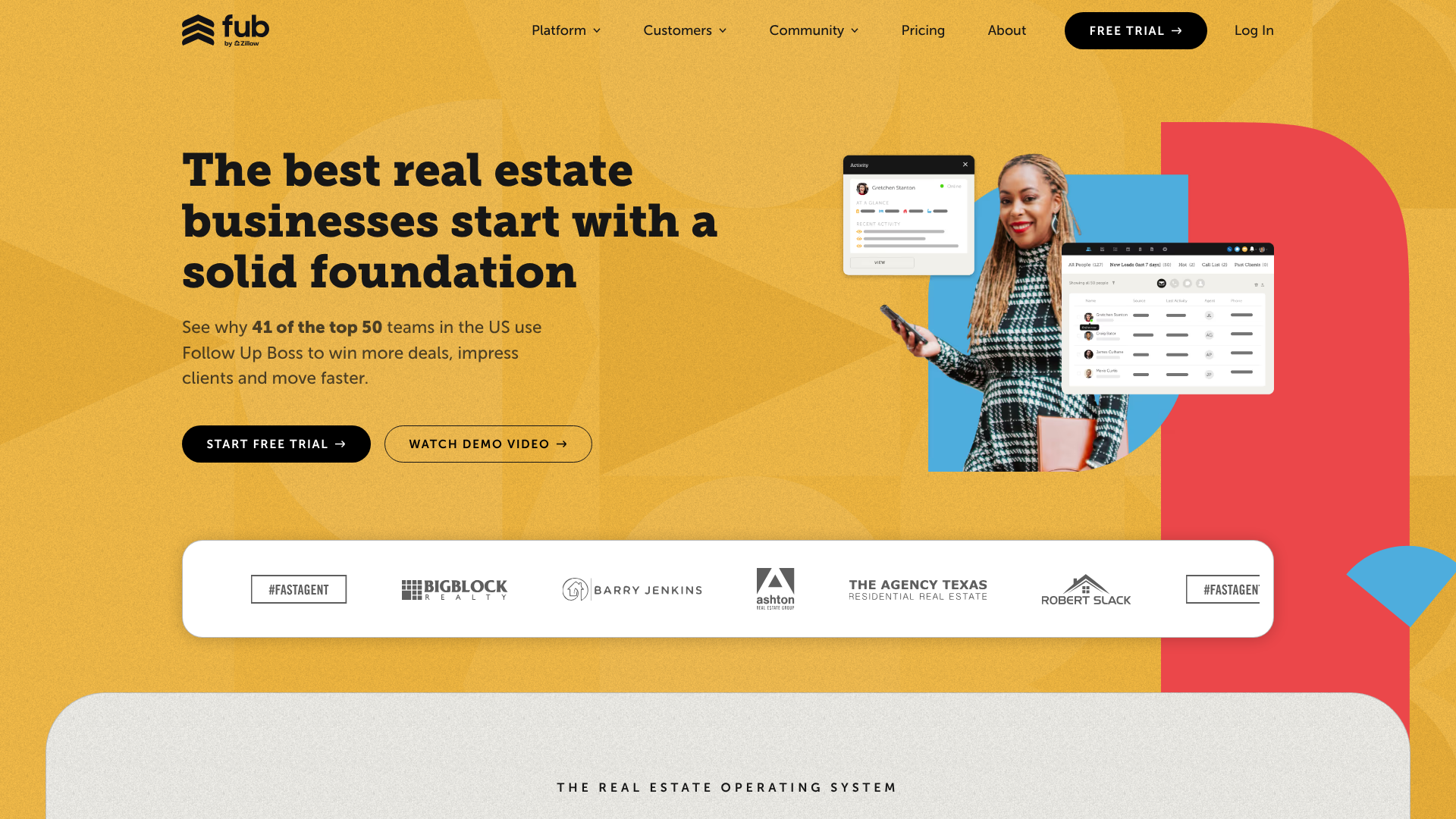
To manage a pipeline of potential buyers and sellers, many agents use a Customer Relationship Management (CRM) system. A robust real estate CRM like Follow Up Boss helps agents track leads, automate communication, and manage follow-up tasks so no opportunity falls through the cracks. For handling contracts and signatures, transaction management platforms are essential. Tools like Dotloop allow agents to create, share, and get documents e-signed, streamlining the paperwork process and keeping everything in one secure, digital location.
Pro Tip: New agents should prioritize setting up their tech stack early. A good CRM and transaction management system are not luxuries; they are foundational tools for building a scalable and successful real estate business in today's market.
Side-by-Side Comparison: Agent vs Salesperson
To make the distinction as clear as possible, here is a direct real estate agent comparison that breaks down the key attributes of each term.
| Aspect | Real Estate Salesperson | Real Estate Agent |
|---|---|---|
| Legal Status | The official title on a state-issued license. | A common job title; describes the role of representing a client. |
| Common Usage | Used in legal documents, by state licensing boards, and within the industry. | Used in public-facing marketing, on business cards, and in everyday conversation. |
| Supervision | Must be sponsored by and work under a licensed broker. | Must also work under a licensed broker (as they hold a salesperson license). |
| Responsibilities | Licensed to facilitate the buying, selling, and renting of property. | Performs the exact same duties as a salesperson. |
| Licensing | The foundational license required to enter the industry. | Not a separate license; it's the title given to a licensed salesperson. |
The Impact of State and Local Laws
It's crucial to remember that real estate is regulated at the state level, not the federal level. This means that the specific difference between agents and salespersons, including the terminology used, can vary significantly from one state to the next. This is a primary source of confusion for the public and even for professionals who move to a new state.
For example, in some states like California, the terms "real estate salesperson" and "real estate agent" are used almost completely interchangeably in both legal and common contexts. In other states, like Texas, the entry-level license is officially called a "Sales Agent" license, blending the two terms from the start. Other states may have more rigid distinctions in their official documentation.
Because of these variations, anyone looking to enter the profession or understand its structure should consult their state's official real estate commission. This government body sets the rules for licensing, education, and conduct. A great resource for finding your state's regulatory agency is the Association of Real Estate License Law Officials (ARELLO), which maintains a directory of all regulatory bodies in North America.
Career Progression: From Salesperson to Broker and Beyond
Holding a salesperson license is the first step in a long and potentially lucrative real estate career. While many professionals are content to work as agents under a brokerage for their entire careers, others aspire to gain more independence and responsibility by advancing to the next level: becoming a real estate broker.
The Path to Becoming a Broker
A real estate broker is a professional who has taken additional education, has several years of active experience as a salesperson, and has passed a more rigorous state broker's exam. The experience requirement is significant, often requiring two to four years of full-time work as a licensed salesperson. The additional coursework delves deeper into topics like real estate law, brokerage management, finance, and investment.
Passing the broker's exam grants the individual a broker's license, which unlocks a new level of professional autonomy. This is the primary career advancement path for a real estate agent vs salesperson, as both start with the same foundational license and can pursue this higher designation.
What a Broker Can Do
The key difference between a broker and a salesperson/agent is independence. A licensed broker can own and operate their own real estate brokerage firm. They can work independently without needing a sponsor, and they can hire and supervise other real estate salespersons. An "associate broker" is someone who holds a broker's license but chooses to work under another managing broker, often for a larger firm.
Managing brokers are responsible for the legal and ethical compliance of all agents at their firm. They oversee operations, manage trust accounts, provide training, and are the final point of accountability for all transactions handled by their agents. This position comes with significantly more responsibility but also a higher earning potential through brokerage fees and commission splits.
Visual Guide: Agent, Realtor, and Broker Explained
Sometimes, seeing and hearing the differences can help clarify them even further. This video provides a great overview of the various titles you'll encounter in the real estate world, including the important distinction of what makes someone a REALTOR®.
What About a REALTOR®? Adding Another Layer
To add one more layer to the discussion, you will frequently see the term REALTOR®. This is not a synonym for real estate agent, although many people use it that way. The term REALTOR® is a professional designation that identifies a real estate professional who is a member of the National Association of REALTORS® (NAR).
To become a REALTOR®, a licensed real estate salesperson, broker, or appraiser must join their local NAR-affiliated association. Membership requires them to subscribe to the NAR's strict Code of Ethics, which is a set of 17 articles that outlines a professional's duties to clients, the public, and other REALTORS®. This code often goes above and beyond what state law requires and is rigorously enforced by the association.
So, while all REALTORS® are licensed real estate agents (or brokers), not all real estate agents are REALTORS®. The designation signals a commitment to a higher standard of professional ethics. For many consumers, working with a REALTOR® provides an extra layer of confidence that their agent is dedicated to professionalism and integrity.
Pro Tip: When interviewing agents, ask if they are a REALTOR®. Their answer can tell you about their commitment to professional standards and continuing education, as NAR members have access to extensive resources and training.
How to Choose the Right Professional for Your Needs
For a home buyer or seller, the distinction between a real estate salesperson and a real estate agent is purely academic. Since they are the same professional, you don't need to worry about which title they use. What truly matters is their skill, experience, and compatibility with you.
Instead of focusing on the title, concentrate on finding a high-quality professional who can effectively represent your interests. You should look for someone with a proven track record in your local market, strong references from past clients, and excellent communication skills. The right agent will be a knowledgeable guide, a skilled negotiator, and a trusted advisor, regardless of whether their license says "salesperson" or their business card says "agent."
When interviewing potential agents, consider asking questions like:
-
How long have you been licensed and working full-time in real estate. – How many homes have you helped clients buy or sell in this neighborhood in the last year. – What is your strategy for marketing my home (for sellers) or finding me a home (for buyers). – Can you provide references from your last three clients.
-
How will you communicate with me throughout the process.
Frequently Asked Questions (FAQ)
Is a salesperson the same as a real estate agent?
In practical terms, yes. A "real estate salesperson" is the official title for the license they hold from the state. A "real estate agent" is the common job title they use when representing clients. Every agent you work with holds a salesperson license (or a higher broker license) and must work under a supervising broker.
Are Realtors and real estate agents the same?
No, they are not. A real estate agent is anyone with a state license to sell property. A REALTOR® is a licensed agent who is also a member of the National Association of REALTORS® (NAR). This membership requires them to adhere to a strict Code of Ethics, which sets a higher standard of professionalism than state law alone.
What is the highest paid position in real estate?
While top-producing agents can earn very high incomes, the positions with the highest potential earnings are typically real estate brokerage owners and successful commercial real estate brokers. A brokerage owner earns from the commissions of every agent in their firm, while commercial brokers handle high-value transactions for businesses, leading to substantial commissions.
Can you be a real estate agent but not a realtor?
Yes, absolutely. Holding a state real estate license makes you a real estate agent (salesperson). Joining the National Association of REALTORS® is an optional step that confers the REALTOR® designation. Many licensed agents choose not to join the association and therefore cannot call themselves REALTORS®.
What is a real estate salesperson called?
In everyday conversation and on marketing materials, a real estate salesperson is almost always called a real estate agent. They may also be referred to as a real estate associate or a sales associate. The term "salesperson" is typically reserved for legal and official licensing contexts.
Final Thoughts
Navigating the world of real estate can feel like learning a new language, but understanding the roles of a real estate salesperson vs real estate agent is straightforward once you grasp the core concept. The key takeaway is that "salesperson" is the license, and "agent" is the job. For you as a client, the terms are functionally interchangeable.
The most important factor is not the title on their license but the quality of service they provide. A great professional—whether they call themselves an agent, a salesperson, or a REALTOR®—will bring market expertise, strong negotiation skills, and a commitment to your best interests. Focus on finding that individual, and you'll be in good hands.
Whether you're just starting your career as a salesperson or growing your business as a seasoned agent, having the right tools is essential for success. Platforms like Follow Up Boss to manage client relationships and Dotloop for transaction coordination can help you stay organized and provide top-tier service from your very first deal.