








How to Use a Real Estate Agent Practice Test to Pass on Your First Try
The journey to becoming a licensed real estate agent is exciting, but it comes with a significant hurdle: the state licensing exam. This comprehensive test is designed to ensure you have the foundational knowledge to operate ethically and legally. To conquer it, you need more than just reading textbooks; you need a strategic approach. Using a real estate agent practice test is one of the most effective ways to prepare, diagnose your weaknesses, and build the confidence needed to pass on your very first attempt.
Many aspiring agents underestimate the exam's difficulty, leading to costly and discouraging retakes. A well-designed practice exam doesn't just show you what you know; it teaches you how to think like the test-makers. It exposes you to the types of questions, tricky wording, and time constraints you'll face on the actual day, transforming your preparation from passive reading to active problem-solving.
This guide will walk you through everything you need to know about leveraging these powerful tools. We'll cover how to choose the right one, what features to look for, and a step-by-step method for integrating practice tests into your study plan for maximum impact.
What You'll Learn
- Simulate the Real Exam: A quality agent practice exam mimics the format, timing, and pressure of the official test, which helps significantly reduce test-day anxiety.
- Analysis is Key: Simply taking tests isn't enough. The real learning happens when you thoroughly analyze your incorrect answers to understand the underlying concepts.
- Comprehensive Prep is Best: The most effective real estate exam prep strategies combine practice questions with detailed study guides, flashcards, and video lessons.
- State-Specific Questions are Crucial: Your exam has a national and a state-specific portion. Your practice materials must cover the unique laws and regulations of the state where you'll be licensed.
- Paid vs. Free Options: While free tests are a good starting point, paid options typically offer larger question banks, detailed answer explanations, and performance tracking that are vital for serious preparation.
What Exactly Is a Real Estate Agent Practice Test?
A real estate agent practice test is a simulation of the official licensing examination required in your state. It's designed to mirror the structure, content, and difficulty of the real thing, giving you an accurate preview of what to expect. Think of it as a dress rehearsal for your big day. It’s a critical component of any serious real estate exam prep plan because it moves you from passively absorbing information to actively applying it.
Most state licensing exams are divided into two primary sections, and your practice tests should reflect this structure:
- The National Portion: This section covers general real estate principles, practices, and laws that are applicable across the United States. Topics include property ownership, contracts, financing, and federal laws like the Fair Housing Act.
- The State Portion: This section is dedicated to the specific laws, rules, and regulations of the state in which you are seeking licensure. This can include topics like state licensing laws, agency relationships specific to your state, and local property disclosures.
These tests almost always consist of multiple-choice questions, just like the official exam. A full-length practice test will typically have between 100 and 150 questions with a corresponding time limit. The primary purpose isn't just to get a score; it's to function as a diagnostic tool. It helps you identify your knowledge gaps with pinpoint accuracy, showing you exactly which topics require more of your attention and study time.
The Core Benefits: Why You Can't Afford to Skip Practice Exams
Integrating an agent practice exam into your study routine is not just a suggestion; it's a fundamental strategy for success. The benefits go far beyond simply quizzing yourself. A structured approach to practice testing builds confidence, improves knowledge retention, and directly prepares you for the pressures of the official exam environment.
Simulating the Real Exam Experience
One of the biggest obstacles test-takers face is anxiety. The unfamiliar format, the ticking clock, and the high stakes can cause even well-prepared candidates to freeze up. Practice tests demystify this experience. By taking timed exams under realistic conditions, you become comfortable with the pressure. You learn to manage your time effectively, pacing yourself through the questions so you don't run out of time on the final, more difficult ones. This familiarity reduces stress and allows you to focus on what you know.



Identifying Knowledge Gaps
You don't know what you don't know. Reading a textbook can give you a false sense of security. You might feel you understand a concept like "easements" or "eminent domain," but can you apply it to a tricky, scenario-based question? Practice tests are the ultimate diagnostic tool. A detailed score report will break down your performance by topic, showing you that while you're strong in contracts, you might be struggling with property valuation. This allows you to focus your precious study time where it will have the most impact.


Mastering Question Formats
Real estate exam questions are notorious for their tricky wording. They often present scenarios with multiple plausible answers, forcing you to choose the best one. Some questions are designed to confuse you with double negatives or irrelevant details. The only way to get good at answering these types of real estate test questions is to practice them. The more questions you see, the better you'll become at dissecting the question, eliminating incorrect choices, and identifying the correct answer based on the principles you've learned.
Reinforcing Key Concepts
Learning science has repeatedly shown that active recall—the act of retrieving information from your brain—is far more effective for long-term memory than passive review. Reading your notes is passive. Answering a practice question is active. Each time you successfully answer a question, you strengthen the neural pathways associated with that information. Even when you get a question wrong, the process of reviewing the correct answer and its explanation helps solidify the concept in your mind.
How to Choose the Right Agent Practice Exam for You
With dozens of online providers offering real estate exam prep, selecting the right one can feel overwhelming. Not all practice tests are created equal. The quality of the questions, the depth of the explanations, and the features of the platform can make a huge difference in your preparation. Here are the key factors to consider when making your choice.
National vs. State-Specific Content
This is the most critical factor. As mentioned, your exam has two parts. A generic practice test that only covers national topics is insufficient. You absolutely must use a prep service that offers a large bank of questions specifically for your state. State laws on topics like agency disclosure, homestead rights, and contract requirements can vary significantly. Failing the state portion is just as bad as failing the national one, so ensure your chosen provider offers robust, up-to-date, state-specific content.
Quality of Answer Explanations
A practice test that just tells you "B is correct" is nearly useless. The real learning comes from the explanation. A high-quality real estate exam prep tool will provide a detailed rationale for each answer. It should explain not only why the correct answer is right but also why the other options are wrong. These explanations are mini-lessons that reinforce the concepts and help you understand the nuances of the law.
Variety and Size of the Question Bank
If a practice test provider only has a few hundred questions, you'll quickly start to memorize the answers instead of learning the concepts. This creates a dangerous illusion of mastery. Look for a service with a large question bank—ideally, over 1,000 questions. This ensures that you are constantly challenged with new scenarios and variations, forcing you to apply your knowledge rather than rely on memory.
User Interface and Features
The platform itself should be easy to use and offer features that enhance your studying. Look for options like:
- Timed Exam Mode: To simulate the real testing environment.
- Topic-Specific Quizzes: To drill down on your weak areas.
- Detailed Performance Analytics: To track your progress over time.
- Mobile Accessibility: So you can study on the go.
Pro Tip: Before committing to a paid service, take advantage of their free trial or sample questions. This allows you to assess the quality of their questions and explanations firsthand. Pay close attention to how well they explain complex topics in their answer rationales.
Reviews and Reputation
What are other aspiring agents saying? Look for reviews on independent sites and forums. A user on a Reddit forum like r/RealEstateExam might share their experience, stating, "I used PrepAgent and the main benefit was the sheer volume of questions. Seeing so many different ways a concept could be tested was key for me." This kind of firsthand feedback can be invaluable in guiding your decision.
Top Recommendations for Real Estate Exam Prep (2026)
While there are many providers, a few consistently stand out for their quality, comprehensiveness, and positive user feedback. Here’s a look at some of the top options to consider for your real estate exam prep journey.
PrepAgent: The All-in-One Solution
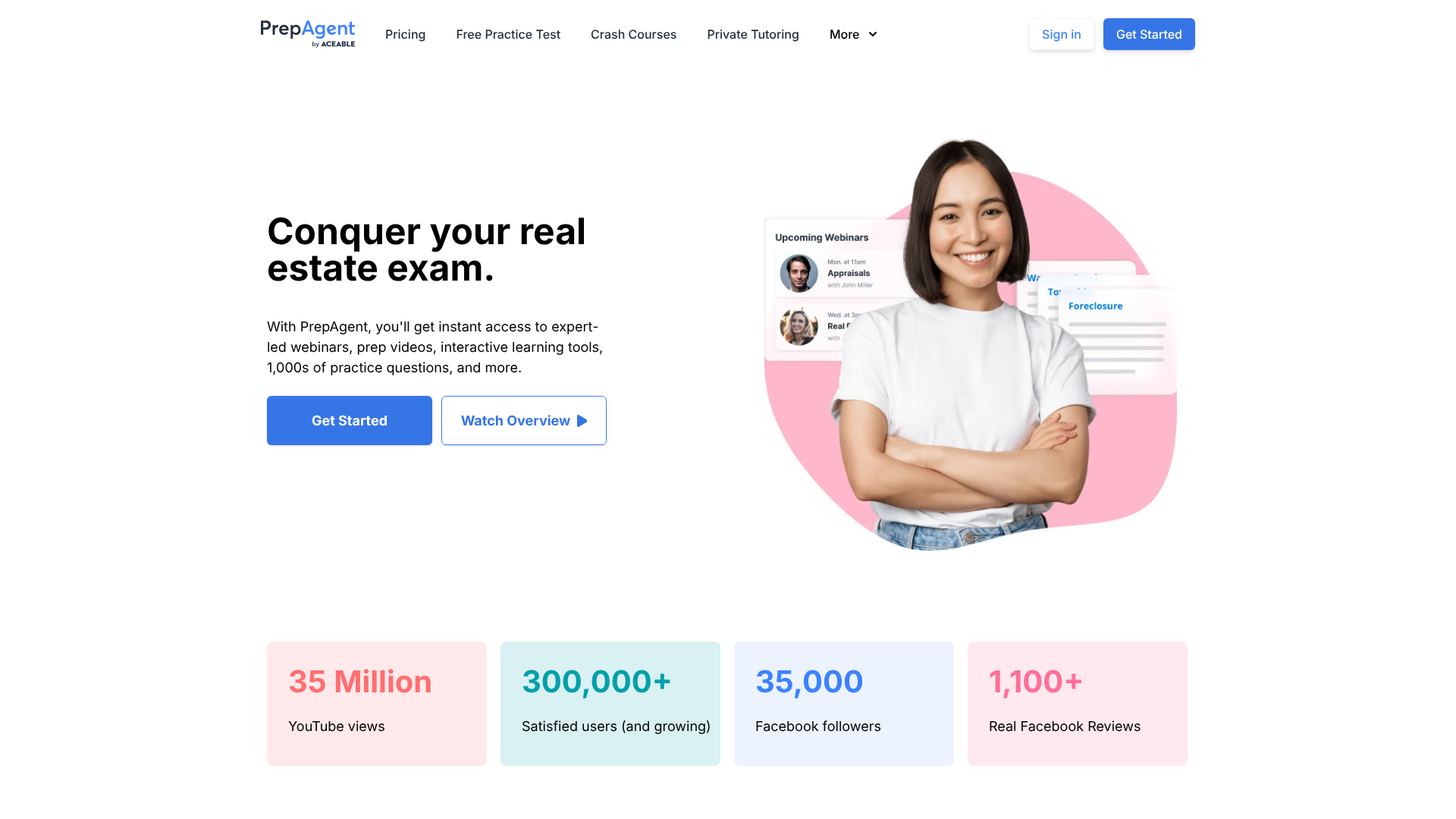
PrepAgent is one of the most popular and highly-regarded platforms in the industry. It's known for its comprehensive approach that combines a massive question bank with engaging webinars, audio lessons, and digital flashcards.
Pros:
- Huge Question Bank: Thousands of national and state-specific questions.
- Multiple Learning Formats: Live online webinars, video and audio lessons cater to different learning styles.
- Excellent Explanations: Detailed rationales are provided for every question.
Cons:
- Subscription-Based: Access is for a limited time (e.g., one week, one month, or one year), which may pressure some users.
- Can Be Overwhelming: The sheer amount of resources can be a lot to navigate for some.
Real Estate Exam Ninja: Best for Free Resources
For those on a tight budget or who want to supplement other materials, Real Estate Exam Ninja offers a surprising amount of high-quality content for free. It's a great starting point to gauge your knowledge without any financial commitment.
Pros:
- Completely Free: Provides hundreds of practice questions with explanations at no cost.
- Simple and Accessible: No sign-up is required to access the basic practice tests.
- Covers All States: Offers specific practice tests for each state.
Cons:
- Limited Question Bank: The free version has fewer questions than paid competitors.
- Fewer Features: Lacks the advanced analytics and multiple learning formats of premium services.
Study.com: For Visual and Auditory Learners
Study.com takes a different approach, focusing on short, animated video lessons to explain complex topics. Their platform is ideal for learners who struggle with dense textbooks and prefer a more engaging, multimedia experience.
Pros:
- Engaging Video Lessons: Breaks down difficult concepts into easy-to-digest videos.
- Integrated Quizzes: Short quizzes follow each lesson to test comprehension immediately.
- Broad Subject Matter: Also useful for college credit and other professional exams.
Cons:
- Monthly Subscription Model: Can become costly if you need several months to prepare.
- Less Focus on Full Exam Simulation: More focused on teaching concepts than mimicking the full test experience.
Pearson VUE / PSI Official Practice Tests: The Closest to the Real Thing
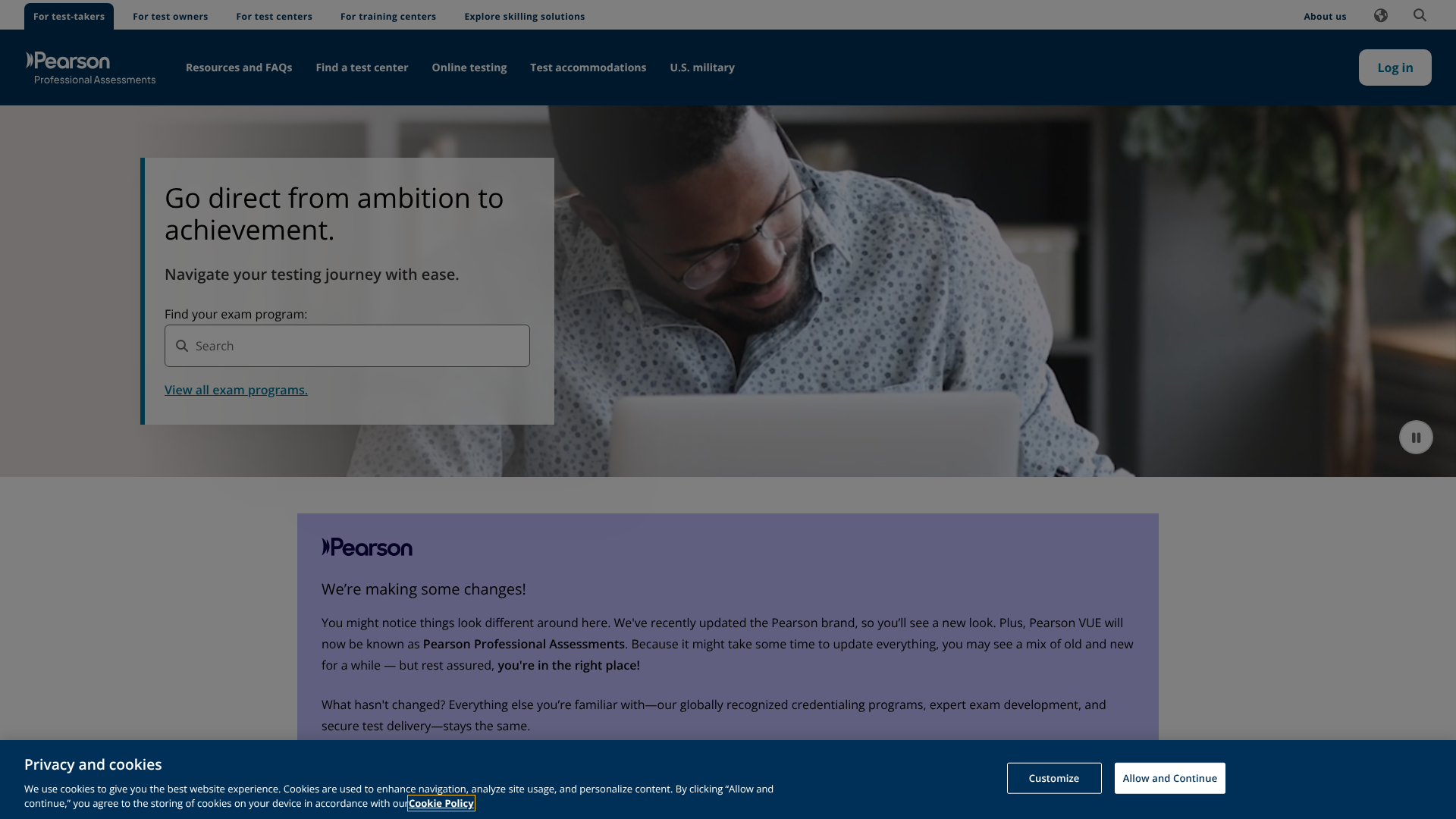
Many states use major testing companies like Pearson VUE or PSI to administer their exams. These companies often sell their own official practice tests. While they can be basic, their value lies in being created by the same people who write the actual exam.
Pros:
- Official Source: Questions are likely to be very similar in style and format to the real exam.
- High Accuracy: Provides a realistic benchmark of your current standing.
Cons:
- Very Small Question Bank: You typically only get one or two practice exams for your money.
- Minimal Explanations: Often, the answer explanations are not as detailed as those from dedicated prep companies.
Understanding Pricing and Cost: Free vs. Paid Options
When you start your search for an agent practice exam, you'll quickly find a wide range of options, from completely free websites to premium courses costing over a hundred dollars. Understanding the difference is key to making an informed investment in your career.
What You Get with Free Practice Tests
Free resources are an excellent starting point. They allow you to get a feel for the types of questions you'll face and identify some of your more obvious knowledge gaps without any financial risk. A free test can be a great way to decide if you're ready to start studying seriously. However, they usually come with significant limitations. The question pools are often small, the answer explanations can be brief or nonexistent, and they rarely offer state-specific content.
The Value of Paid Real Estate Test Questions
Investing in a paid exam prep service is often what separates those who pass on the first try from those who don't. Paid platforms offer:
- Massive Question Banks: Access to thousands of questions ensures you won't see repeats.
- Detailed Explanations: This is where the real learning happens. Premium services invest heavily in clear, comprehensive rationales.
- Performance Tracking: Analytics show your progress over time and highlight your persistent weak spots.
- Up-to-Date, State-Specific Content: Paid providers have a financial incentive to keep their material current with changing laws.
Typical Cost Structures
Pricing for real estate exam prep generally falls into two categories:
- Subscription Access: You pay a monthly fee for access to all materials (e.g., $40-$60 per month).
- Package Deals: You pay a one-time fee for access for a set period (e.g., $99 for 3 months of access).
Is It Worth Paying for Exam Prep?
Consider the cost of failure. The fee to retake the real estate exam can be $50 to $100 or more, not to mention the lost time and income from a delayed career start. A paid prep course, which might cost around $100, is a small investment to ensure you pass the first time. The confidence and knowledge gained are well worth the price.
A Step-by-Step Guide to Using Practice Tests Effectively
Buying access to a great real estate agent practice test is only the first step. To truly get the most out of it, you need a systematic approach. Follow these steps to turn practice tests into your most powerful study tool.
Step 1: Take a Baseline Test
Before you even open a textbook, take a full-length, timed practice exam. Don't worry about the score; the goal is to get a raw, honest assessment of your starting point. This initial test will highlight your natural strengths and weaknesses, giving you a roadmap for your study plan. It will prevent you from wasting time on topics you already understand and direct you toward the areas that need the most work.
Step 2: Integrate Practice Questions into Your Study Routine
Don't save practice tests for the very end. Use them throughout your preparation. After you study a specific chapter, like Contracts, take a 20-question quiz on that topic. This immediate application of knowledge, known as active recall, is scientifically proven to improve memory and comprehension. It helps lock in the information far more effectively than simply re-reading the chapter.
Step 3: Simulate Real Testing Conditions
As you get closer to your exam date, your practice tests should become full-blown dress rehearsals. This means:
- Find a Quiet Place: Eliminate all distractions.
- Set a Timer: Adhere strictly to the official time limit for your state's exam.
- No Cheating: Don't look at your notes or phone.
This process builds mental stamina and helps you master time management, two critical skills for success on exam day.
Step 4: The Critical Review Process
This is the most important step of all. After each practice test, you must meticulously review your results. Don't just look at the questions you got wrong. Review every single question.
- For Wrong Answers: Read the explanation carefully. Go back to your textbook or study guide to review the underlying concept. Don't just memorize the answer; understand why it's correct.
- For Right Answers: Make sure you got it right for the right reason. Did you guess correctly? If so, review the explanation anyway to solidify your understanding.
Create a "mistake log" or flashcards for the concepts you struggle with. This focused review is where the deepest learning occurs.
A Practical Resource for Your Prep
Watching someone walk through questions can be incredibly helpful. This video provides a run-through of 100 common real estate exam questions, which can supplement your own practice.
Step 5: Focus on Your Weakest Areas
Use the analytics from your practice tests to guide your study sessions. If your results consistently show you're scoring poorly on Property Valuation, dedicate your next few study blocks to that topic. Drill down with topic-specific quizzes until your scores improve. This targeted approach is far more efficient than passively re-reading the entire textbook.
Step 6: Taper Off and Rest Before Exam Day
In the final 24-48 hours before your exam, avoid cramming with full-length practice tests. This can lead to burnout and anxiety. Instead, do a light review of your notes or your "mistake log." Trust in the preparation you've done. Get a good night's sleep, eat a healthy breakfast, and walk into the testing center with confidence.
Frequently Asked Questions (FAQ)
How many practice questions should I do?
There's no magic number, but volume and consistency are key. Most experts recommend answering at least 1,000-2,000 unique practice questions during your preparation. This volume exposes you to a wide variety of question types and scenarios, ensuring you're prepared for whatever the real exam throws at you. The focus should be on quality over quantity; it's better to do 50 questions and review them thoroughly than to rush through 200 with no analysis.
Is the real estate exam hard?
The difficulty is subjective, but it is a challenging professional licensing exam that should not be underestimated. The pass rates vary by state but often hover between 50% and 60% for first-time takers. The exam covers a broad range of topics, from complex legal principles to detailed financial calculations. The questions are often worded in a tricky way to test your true understanding, not just memorization. With diligent study and extensive practice, it is very passable.
What is a passing score on the real estate exam?
Passing scores are set by each individual state's real estate commission. Most states require a score of 70% to 75% to pass. It's important to note that you typically must achieve this passing score on both the national and state-specific portions of the exam independently. You can find the exact requirement for your state on your real estate commission's website, a resource you can often find through the Association of Real Estate License Law Officials (ARELLO).
Can I just use free practice tests to pass?
While it's theoretically possible, it's not recommended. Free tests are a great supplement, but they often lack the depth, detailed explanations, and large, state-specific question banks of paid services. The investment in a quality prep course is an investment in passing the first time, saving you the time, money, and stress of having to retake the exam.
How close are practice test questions to the real exam?
Reputable prep companies work hard to make their questions as similar as possible to the real exam in terms of style, difficulty, and content. However, you will never see the exact same questions on the official exam due to security protocols. The goal of practice questions is not to memorize answers but to master the underlying concepts and get comfortable with the format, so you can confidently answer any question on a given topic.
Final Thoughts
Passing your real estate exam is the first major step toward a rewarding career. While the process requires dedication and hard work, you don't have to go into it blind. A high-quality real estate agent practice test is the most effective tool at your disposal. It provides a clear path forward, illuminating your weaknesses and building your strengths.
Remember, the key is not just to take test after test, but to engage in a deliberate cycle of testing, reviewing, and learning. By simulating the exam environment, analyzing your mistakes, and focusing your efforts where they're needed most, you transform your preparation from a guessing game into a proven strategy for success.
Commit to the process, use these tools wisely, and you'll be well on your way to walking out of that testing center with a passing grade. Your future clients are waiting for the knowledgeable, professional agent you are about to become.