









15 Essential Real Estate Tools for Agents to Boost Sales in 2026
In today's competitive market, top-producing real estate agents don't just rely on charm and a strong network; they operate like tech-savvy CEOs of their own businesses. The right stack of real estate tools for agents is no longer a luxury—it's the engine that drives lead generation, client management, and transaction efficiency. Without a solid technology foundation, you risk losing leads, wasting time on manual tasks, and falling behind competitors who work smarter, not just harder.
This guide breaks down the essential categories of tools every agent needs to thrive in 2026. We'll cover everything from the CRM that acts as your digital command center to the AI-powered assistants that automate your marketing, helping you focus on what you do best: building relationships and closing deals.
What to Know
- CRM is Non-Negotiable: A Customer Relationship Management (CRM) system is the most critical tool for managing leads, automating follow-ups, and tracking your sales pipeline from start to finish.
- AI is Your New Assistant: Artificial intelligence is transforming real estate marketing by automating tasks like writing property descriptions, nurturing leads with chatbots, and personalizing client communication.
- Visuals Sell Properties: High-quality virtual tours and a consistent video marketing strategy are essential for showcasing listings in a digital-first world, attracting more qualified buyers.
- Your Website is Your Hub: A professional, mobile-friendly website with IDX integration is the cornerstone of your online presence and a powerful engine for capturing exclusive leads.
1. Customer Relationship Management (CRM): Your Digital Command Center
A real estate CRM is more than just a digital address book; it's the central hub for your entire business. It organizes your contacts, tracks every interaction, and automates follow-up so no lead ever falls through the cracks. The primary function of these tools for real estate agents is to turn scattered data into a streamlined, actionable pipeline.
A great CRM helps you manage relationships at scale. It can automatically remind you to call a past client on their home anniversary, send a happy birthday email, or start a drip campaign for a new online lead. This level of organization frees up your mental energy and ensures you provide a consistent, professional experience for every client.
Here are some of the top CRMs designed specifically for real estate professionals:
Follow Up Boss
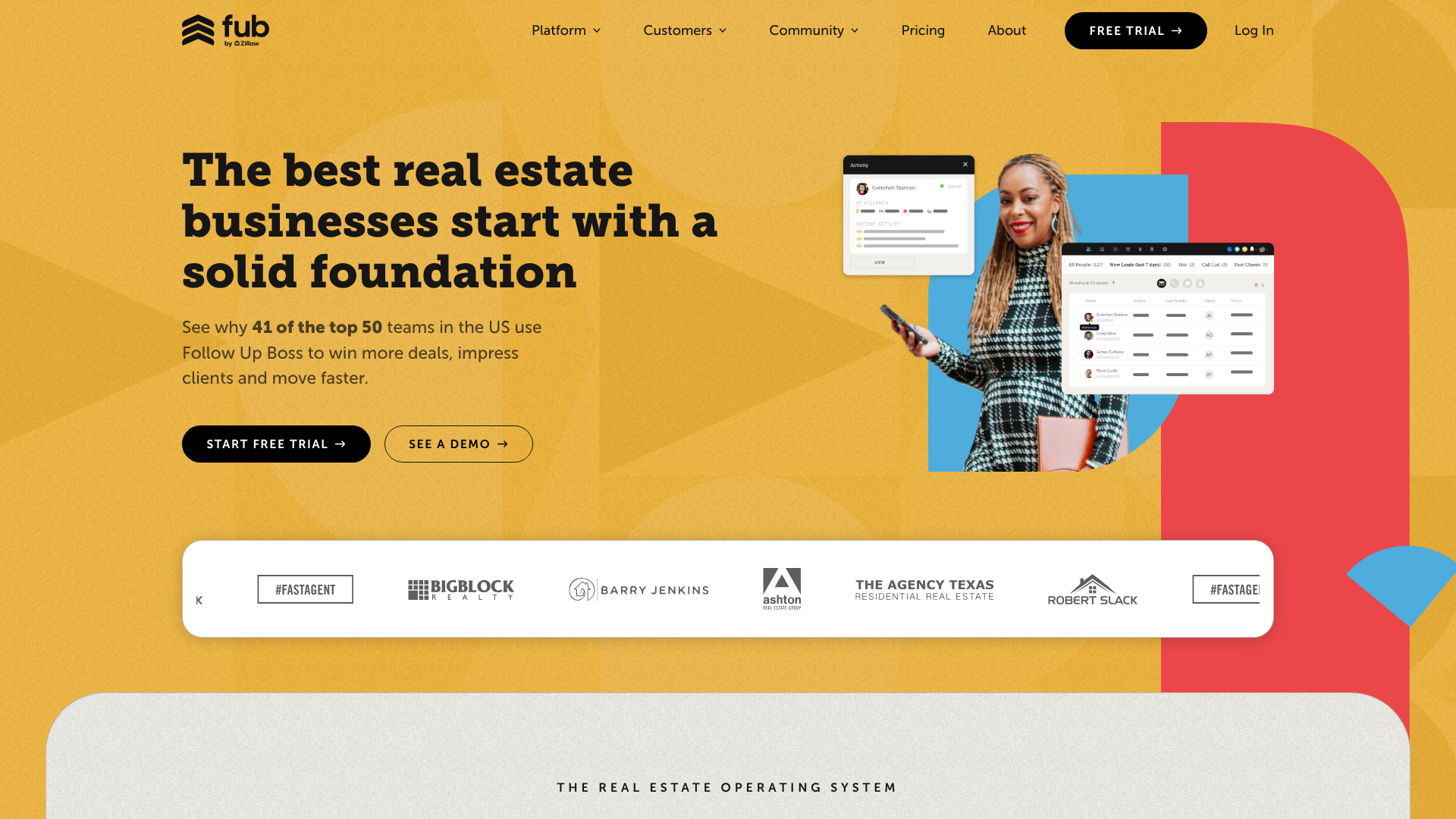
Follow Up Boss is widely regarded for its powerful lead routing and consolidation features. It pulls in leads from over 200 sources (like Zillow, Realtor.com, and your website) into one simple inbox, making speed-to-lead effortless. Its clean interface and robust mobile app are perfect for agents who are always on the move.
Pros:
- Excellent lead aggregation from hundreds of sources.
- Strong team features, including lead routing and accountability tracking.
- Simple, intuitive user interface that requires minimal training.
Cons:



- Lacks a built-in website builder or transaction management features.
- Can be more expensive than some all-in-one competitors.
Chime
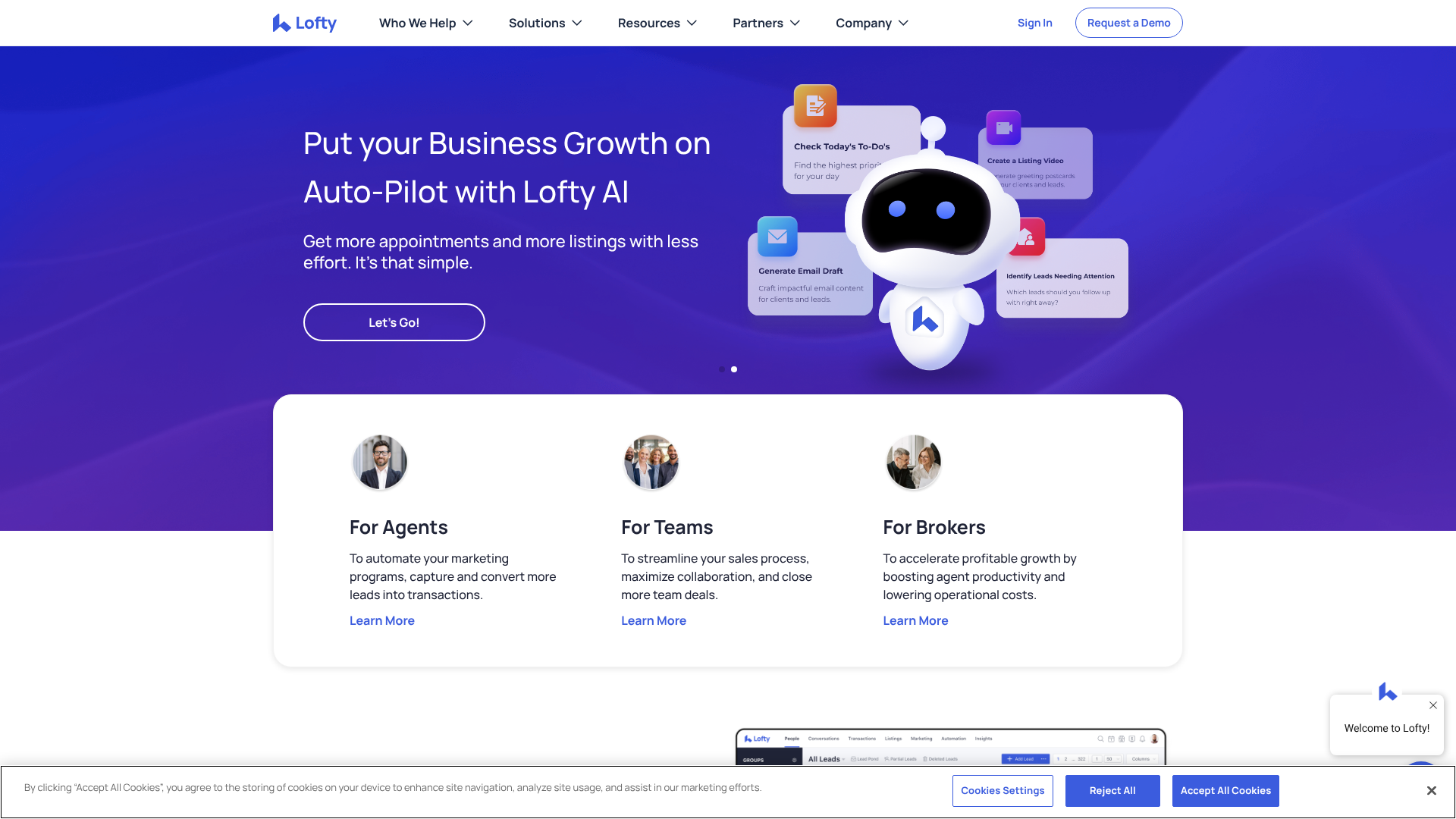
Chime is an all-in-one platform that combines an IDX website, a powerful CRM, and AI-driven marketing tools. Its AI assistant can engage leads 24/7, qualifying them before they ever reach your inbox. This makes it a great option for agents and teams looking for a comprehensive system to manage their entire sales and marketing process.
Pros:
- AI assistant for lead nurturing and qualification.
- Fully integrated IDX website and marketing tools.
- Strong power dialer and communication features built-in.
Cons:
- Can have a steeper learning curve due to its extensive features.
- The all-in-one model may not be ideal for agents who prefer best-in-class standalone tools.
LionDesk
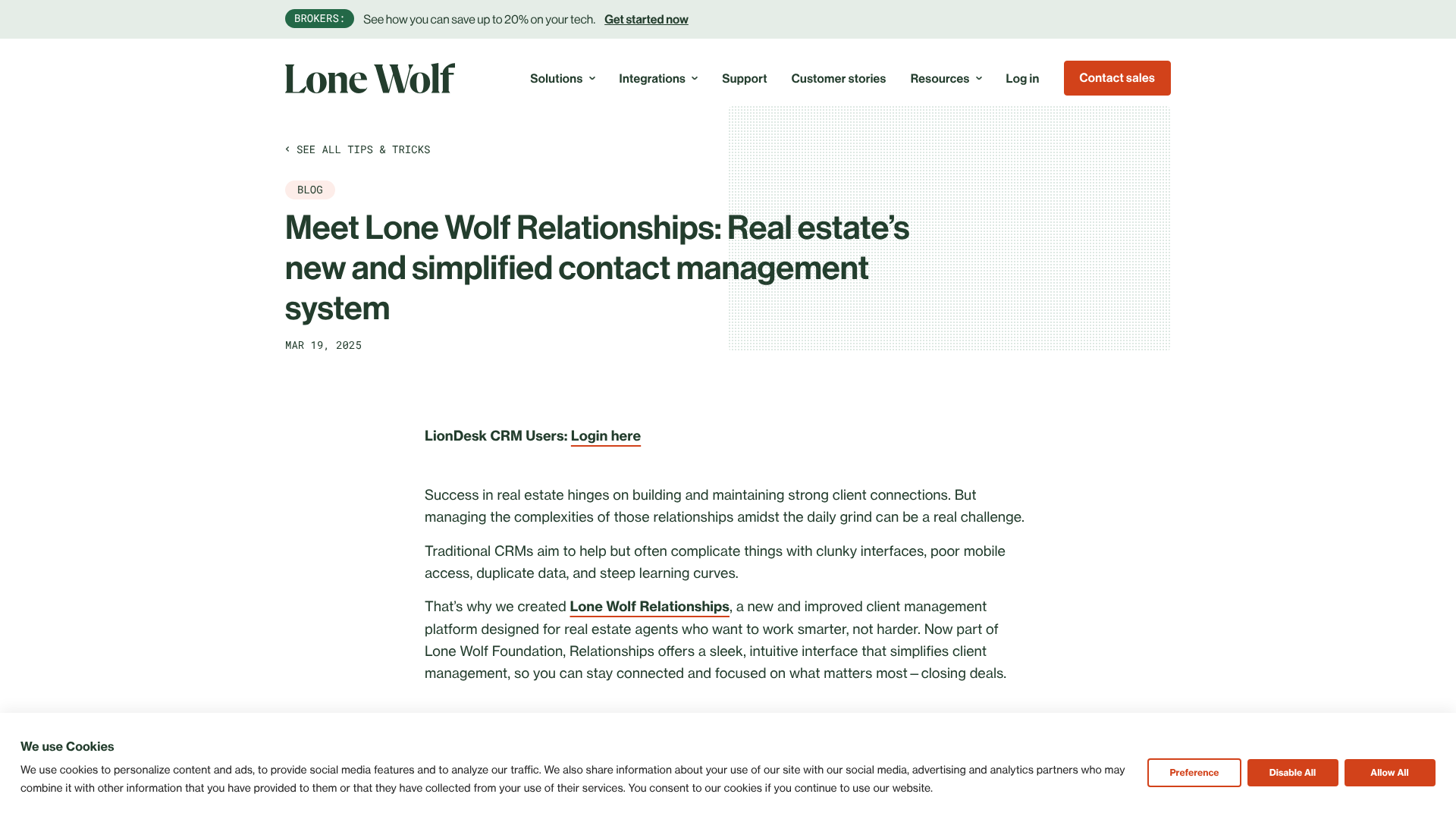
LionDesk stands out for its focus on multi-channel communication. It allows you to send mass texts, emails, and even video messages directly from the platform. This makes it easier to build personal connections with your database and stand out from the competition. It's an affordable yet feature-rich option for individual agents.
Pros:
- Integrated video email and texting capabilities.
- AI-powered lead follow-up assistant (Gabby AI).
- Very competitive pricing for the features offered.
Cons:
- The user interface can feel a bit dated compared to newer platforms.
- Some users report that the transaction management module is less developed than dedicated tools.
Wise Agent
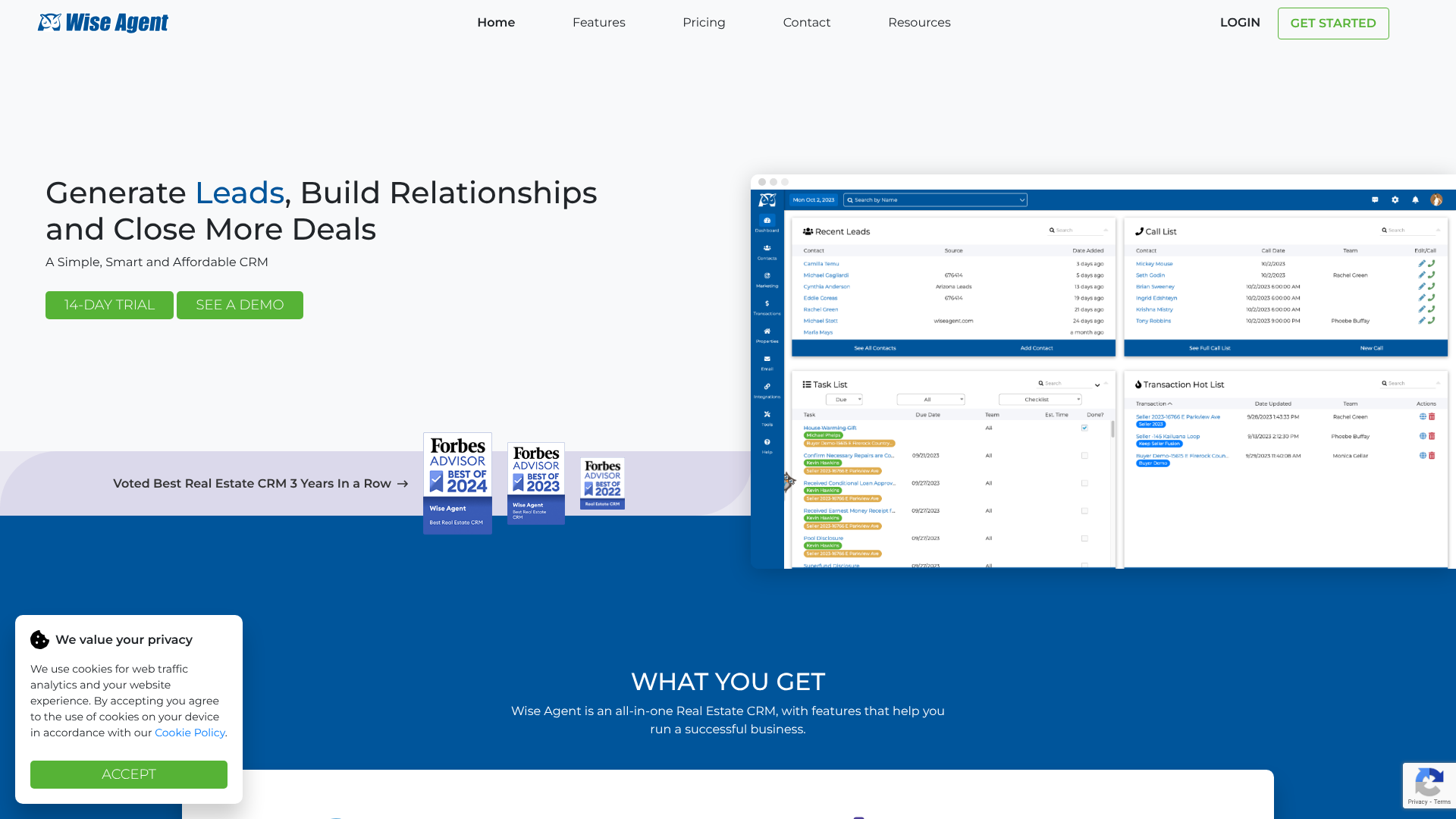
Wise Agent has been a reliable choice for agents for years, offering a balanced set of features that cover everything from contact management to marketing and transaction checklists. It's known for its excellent customer support and straightforward, no-nonsense approach to CRM. It's a solid all-around platform that gets the job done without being overly complex.
Pros:
- Comprehensive, all-in-one feature set including marketing and transaction tools.
- Highly-rated customer service and support.
- Includes landing pages and lead capture forms.
Cons:
- The interface isn't as modern as some competitors.
- Mobile app functionality could be improved.
| Feature | Follow Up Boss | Chime | LionDesk | Wise Agent |
|---|---|---|---|---|
| Best For | Lead Aggregation & Teams | AI & All-in-One | Video Communication | All-Around Value |
| IDX Website | No | Yes | No | No |
| AI Assistant | No | Yes | Yes | No |
| Video Email/Text | No | No | Yes | No |
| Starting Price | Visit site for pricing | Visit site for pricing | Visit site for pricing | Visit site for pricing |
2. Lead Generation Platforms: Fueling Your Pipeline
While a CRM helps you manage leads, lead generation platforms are the agent tools for real estate that help you find them in the first place. These systems typically provide you with a professional, consumer-facing website integrated with the local MLS via an IDX feed. This allows visitors to search for properties directly on your site, turning it into a powerful lead capture machine.
These platforms go beyond just a website. They often include built-in tools for running Facebook ads, Google PPC campaigns, and creating landing pages for specific properties or neighborhoods. The goal is to drive traffic, capture contact information, and automatically feed new prospects into your CRM for nurturing.
kvCORE
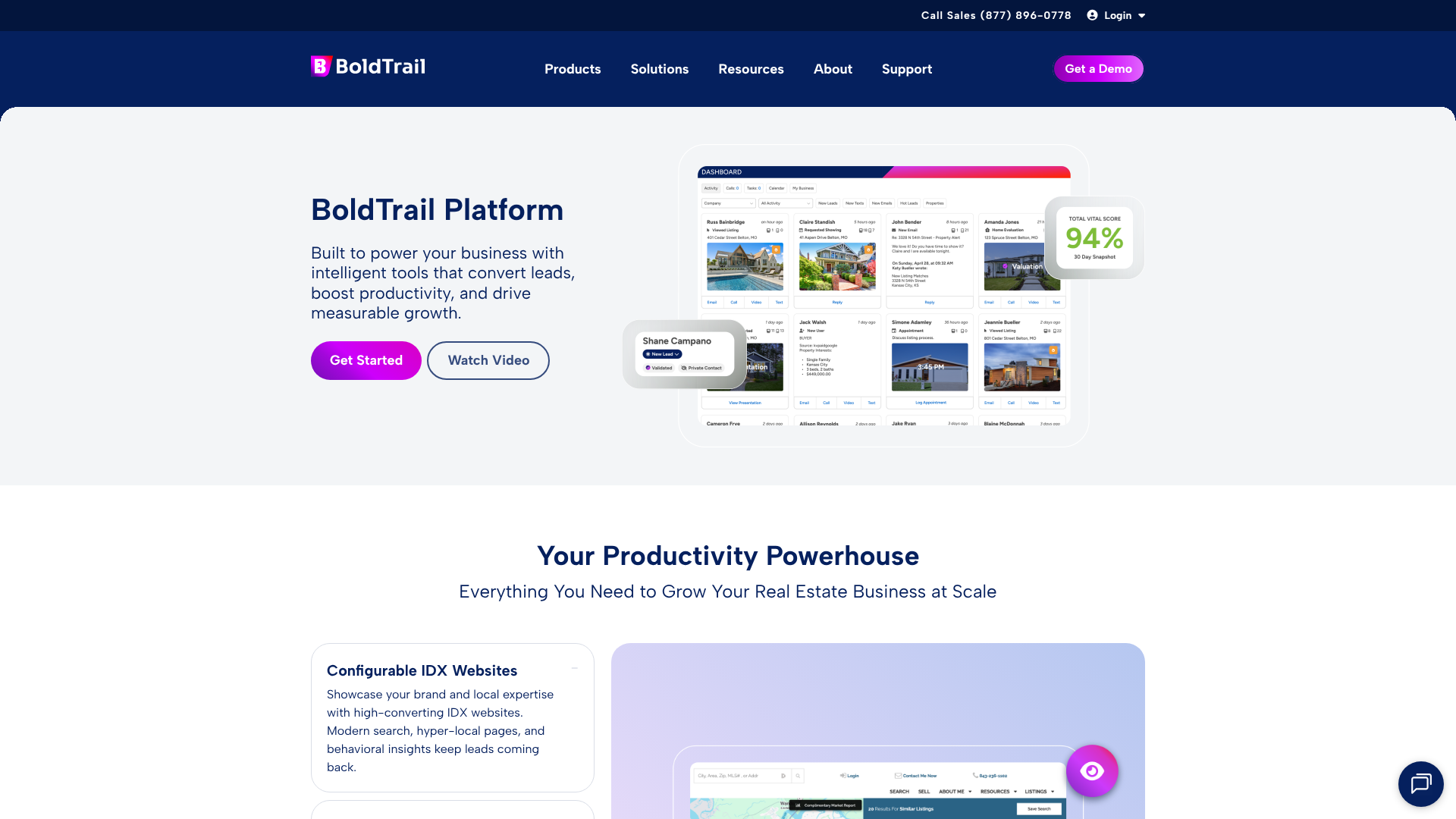
kvCORE is a complete ecosystem for brokerages and teams. It provides every agent with a customizable IDX website, a smart CRM, and a suite of marketing automation tools. Its behavioral automation feature tracks user activity on your site and triggers follow-up campaigns based on what properties they view or save, creating a highly personalized experience.
Pros:
- Comprehensive platform covering website, CRM, and marketing.
- Advanced automation based on user behavior.
- Strong tools for teams and brokerages to manage performance.
Cons:
- Often sold at the brokerage level, so it may not be available to all individual agents.
- Can be complex to set up and master fully.
Real Geeks
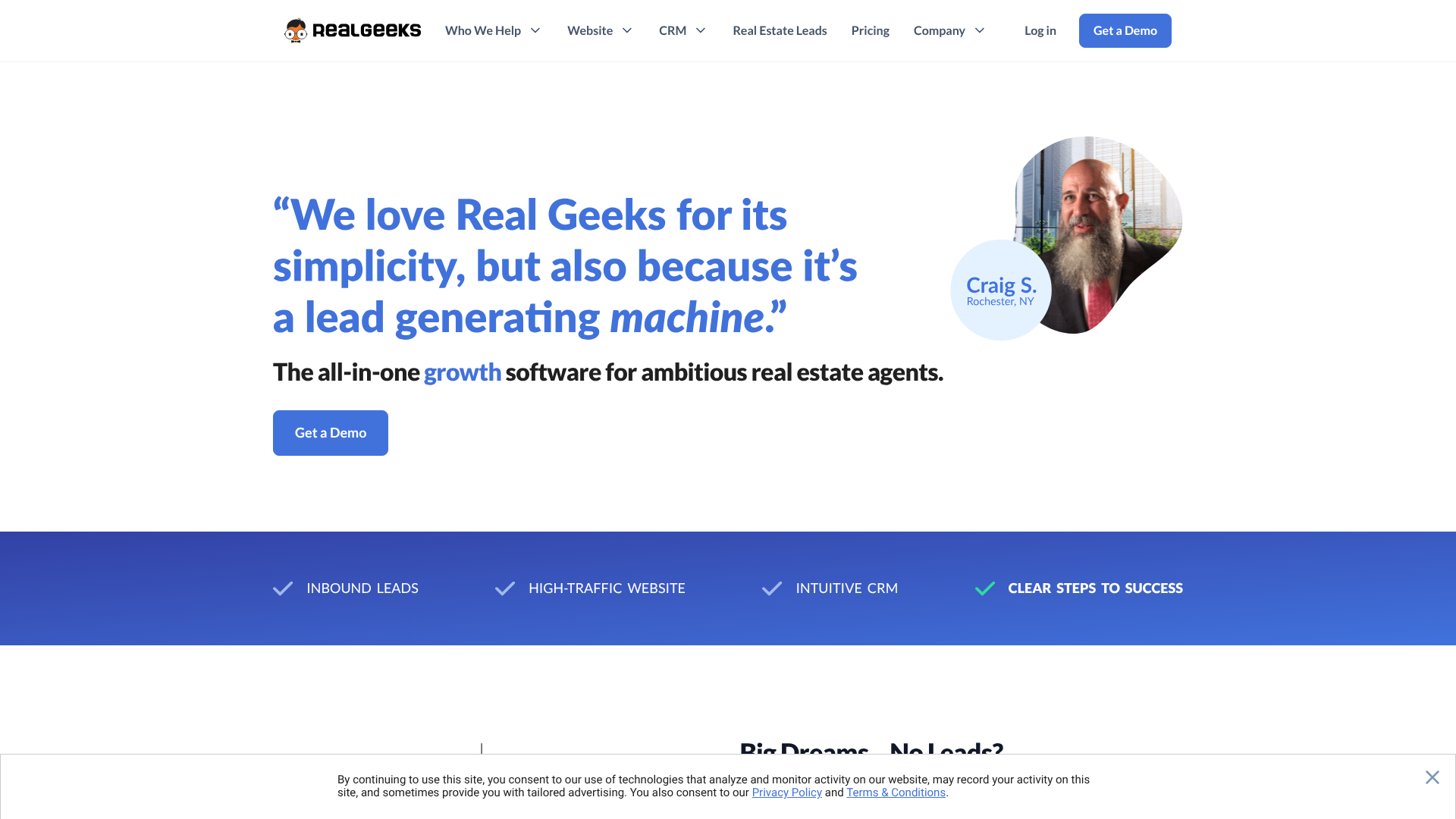
Real Geeks is known for its high-performing, SEO-friendly IDX websites that are designed for lead conversion. The platform includes a CRM and email marketing system, but its real strengths are its Facebook marketing tool and Google PPC management services. It's a favorite among agents who are serious about generating leads through online advertising.
Pros:
- Excellent IDX websites optimized for conversion.
- Powerful Facebook ad manager and optional PPC services.
- User-friendly backend and CRM.
Cons:
- The CRM is functional but not as feature-rich as standalone options like Follow Up Boss.
- Design customization on websites can be limited.
BoomTown
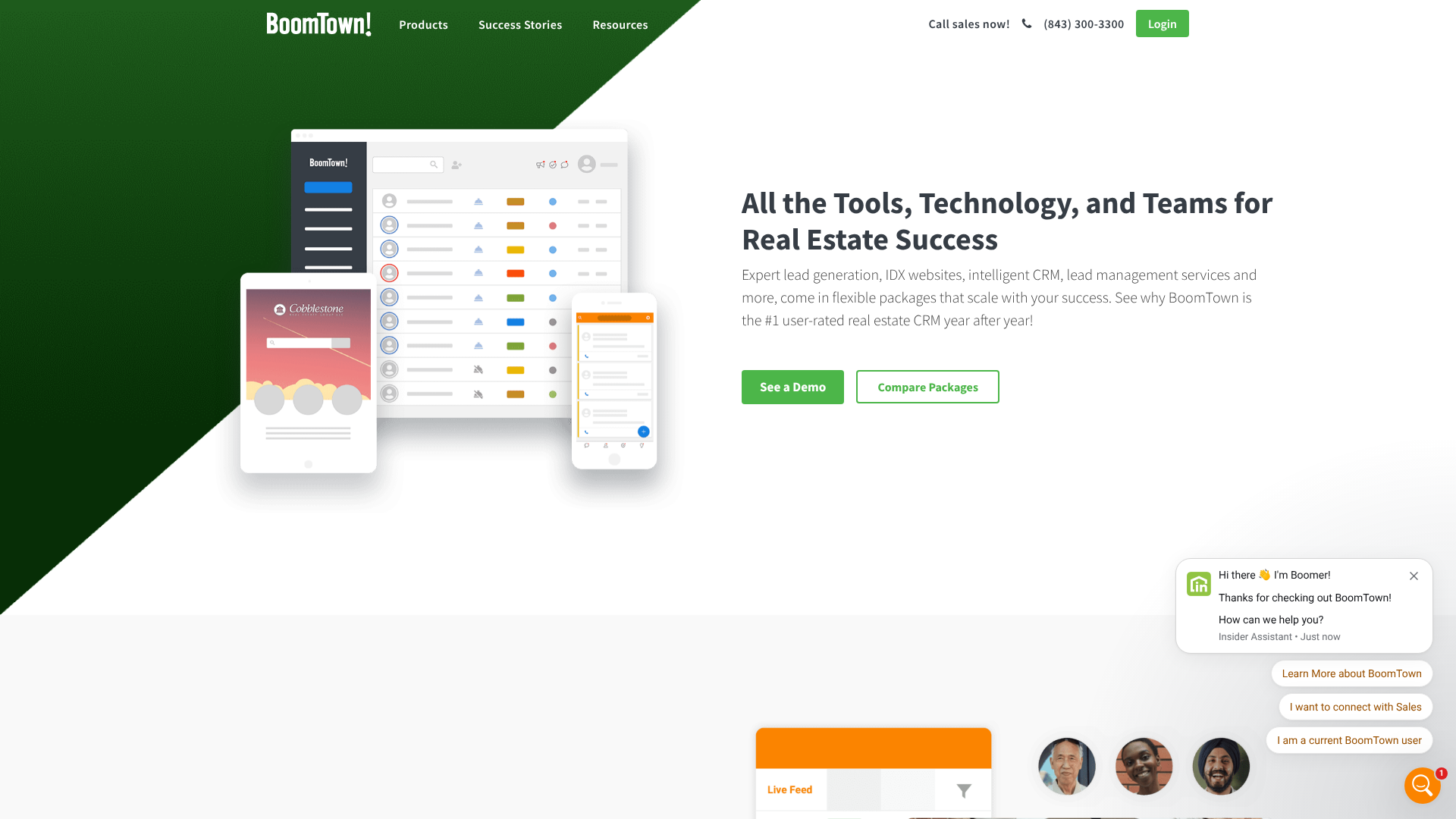
BoomTown is another top-tier platform designed for high-producing teams and brokerages. It excels at lead qualification and distribution. Its predictive CRM helps agents focus on the leads most likely to transact, and its "Success Assurance" concierge service can call and qualify new leads on your behalf, saving you valuable time.
Pros:
- Predictive CRM that scores and prioritizes leads.
- Optional lead qualification concierge service.
- Robust reporting and accountability tools for team leaders.
Cons:
- Higher price point makes it less accessible for individual agents.
- Requires a significant commitment to get the most out of the system.

3. AI-Powered Assistants: The Future of Real Estate Marketing
Artificial intelligence is rapidly changing how agents market properties and communicate with clients. AI-powered real estate agent tools can now write compelling property descriptions, create social media posts, run ad campaigns, and even respond to initial lead inquiries. This technology acts as a tireless assistant, handling repetitive tasks so you can focus on high-value activities.
For example, instead of spending an hour trying to write the perfect listing description, an AI tool can generate several creative options in seconds based on property features and photos. This not only saves time but can also improve marketing quality and consistency.
Trof AI
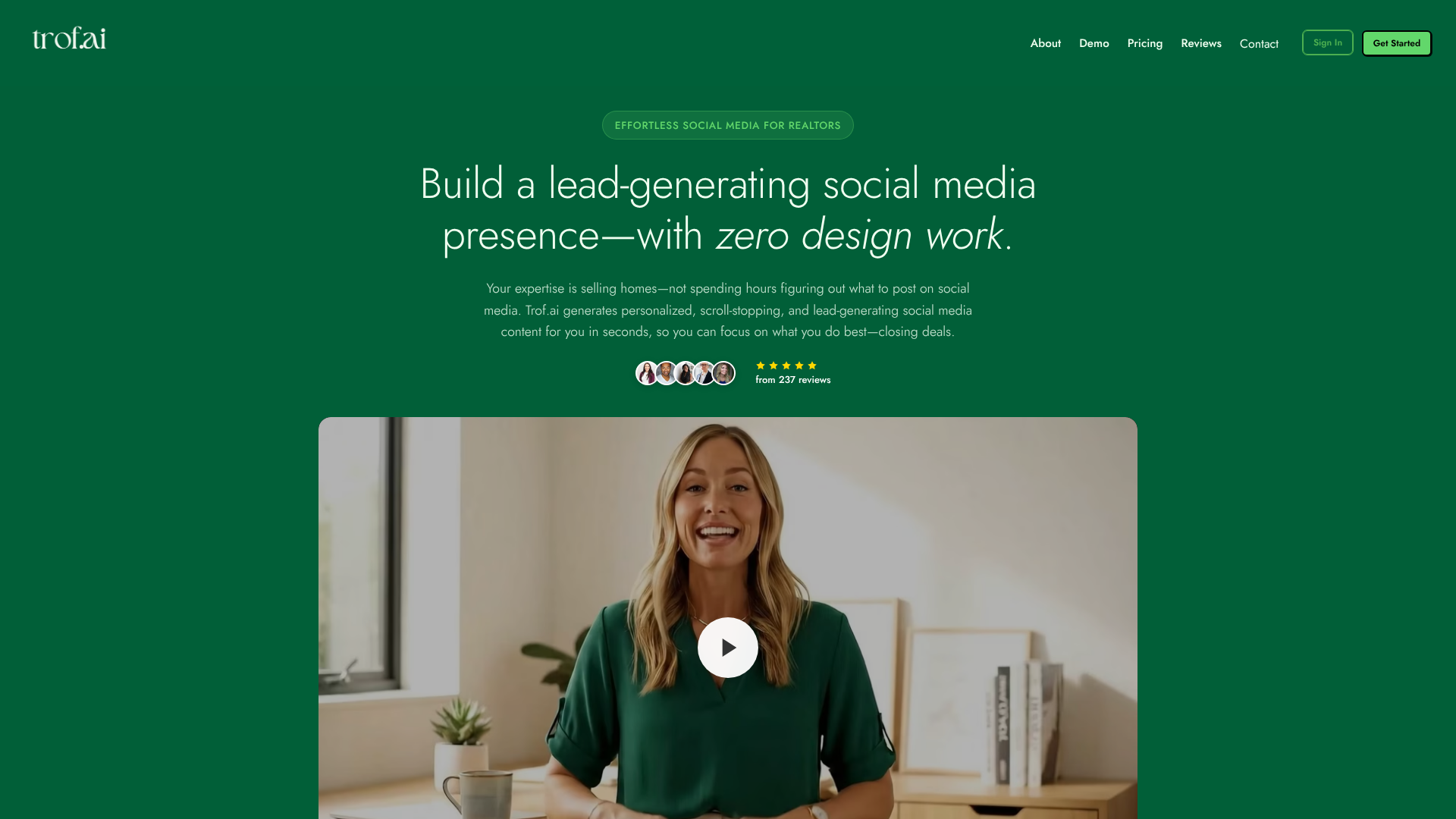
Trof AI is a marketing platform built specifically for real estate agents. It uses AI to automate the creation of property marketing materials. You can upload property details, and it will generate everything from engaging listing descriptions and social media captions to email newsletters and blog posts. It's designed to be an all-in-one content creation solution for busy agents.
Pros:
- Generates a wide range of marketing content from a single property input.
- Helps maintain a consistent and professional brand voice.
- Saves significant time on content creation tasks.
Cons:
- As with any AI tool, the output may require some human editing for perfection.
- It's a specialized tool focused on content, not a full CRM or lead gen platform.
4. Transaction Management Software: From Offer to Close
Managing the mountain of paperwork from contract to closing is one of the most stressful parts of a real estate deal. Transaction management software digitizes this entire process. These platforms provide secure, cloud-based storage for documents, e-signature capabilities, and automated checklists to ensure every deadline is met and nothing is missed.
Using a dedicated tool for this improves compliance, enhances the client experience, and creates a seamless workflow between you, your clients, the other agent, and the title company. It's a must-have for any agent looking to run an organized, professional business.
Dotloop
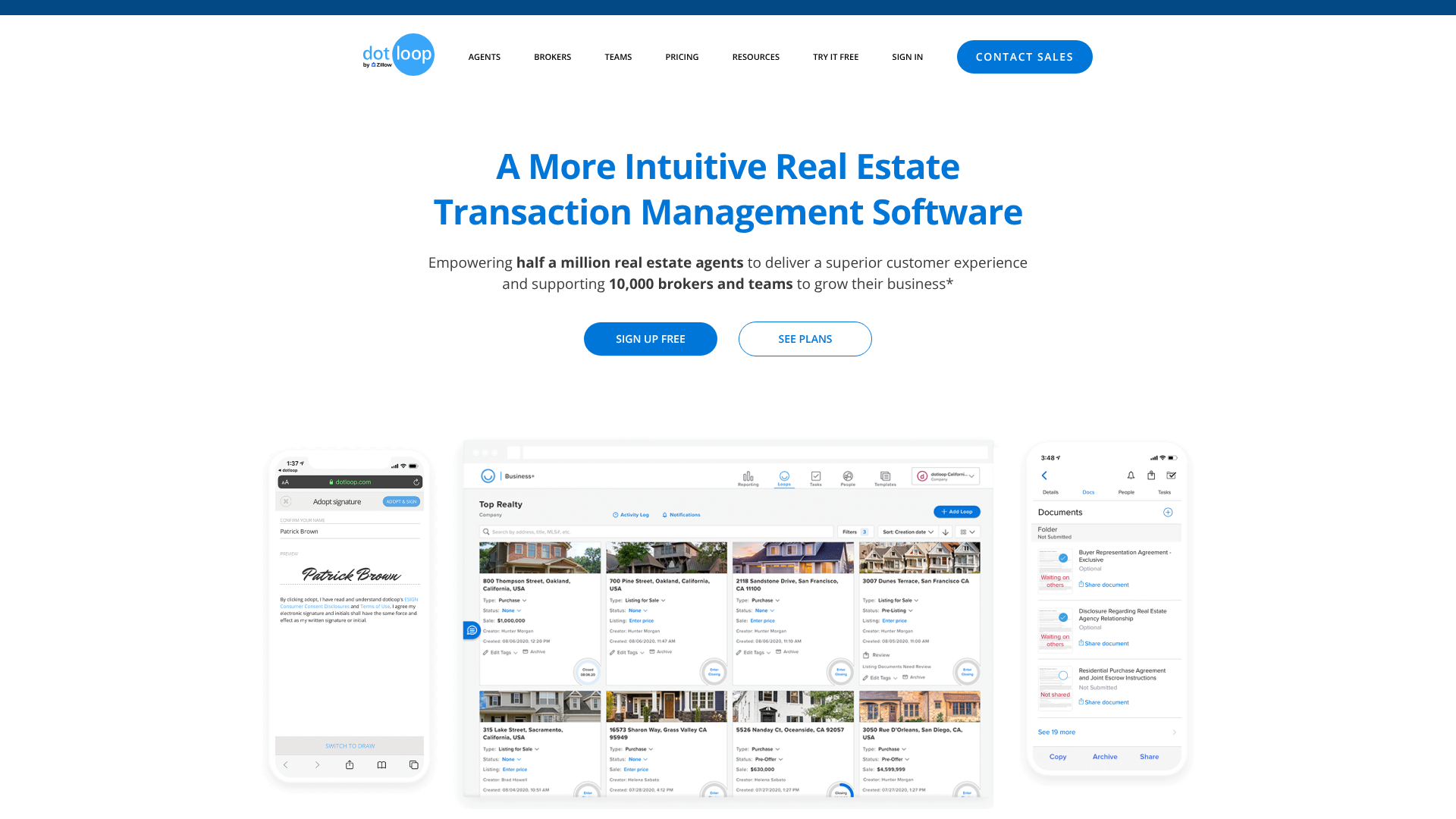
Dotloop is a leading transaction management platform that brings all parties of a deal into one collaborative workspace, or "loop." It offers legally binding e-signatures, customizable document templates, and compliance workflows. Its intuitive interface makes it easy for clients to sign documents from any device, speeding up the entire process.
Pros:
- All-in-one platform for document sharing, e-signatures, and compliance.
- Collaborative features make it easy to work with all parties in a transaction.
- Strong security and compliance features.
Cons:
- Some agents prefer to keep their e-signature tool separate from their document management.
- The mobile app has fewer features than the desktop version.
5. Virtual Tour & Staging Technology: Creating Immersive Experiences
In a world where many buyers begin their search online, static photos are no longer enough. Virtual tour technology allows you to create immersive 3D walkthroughs of your listings, giving potential buyers a true sense of the space before they ever step inside. This is one of the most impactful tools for real estate agents to pre-qualify buyers and attract out-of-town interest.
Platforms like Matterport allow you to create a digital twin of a property that users can navigate from their computer or phone. Similarly, virtual staging services from companies like BoxBrownie or Styldod can digitally furnish an empty home, helping buyers visualize its potential at a fraction of the cost of physical staging.
These technologies not only enhance the buyer experience but also position you as a modern, tech-forward agent, which can be a powerful differentiator when competing for listings.
6. Social Media Management & Content Creation Tools
A strong social media presence is crucial for building your brand and generating leads. However, being consistent can be a major challenge. Social media management tools help you plan and schedule your content in advance, so your profiles stay active even when you're busy with clients.
Platforms like Buffer, Hootsuite, or Later allow you to schedule posts across multiple platforms (Facebook, Instagram, LinkedIn) from a single dashboard. For content creation, Canva is an indispensable tool. It provides thousands of professionally designed templates for real estate flyers, social media graphics, market updates, and more, allowing you to create stunning visuals with no design experience.
Pro Tip: Create a simple content calendar for your social media. Plan out your posts a week or two in advance. Dedicate specific days to certain themes, like "Market Update Monday," "Testimonial Tuesday," or "Featured Listing Friday." This consistency builds anticipation and makes content creation much more manageable.

7. CMA & Data Analytics Tools: Pricing Properties with Confidence
Creating an accurate Comparative Market Analysis (CMA) is a core skill for any real estate agent. While your MLS is the primary source for this data, specialized CMA tools can help you present that information in a more professional and persuasive way. Tools like Cloud CMA or Brokermint's CMA generator integrate with your MLS to create beautiful, branded reports that are easy for clients to understand.
Beyond individual CMAs, data analytics tools help you understand broader market trends. Services like Altos Research or local market reports from your Realtor association provide valuable insights into inventory levels, days on market, and pricing trends. Using this data in your client conversations and marketing materials establishes you as a true market expert.
8. Video Marketing Platforms: Engaging Buyers and Sellers
Video is the most engaging form of content online. For real estate, it's a powerful medium for everything from property tours and neighborhood guides to client testimonials and educational content. Integrating video into your marketing can dramatically increase engagement and help you build a stronger connection with your audience.
While you can upload videos directly to social media, specialized platforms can enhance your efforts. For example, BombBomb allows you to easily record and send personalized video messages via email. This is a fantastic way to follow up with new leads or thank clients. Many CRMs, like LionDesk, have similar video messaging features built directly into their platform, making it easy to add a personal touch to your automated campaigns.
9. Website & IDX Solutions: Your Digital Storefront
Your website is your digital business card, your marketing hub, and your 24/7 lead capture tool. It's essential that it's professional, mobile-friendly, and provides real value to visitors. The key to a valuable real estate website is Internet Data Exchange (IDX) integration.
IDX is the technology that allows you to display all active MLS listings on your own website. This turns your site into a property search portal that rivals the big national platforms. When visitors can search, save, and get alerts for properties on your site, they have a reason to come back—and you have a reason to capture their information. Platforms like kvCORE and Real Geeks are built around providing powerful, lead-generating IDX websites as part of their core offering.
10. Essential Mobile Apps for Agents on the Go
As an agent, your office is often your car. Having the right mobile apps on your phone is critical for staying productive between appointments. Here are a few must-haves:
- Your CRM App: Every modern CRM, from Follow Up Boss to Chime, has a mobile app. This is non-negotiable for looking up client info, adding notes, and responding to leads quickly.
- Document Scanner: Apps like Adobe Scan or CamScanner turn your phone's camera into a high-quality scanner, perfect for digitizing receipts or signed documents on the fly.
- Mileage Tracker: An app like MileIQ automatically tracks your drives for business, making tax time significantly easier by maximizing your deductions.
- Open House Management: Apps like Open Home Pro allow you to ditch the paper sign-in sheet. Visitors sign in on a tablet, and their information is automatically added to your CRM for follow-up.
FAQ: Answering Your Top Questions About Real Estate Tools
What equipment do you need to be a real estate agent?
Beyond a reliable car and professional attire, a modern agent's essential equipment is primarily tech-based. This includes a powerful smartphone with a good camera, a lightweight laptop or tablet for mobile work, and a Realtor's lockbox key (often a smartphone app itself, like SentriKey). On the software side, the foundational equipment includes a CRM, access to the MLS, and a transaction management tool.
What does every realtor need?
Every realtor needs a system to manage three core areas of their business: leads, clients, and transactions. This translates to needing a lead generation source (like an IDX website or social media), a CRM to nurture those leads and manage client relationships, and a transaction management platform like Dotloop to handle the paperwork efficiently and compliantly.
What is the biggest mistake a real estate agent can make?
The biggest mistake is failing to treat their business like a business. This often manifests as a lack of systems, particularly a failure to adopt and consistently use a CRM. Without a system to manage leads and follow up, opportunities are inevitably lost, income becomes unpredictable, and the business relies entirely on manual effort, leading to burnout.
Is being a real estate agent still worth it in 2026?
Absolutely. While the industry is constantly evolving, the need for professional, knowledgeable, and client-focused agents remains strong. Success in 2026 and beyond depends on an agent's ability to adapt. Those who leverage technology to streamline their operations, automate their marketing, and provide a superior client experience will not only survive but thrive.
Final Thoughts
Building a successful real estate career in the modern era requires more than just people skills—it requires a smart, efficient technology stack. The real estate tools for agents outlined in this guide are not just add-ons; they are foundational components of a scalable, profitable business.
Start by evaluating the core of your business: your CRM. A system that organizes your contacts and automates your follow-up is the single most important investment you can make. From there, you can build out your stack with tools for lead generation, marketing, and transaction management that fit your budget and business goals.
If you're looking to upgrade your core system, exploring options like Follow Up Boss for its powerful integrations or Chime for its AI capabilities is a great next step. By embracing the right technology, you can spend less time on administrative tasks and more time on what truly matters: serving your clients and growing your business.