









How Much Do Real Estate Agents Make? The Complete Income Breakdown for 2026
The question of how much do real estate agent make is one of the most common queries from anyone considering a career in the industry. Unlike traditional jobs with a steady paycheck, a real estate agent's income is a dynamic figure that can range from barely covering expenses to well over seven figures a year. The allure of unlimited earning potential is strong, but the reality is a complex mix of commissions, splits, expenses, and entrepreneurial effort.
This guide breaks down every component of a real estate agent's earnings. We'll explore how commissions work, the hidden costs that impact your take-home pay, and the strategies top producers use to build a thriving business. Whether you're an aspiring agent or just curious about the industry, you'll get a clear and honest picture of what it takes to succeed financially in real estate.
In a Nutshell
- Income is Commission-Based: Real estate agents don't earn a fixed salary. Their income is derived entirely from commissions on completed sales, which means no deals, no pay.
- Averages Can Be Deceiving: While national data suggests an average real estate agent salary between $50,000 and $100,000, this figure is misleading. A small percentage of high-earning agents skews the average, while many new agents struggle to make a living.
- Key Factors Drive Earnings: Your income potential is heavily influenced by your location, local market conditions, experience level, and chosen niche. What works in a hot market in California may not apply in rural Texas.
- Expenses Are Significant: Agents are independent contractors responsible for their own business costs, including marketing, licensing fees, MLS access, and taxes. Gross commission is not the same as net income.
Understanding the Real Estate Agent Income Model
Before diving into numbers, it's crucial to understand that the term "real estate agent salary" is a misnomer. Agents are typically independent contractors who work under a licensed broker, and their compensation is based 100% on commission. This means they only get paid when they successfully help a client buy or sell a property.
The entire process starts with the Gross Commission Income (GCI). This is the total commission amount paid by the seller at the closing of a sale. The commission rate is negotiable but typically falls between 5% and 6% of the home's final sale price. However, the agent who listed the property doesn't get to keep this entire amount.
It's split multiple ways.
Here’s a typical breakdown of a 6% commission on a $400,000 home sale:
- Total Commission: $400,000 x 6% = $24,000
- Split Between Brokerages: This $24,000 is usually split 50/50 between the seller's agent's brokerage and the buyer's agent's brokerage. Each side receives $12,000.
- Split with the Sponsoring Broker: The agent doesn't get the full $12,000. They must share it with their sponsoring broker. This "broker split" varies widely, from a 50/50 split for new agents to a more favorable 80/20 or even 90/10 for experienced top producers. Some brokerages offer a 100% commission model in exchange for a monthly "desk fee."
Assuming an agent is on a 70/30 split (70% to the agent, 30% to the broker), their take-home from that $12,000 commission would be $8,400. From this amount, the agent must still pay for all their business expenses and taxes.
Key Factors That Influence How Much Real Estate Agents Make



The vast difference in the earnings of real estate agents can be attributed to several key variables. Two agents working in the same city can have wildly different incomes based on their strategies, skills, and circumstances. Understanding these factors is essential for setting realistic expectations.
Geographic Location
Location is arguably the biggest factor. An agent in a high-cost-of-living area like San Francisco or New York City has a much higher potential GCI simply because home prices are higher. A 3% commission on a $1.5 million condo is $45,000, while the same commission on a $250,000 house in a smaller Midwestern city is only $7,500. Of course, the cost of doing business and living expenses are also significantly higher in these prime markets.
Market Conditions
The health of the real estate market directly impacts an agent's income. In a hot "seller's market" with low inventory and high demand, homes sell quickly and often above the asking price, leading to more frequent and larger commission checks. Conversely, in a "buyer's market" or during an economic downturn with high interest rates, sales can slow down, and agents may have to work much harder for each closing.
Experience Level
There's a steep learning curve in real estate. According to industry data, a large percentage of new agents leave the business within their first few years. First-year agents often struggle to build a client base and may close only a handful of deals. Seasoned agents, on the other hand, benefit from a strong reputation, a deep network of contacts, and a steady stream of referrals, which are the lifeblood of a sustainable real estate business.
Niche Specialization
Generalist agents can do well, but many top earners specialize in a specific niche. This allows them to become the go-to expert for a particular type of client or property, which helps them attract higher-quality leads. Popular niches include:
- Luxury Homes: High price points mean larger commissions, but it requires a sophisticated marketing approach and a strong network.
- Commercial Real Estate: Involves office buildings, retail spaces, and industrial properties. Deals are more complex and have a longer sales cycle but can be extremely lucrative.
- First-Time Homebuyers: Requires patience and a talent for education, but can lead to a loyal client base that provides future referrals.
- Real Estate Investing: Working with investors who buy and sell properties frequently can provide a consistent stream of business.
Brokerage Choice
The brokerage an agent chooses to affiliate with can have a significant impact on their bottom line. A brokerage with a generous commission split might seem attractive, but it may offer little in terms of training, mentorship, and lead generation support. Conversely, a brokerage with a lower split might provide valuable resources that help a new agent get their business off the ground, ultimately leading to a higher net income.
The Hidden Costs: Expenses That Impact Net Earnings of Real Estate Agents

Gross commission income is a vanity metric; net income is what truly matters. Real estate agents are business owners, and they are responsible for all the costs of running that business. These expenses can easily consume 30% or more of an agent's GCI, and failing to budget for them is a common reason why new agents fail.
Here are some of the most common expenses an agent must cover:
- Brokerage Fees: Beyond the commission split, many brokers charge monthly desk fees, transaction fees, or technology fees.
- Licensing and Education: Initial licensing courses and exams can cost several hundred dollars. Agents must also pay for ongoing continuing education to keep their licenses active.
- MLS Dues: Access to the Multiple Listing Service (MLS) is essential for listing properties and finding homes for buyers. This typically involves quarterly or annual fees.
- Association Dues: Membership in the National Association of Realtors (NAR), as well as state and local associations, is often required and comes with annual dues.
- Marketing and Advertising: This is a major expense category and includes everything from professional photography and yard signs to online advertising, direct mail, and personal branding efforts.
- Business Tools: A modern agent needs a suite of technology, including a professional website, a Customer Relationship Management (CRM) system, and transaction management software.
- –Taxes: As independent contractors, agents must pay self-employment tax (Social Security and Medicare), which is roughly 15.3% of their net earnings. They are also responsible for making quarterly estimated tax payments to the IRS.
- Insurance: Errors & Omissions (E&O) insurance is required to protect against liability from mistakes. Agents also need to cover their own health insurance.
- General Business Expenses: This includes vehicle costs (gas, maintenance), client gifts, office supplies, and professional attire.
Pro Tip: Track every single business expense meticulously from day one. Use accounting software or a dedicated spreadsheet to categorize your spending. This not only helps you understand your true profitability but also maximizes your tax deductions at the end of the year.
Strategies and Tools to Maximize Your Real Estate Agent Salary
Transitioning from a struggling agent to a top producer isn't about luck; it's about implementing proven systems and using the right tools. The highest-earning agents treat their work as a serious business and invest in strategies that generate a consistent return.
Master Your Client Relationships with a CRM
A Customer Relationship Management (CRM) system is the central hub of any successful real estate business. It's where you manage your leads, track conversations, and automate follow-ups to ensure no opportunity falls through the cracks. Relying on spreadsheets or sticky notes is a recipe for disaster. A dedicated real estate CRM helps you build a predictable sales pipeline.
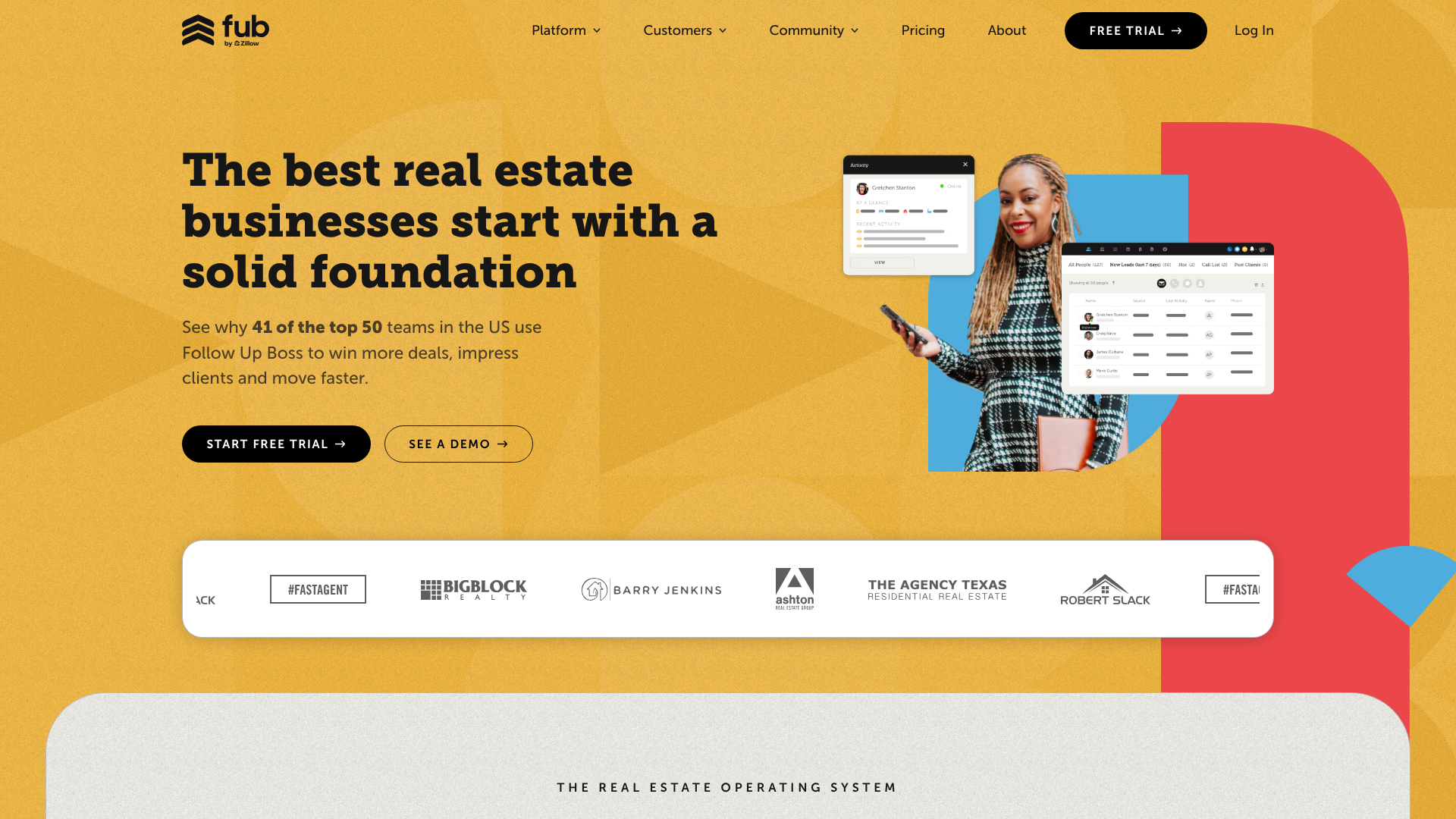
For agents serious about growth, a platform like Follow Up Boss is designed specifically for real estate teams and solo agents. It consolidates leads from all sources (Zillow, your website, social media) into one place and provides powerful tools for automated communication, ensuring you stay top-of-mind with your entire database. This systematic approach is key to converting more leads and generating more referrals.
Streamline Transactions for Efficiency
The real estate transaction process involves a mountain of paperwork, deadlines, and coordination between multiple parties. The more time you spend on administrative tasks, the less time you have for income-producing activities like lead generation and client meetings. Transaction management software digitizes the entire process, from offer to closing.
Tools like Dotloop provide a single platform for e-signatures, document storage, and compliance tracking. This not only makes you look more professional but also dramatically reduces the time it takes to close a deal. By becoming more efficient, you can handle a higher volume of transactions without getting overwhelmed, directly increasing your earning potential.
Embrace Technology and AI
The real estate industry is rapidly evolving, and agents who embrace new technology will have a competitive edge. Artificial intelligence (AI) is no longer a futuristic concept; it's a practical tool that can help you work smarter. AI-powered platforms are emerging to help with everything from writing compelling property descriptions to analyzing market data and predicting client behavior.
For example, a tool like Trof AI can assist with crafting marketing copy or automating client communications, freeing up your time to focus on building relationships. By using technology to automate repetitive tasks and gain deeper market insights, you can provide better service to your clients and close more deals.
The Pros and Cons of a Commission-Based Real Estate Career
A career in real estate offers a unique lifestyle and income potential, but it's not for everyone. It's essential to weigh the benefits against the challenges before making the leap.
The Pros
- Unlimited Earning Potential: There is no ceiling on how much you can make. Your income is directly tied to your effort, skill, and ability to build a business.
- Flexibility and Autonomy: As an independent contractor, you are your own boss. You set your own schedule and decide how to run your business, offering a level of freedom that's rare in a traditional 9-to-5 job.
- Entrepreneurial Spirit: You get to build a business from the ground up. This is incredibly appealing for self-starters who enjoy marketing, networking, and creating their own success.
- Rewarding Work: Helping people navigate one of the biggest financial and emotional decisions of their lives can be deeply fulfilling. You play a pivotal role in your clients' life journeys.
The Cons
- Income Instability: The flip side of unlimited potential is the lack of a guaranteed paycheck. You can have a fantastic month followed by several months with no closings, which can be stressful if you don't have significant savings.
- High Initial Costs and Long Hours: Getting started requires a financial investment in licensing and business setup. The first few years often demand working long hours, including nights and weekends, to build momentum.
- Stress and Emotional Toll: You're dealing with high-stakes transactions and emotional clients. Deals can fall apart at the last minute, and you have to manage the expectations and anxieties of everyone involved.
- You Are the Business: You're not just a salesperson. You're also the marketing director, accountant, and administrative assistant, especially when you're starting out.
Frequently Asked Questions About Real Estate Agent Earnings
Here are detailed answers to some of the most common questions people have about the earnings of real estate agents.
Is it hard to make good money as a real estate agent?
Yes, it can be very challenging, especially in the first one to two years. The industry has a high attrition rate because many new agents underestimate the difficulty of generating consistent leads and managing the costs of running a business. Making good money requires a strong work ethic, excellent people skills, a solid business plan, and the resilience to handle the income fluctuations inherent in a commission-only role.
Can you make $1,000,000 a year in real estate?
Absolutely, but it is rare. Agents who earn seven figures a year are elite business owners. They typically lead a team of agents, have highly efficient systems for lead generation and client management, and often specialize in a high-end niche like luxury or commercial real estate. Reaching this level of income requires years of experience, a stellar reputation, and a significant investment in marketing and technology.
How to make $100,000 your first year in real estate?
Making six figures in your first year is an ambitious but achievable goal. It requires a strategic approach from day one. You'll need to choose a supportive brokerage with excellent training, have at least six months of living expenses saved up, and create a detailed daily schedule focused on lead-generation activities. Successful new agents often leverage their existing sphere of influence, master one or two lead sources, and invest in a CRM to stay organized from the start.
How much commission do most real estate agents make?
This is best answered by looking at the commission split. The total commission on a sale is typically 5-6%. This is split between the buyer's and seller's agents' brokerages. From their half, the agent then pays a split to their own broker.
A common split for a newer agent is 60/40 or 70/30 (agent/broker). So, on a $10,000 commission that comes to their brokerage, an agent on a 70/30 split would receive $7,000 before taxes and expenses.
How much do real estate agents make off a $300,000 house?
Let's do the math. Assuming a 6% total commission, that's $18,000 ($300,000 x 0.06). This is split between the two brokerages, so each side gets $9,000. If an agent has a 70/30 split with their broker, they receive 70% of that $9,000, which is $6,300.
After setting aside about 30% for taxes and business expenses, their net take-home pay from that single transaction would be approximately $4,410.
Do realtors get paid if the house doesn't sell?
No. Real estate agents only get paid when a property sale successfully closes. They work entirely on contingency. An agent can spend hundreds of hours and thousands of dollars marketing a property, and if it doesn't sell or the deal falls through, they receive no compensation for their time or investment.
This is one of the biggest financial risks of the profession.
Is real estate a good career in the USA?
For the right person, it can be an excellent career. According to the U.S. Bureau of Labor Statistics, the outlook for real estate agents and brokers is projected to grow, though at a slower-than-average pace. It offers entrepreneurship, flexibility, and high earning potential.
However, it requires a personality that is self-motivated, resilient, and comfortable with risk and income instability. It's not just a job; it's a business you have to build and run yourself.
Final Thoughts: Is a Real Estate Career Right for You?
Ultimately, the answer to "how much do real estate agents make?" is: it depends entirely on you. The career offers a direct correlation between effort and reward, but it's far from a get-rich-quick scheme. It's a demanding, entrepreneurial venture that requires significant upfront investment, unwavering discipline, and a genuine passion for helping people.
Success is not determined by the market alone, but by the systems you build, the relationships you nurture, and the tools you use. The agents who thrive are those who treat it like a business from day one, manage their finances wisely, and continuously adapt to the changing landscape.
If you're serious about building a successful real estate business, investing in foundational tools can make a significant difference. A powerful CRM like Follow Up Boss to manage your pipeline and a transaction manager like Dotloop to streamline your workflow aren't just expenses—they are investments in your efficiency and long-term income potential.